Nomads of Nature: Amazing Migration Journeys
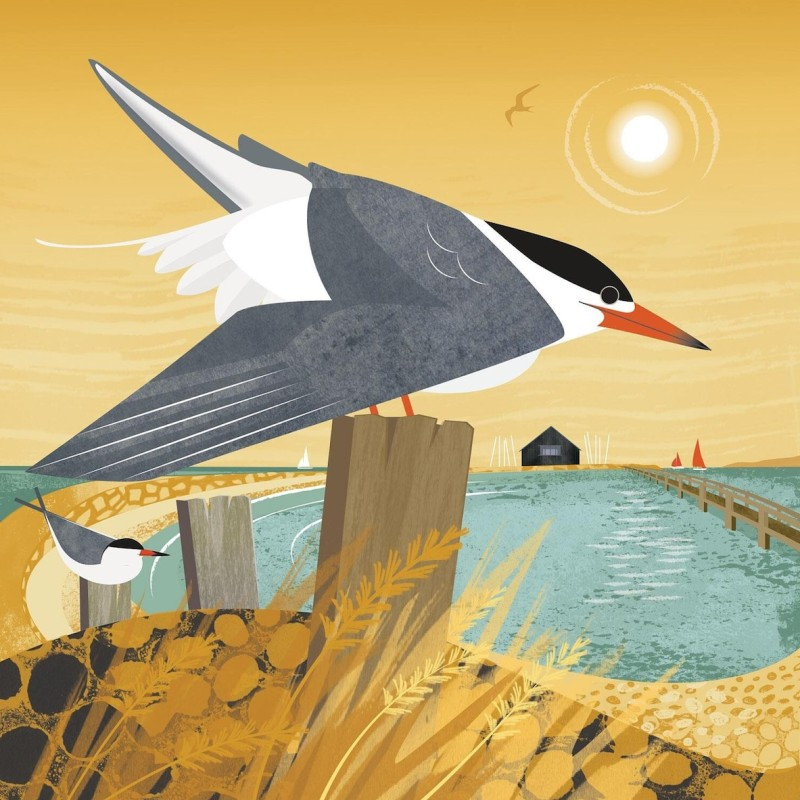
Common Terns are England’s sea swallows’ named due to their forked tails and graceful flight. They only visit England from April to September, nesting in noisy colonies on the coast or inland lakes. They are Amber-listed due to declining numbers, so it’s really important to help them thrive.
Terns are silver-grey with black caps, and short red legs and bills (with a black tip on the end). They hover over the water before plunging to hunt fish.
As well as keeping our beaches clean, restoring wetlands is the other way to help.
Install tern rafts (floating nest islands)
These are artificial floating islands that can offer safe undisturbed areas on the water. Ask your council to invest, if it has local visiting populations in summer months.
These are robust enough to withstand wind and water, and made to last five years. An individual raft can be anchored as a single nesting platform. Or many can be bolted together, to create larger nesting islands.
How to protect England’s coastal birds
- It’s also important to keep yourself and dogs away from coastal birds (flying away uses up energy they need to feed), especially at nesting season (when many birds hide chicks in the sand dunes). Read more on keeping dogs safe at the seaside.
- Always keep to designated footpaths and take litter home (report any injured birds to your local wildlife rescue).
- Sometimes pirri-pirri burrs stick to your clothing (or a dog’s fur). If seen, remove them and bin securely, to avoid them choking coastal chicks (same on country walks).
- If you sail a boat, keep at least 100m away from nesting or resting birds (particularly on shingle islands and spits) and turn off your engine if nearby. Likewise, take any litter with you.
A Year of Bird Migrations
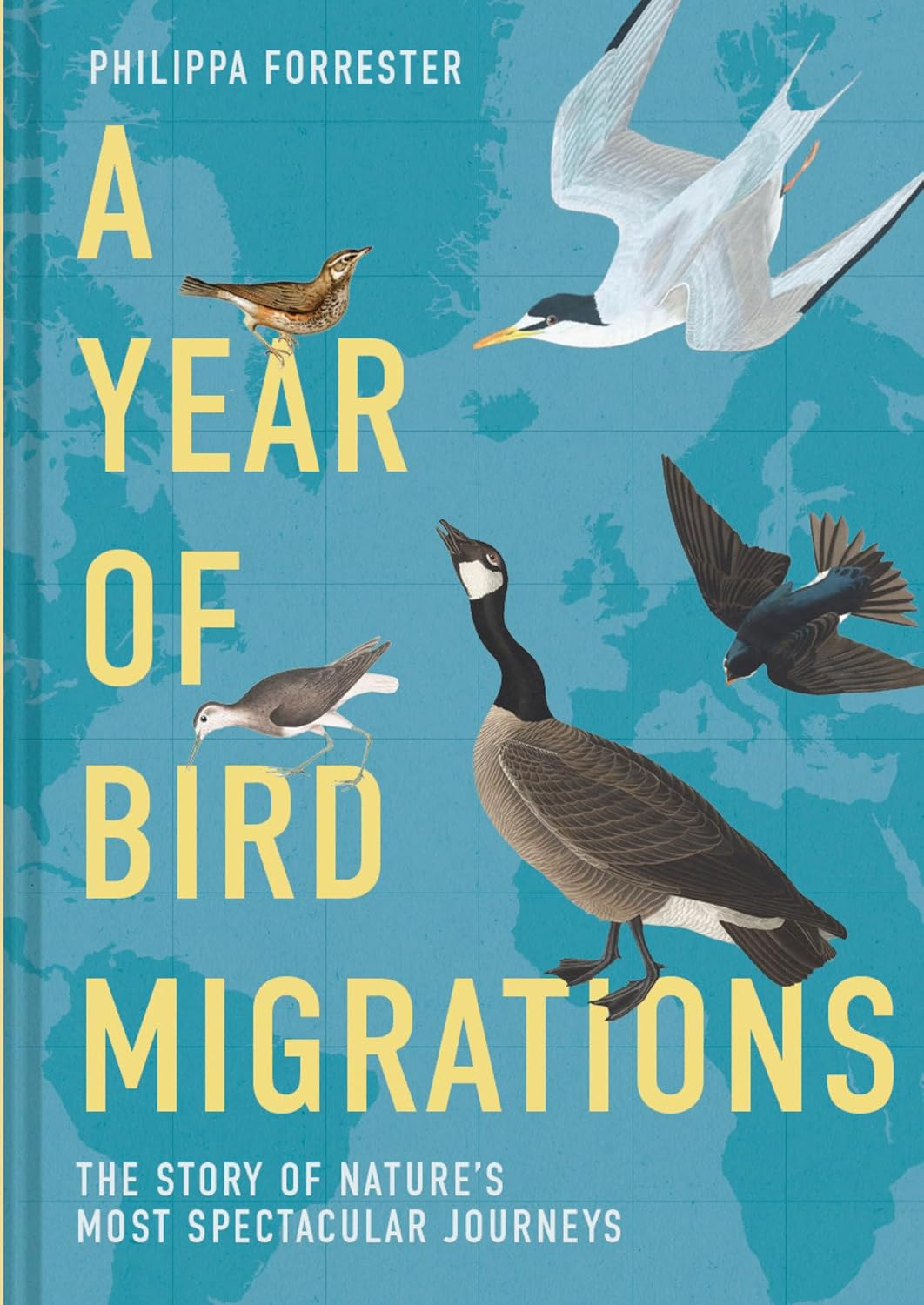
A Year of Bird Migrations discovers nature’s most extraordinary journeys, through some of the most intrepid avian species on our planet.
From swallows and arctic terns crossing the skies between summer and wintering grounds, to great snipes making non-stop flights of up to 7000km. An albatrosses circling the globe as they ride the ‘Roaring Forties’ winds on the Southern Hemisphere.
The scop of our avian life’s journeys are astounding. Whether travelling to warmer climates, increased food sources or breeding grounds, migrating birds are equipped with incredible resources to help them on their way. Some species even have tiny bits of magnetic material in their brains, which act as an internal compass.
With several entries for each migrating birds over the course of a single year, discover the different points along each route, and the incredible distances covered.
As well as the challenges faced and the ways in which climate change can affect these ancient routes. Also included are colour illustrations to depict each bird, plus maps which plot the flight lines.
Atlas of Amazing Migrations
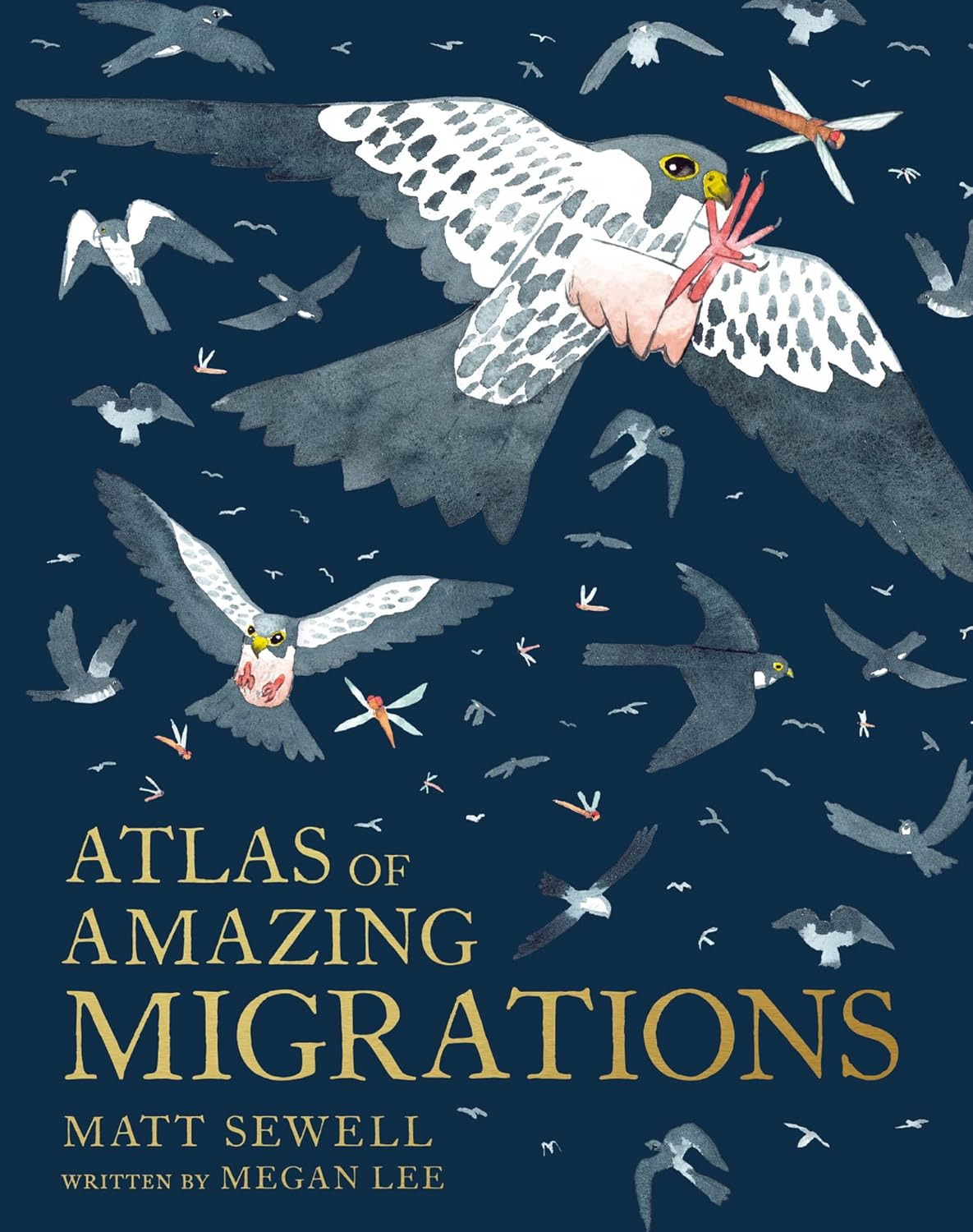
Atlas of Amazing Migrations is an illustrated celebration of the mammals, birds, reptiles, fish, insects and even plants that battle through Earth’s toughest conditions to make extreme journeys.
Follow arctic terns on their 40,000 km journey between the North and South Pole, join monarch butterflies on their pilgrimage from Canada to Mexico, and learn how wildebeest, humpback whales, salmon and dragonflies migrate. Using the sun (or earth’s) magnetic field.
If you’ve ever been told off for eating with your mouth open, you’re in good company with the basking shark.
These massive sharks can be found all over the world in arctic and temperate waters, and migrate closer to the shore during summer where they ‘bask’ (swimming slowly with their large mouths open).
Swimming along in what looks like a suspended yawn is filter feeding to capture plankton. Basking sharks may be the second largest fish in the world, but boy do they keep to themselves.
The swift parrot is a bit of a showstopper, with a loud personality and equally loud plumage of felt-tip pen shades. This parrot is a zippy flyer, and can cover as much as 2000km a year.
They also do a fantastic job of spreading pollen, so it’s a true shame that an overlogging of blue gum has led to declines in this bird – there are now as few as 1000 swifts left in the wild.
Animal migration, hibernation and adaptation
What Do Bees Do in Winter? is a fun illustrated guide on what all the creatures you never see in winter or some parts of the year are doing, and where they are. Some animals hibernate and others may change the colours of their behaviour or even coats. But which animal does which?
In this book you’ll meet whales to wood frogs, beavers to brown bears and salmon to snowshoe hares, all want to share their story with you, about where they go and what they do as seasons change. You’ll even follow the monarch butterfly and honeybee, to see how they survive the cold weather.
Nightjars (England’s summer visitors from Africa)
Nightjars are summer visitors, returning each year to heathlands and open woodland in southern England. During the daytime, their camouflaged feathers keep them hidden from view.
At dusk, they arrive with strange churring calls, hunting moths and insects. Mysterious and cryptic, nightjars fly close to the ground and rest hidden in leaf litter.
Read our posts on creating safe havens for garden birds, and help to stop birds flying into windows.
Arriving around April or May, they are mostly found in southern English heathlands and young conifer forests. They are almost impossible to spot, as they nest on the ground, blending in with leaf litter and bark.
They have tiny beaks but enormous wide mouths to catch moths and beetles mid-air. They also lay their eggs directly on the ground, making them vulnerable to disturbance.
Males display to females, by flying around and clapping their wings together! Though numbers are recovering, nightjars are still a conservation concern.
Arctic Terns (nature’s longest migration journey)
Arctic Terns are tiny birds that migrate from the Arctic and Antarctic, to arrive in Northumberland, to nest on coastal beaches around April. Keep away, as they will dive-bomb intruders and have sharp bills!
They live on small fish and krill (so don’t buy supplements from stores, as all marine creatures need this important food source).
Beautiful hoopoes (our summer visiting birds!)
Hoopoes are beautiful birds with pink-brown bodies and crests, black bills and black/white wings. Although it’s not native to England, around 100 birds often turn up here during their migration from Africa to Europe, usually found in southern England.
They are a Schedule 1 species, meaning they are highly protected under the Wildlife and Countryside Act.
Europe becomes a bustling hub for these extraordinary birds from March to June. They seek out open woodlands, orchards, and meadows, to find insects for growing families.
Their ideal breeding grounds often include old buildings and tree cavities, providing shelter and a safe environment for raising their chicks.
During the chill of winter, Hoopoes retreat to the balmier climates of Sub-Saharan Africa and parts of Asia. These regions offer the mild temperatures and abundant food sources Hoopoes need.
Whether in dry savannas or scattered woodlands, they find the perfect environment for rest and recovery away from the freezing European winters.
Monarch butterfly migration
Every year, millions of monarch butterflies set off from Canada and the northern US on an epic journey to Mexico. This migration covers up to 3,000 miles, ending in dense forests where tree branches can bend under the weight of so many butterflies.
Their orange and black wings fill the air like floating confetti, turning a simple forest into a glowing wonderland. This journey is at risk as habitats shrink, making each sighting even more precious.
Ocean voyagers (epic migrations under the sea)
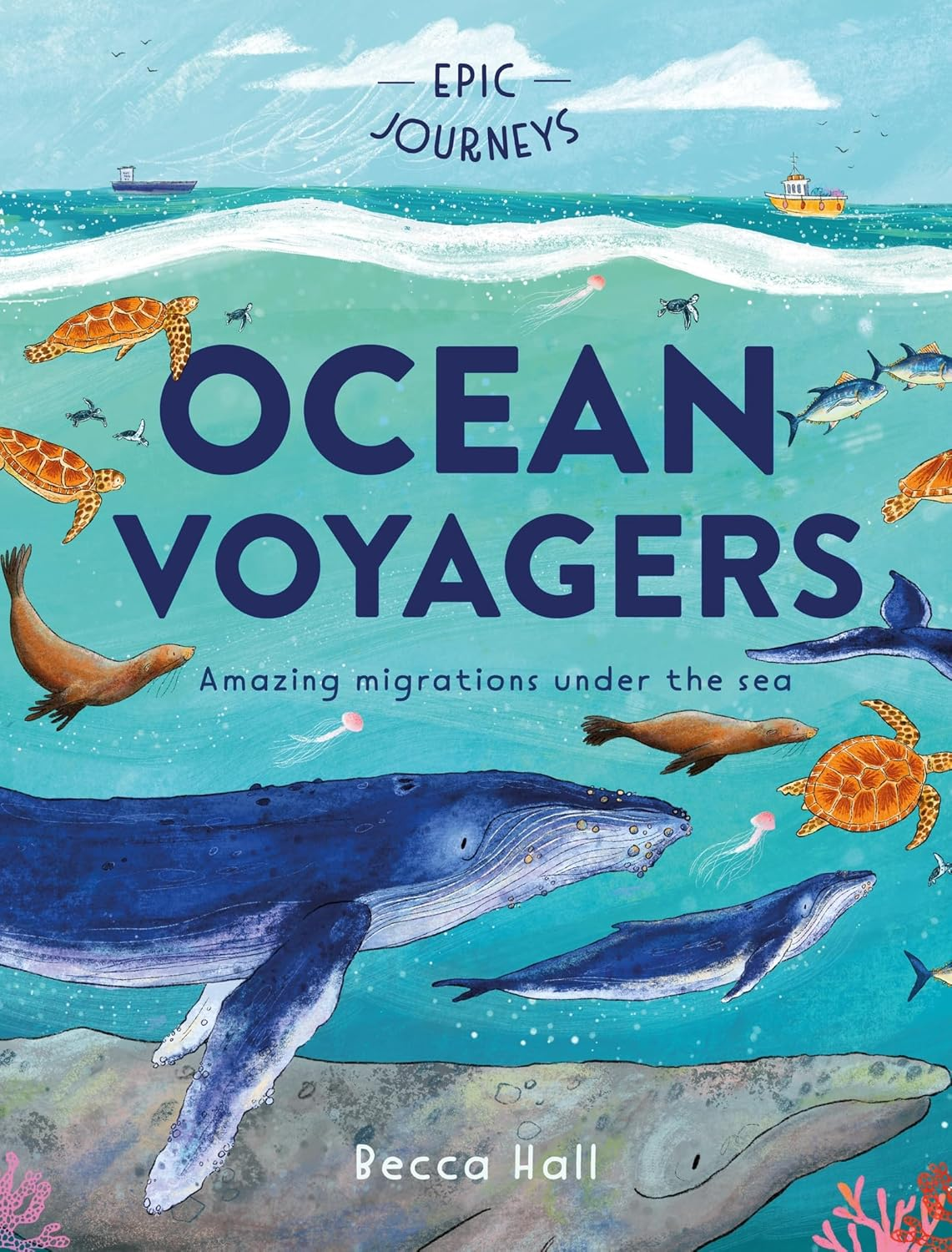
Ocean Voyagers is a lovely book for young readers (or any age!) about the amazing journeys underwater that some marine creatures undertake.
From whales swimming thousands of miles in search of warmer waters, to sea turtles crossing oceans to return to the same beaches where they hatched. Or spiny lobsters marching in single lines, across the ocean floor!
Our oceans are alive with epic journeys of survival, endurance and wonder. Children will learn about why and how sea creatures migrate, as well as the dangers they face. And how climate change is impacting their journeys, and what we can all to do help.
How to help migrating underwater friends
- Litter travels on tides, so never drop litter at the beach (or off a boat) as it could end up in the stomachs (or tangling) creatures here and far away .
- Other ways to help are to choose reusable over disposable, and use waterless car washes (home drive and supermarket car washes send untreated oily water down drains, and into the sea.
- If you eat fish, look for sustainable-certified brands, which don’t use by-catch methods (that catch other marine creatures in nets).