Investing in People: The Economic Case for Basic Income
If you’re vegan or going that way, it’s likely that you want the world to be a better for everyone, and that includes humans. Basic Income is a wonderful idea, that could eradicate worldwide poverty, and especially in the west would turn economic policy upside down.
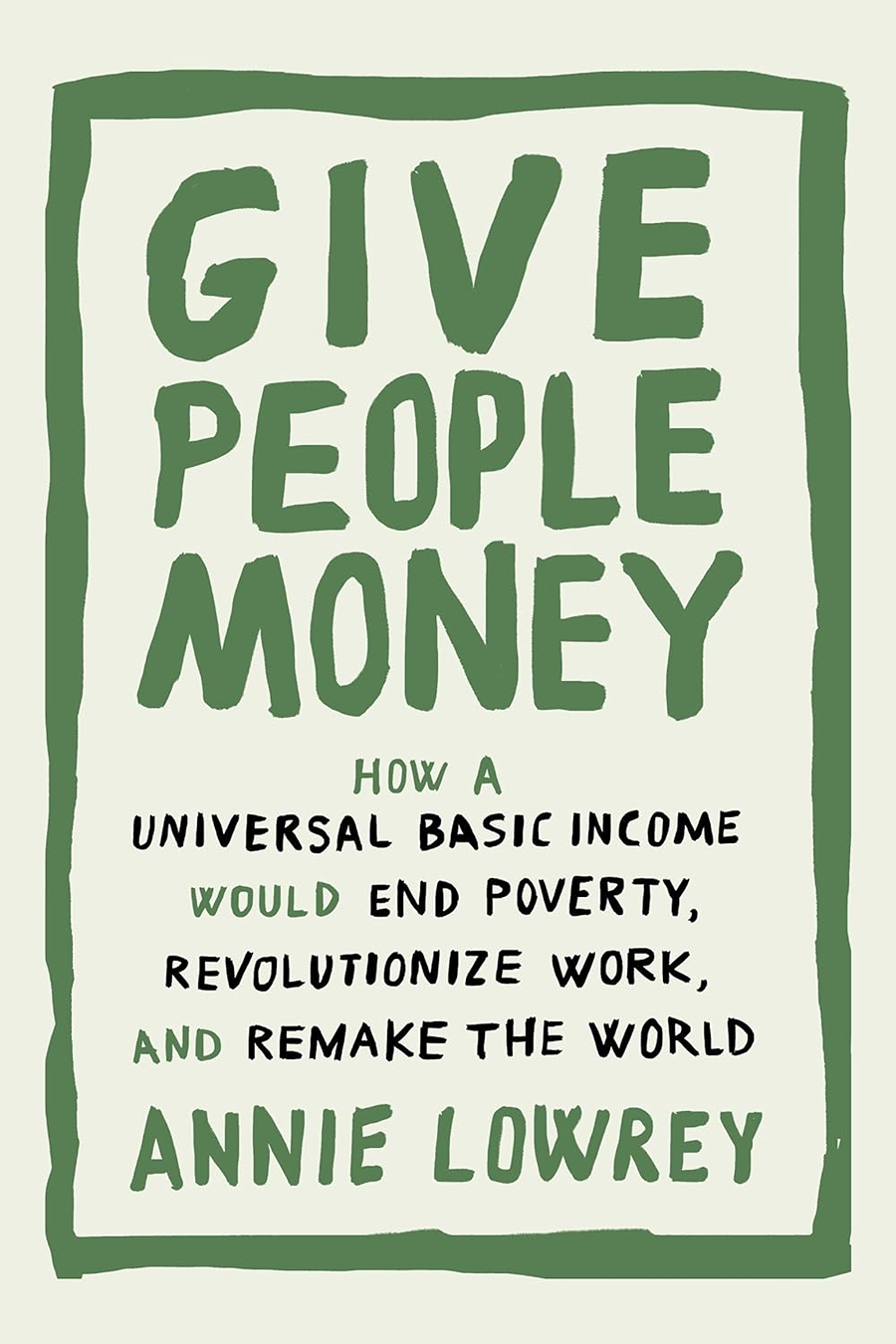
Give People Money is a complete guide to how it works.
In a nutshell, it means getting rid of complicated benefits systems. It gives everyone a set amount each week, then you can care for a loved one, be a volunteer dog walker, raise children, work part-time, pursue your dreams or work full-time, all while still receiving an income to help eliminate benefit fraud and debt.
Basic Income is paid to individuals (not households) and children also get it, but on a lower scale. Only legal citizens and legal immigrants receive it, but there’s no check on jobs, wealth and no forms. Payments cover food and rent, and there are extra benefits for housing if needed, and disability.
Examples of Basic Income worldwide
- Alaska, USA: Everyone who has lived in Alaska for over a year gets a yearly dividend from oil revenues (ok, not eco-friendly but we’re giving an example of how it works), called the Permanent Fund Dividend. It usually lands between $1,000 and $2,000. People use it for bills, education, or just cushion against surprises.
- Iran: In 2011, Iran replaced fuel subsidies with direct cash payments to almost all citizens. While the amount changes with inflation, the structure sets a real precedent.
- Taiwan: Though not a full UBI, Taiwan pays every citizen a yearly “Citizen Dividend”. The sum depends on government profits from national resources.
- US Pilot Projects: Cities like Stockton, California started giving $500 a month as part of Mayors for a Guaranteed Income. Dozens of other US cities have tried similar pilots.
Why give money to rich people?
This is an argument often touted. As mentioned above, the reason is that the cost of means-testing, is usually more than just giving a set income to everyone, saving billions of pounds in hiring out staff, and billions of hours in no-longer needed paperwork and checks.
And who knows – some of the rich receiving the money may give it to small charities. Stranger things have happened.
Why give money to ‘do nothing?
This is usually an argument touted by idiots, who have no idea how much people struggle on the bottom rung of the financial ladder. Most people who are very poor (whether homeless, single parents, people with health problems, cash-strapped pensioners etc) rarely ‘do nothing’.
They are struggling to survive, visiting different food shops to seek produce on sale to pay the bills, walking miles to food banks, using libraries to search for jobs.
Or more commonly, raising children or caring for elderly relatives. Giving people money helps provide financial stability for the ‘backbone people’ of England, who prop everyone else up.
Voices calling for Basic Income
- Martin Luther King Jr.: Long before UBI entered the mainstream, King called for a guaranteed income as the surest way to “abolish poverty.” He believed dignity started with meeting basic needs, and cash in hand gave everyone a real shot at stability.
- Andrew Yang: Running for US president in 2020, Yang turned UBI into a household phrase with his “Freedom Dividend” plan—$1,000 a month for every American adult, no strings attached.
- Mayors for a Guaranteed Income.: More than 100 mayors in the US, from big cities to small towns, formed this network to explore pilot programmes. They say direct cash works better than any bureaucratic maze of rules.
- The Green Party and SNP both include UBI or guaranteed income schemes in their official policies. They see UBI as a modern answer to rising insecurity and low pay.
Why shorter working hours benefit all

Basic Income encourages more people to work part-time. Sweden has switched to six-hour workdays for staff, while still paying for eight. If that sounds mad, it isn’t. Shorter and flexible working weeks are proven to produce better life/work balance, more productivity and better health (which reduces NHS costs).
Nurses in Gothenburg work fewer hours but report more energy, less stress and fewer sick days. Workers use the extra time off for family walks, hobbies or just a slower coffee break at home.
Iceland followed suit and took the step to try a four-day work-week in government offices and some private companies, by dropping weekly hours from 40 to 35, without cutting pay. Again, workers reported feeling much better. 86% of the country’s workforce have now adopted shorter working weeks.
In Poland, parents can start at 7am and leave earlier, or arrive at 10am and stay later. This helps people to skip rush hours and walk children to school, and care for older parents.
Bologna, often called Italy’s co-operative capital, puts people first at work. Local co-ops sometimes cut hours in exchange for slightly lower pay or profit-sharing.
Often in Italian cities, stores open early morning, pause long mid-day lunch breaks, and stay open later in the evening. This matches daily life and is good to go inside and rest, during hot afternoons. It also means shopkeepers can share child-caring for other relatives.
Yet Bologna has a better economy than the rest of Italy, despite working less hours. Extra time isn’t just for family or fun. Some workers use their added hours to help their communities, volunteer, or support local events. It’s common for people to help at food banks, join neighbourhood clean-ups or care for elderly relatives.
No more ‘silly made-up jobs’

In his book Bullshit Jobs, the late David Graeber wrote how society is set up to create jobs that ‘don’t exist’. You know the ones: telemarketers and ‘team meetings’ with people drawing things on whiteboards, creating ‘mission statements’.
We don’t need jobs like this, which are usually created to manipulate job figures for the government stats. We need more ‘real jobs’. carers and wildlife rescuers, dog walkers, carpenters, green builders, teachers, hospice workers, community chefs.
Many people in England are working on jobs they hate, simply to earn money. But money is not everything, it’s important to do work that you love and that makes a difference to your community.
Graeber grouped bullshit jobs into five types:
- Flunkies: roles that make someone else look or feel important. Think receptionists hired for empty foyers, or assistants whose main task is to signal status.
- Goons: roles that exist only because others have them. Think PR hit-squads trading press hits, or aggressive sales teams battling for the same pie.
- Duct tapers: roles created to fix problems that should not exist. Think staff paid to patch broken systems rather than fix the system itself.
- Box tickers: roles that produce reports and metrics to prove work is happening, even when it is not.
- Taskmasters: managers who create work for others, or oversee teams that do not need oversight.
You have likely experience of this. Ever gone into a Lush or Next shop? You’re bombarded the minute you arrive, with people ‘greeting you”. They look bored out of their brain, and the first thing you do is leave the shop. It would be far better if Next spent money on improving their ethics score at Good on You.
The NHS budget is bursting. But we have managers and middle managers, who waste money and energy on lit-up appointment boards. That money could be used to fund nursing assistants, to take the load off nurses and doctors. Proper jobs!
In a YouGov survey, 37% of British workers said their job did not make a meaningful contribution to the world. That is a lot of wasted potential.
Ask three simple questions, to determine if you’re in a silly job:
- What would break if I stopped doing this for a month?
- Who would notice, and why?
- Does my job help anyone or the community?
David Graeber (the anthropologist who coined the term ‘bullshit jobs’) was a fan of Universal Income, rather than a society where the blue-collar workers got ill from exhaustion, and white-collar workers did ‘invented jobs’ going round with clipboards, to check how others were doing:
For some reason, we as a society have collectively decided to have millions of human beings spending years of their lives, pretending to type into spreadsheets or preparing mind maps for PR meetings. Rather than freeing them to knit sweaters, play with their dogs, start a garage band, experiment with new recipes or sit in cafés arguing about politics.