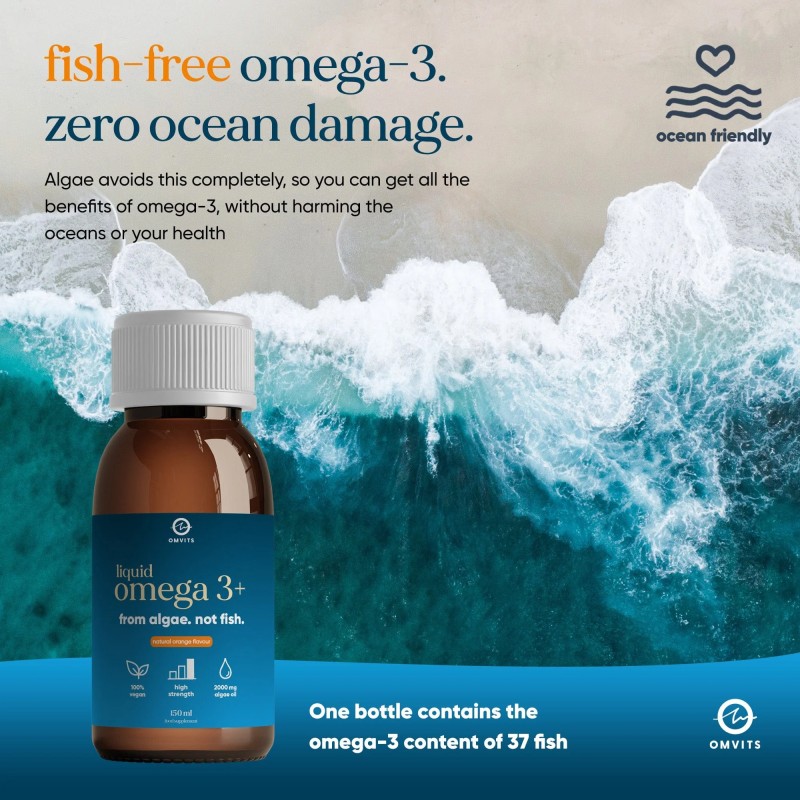
Nothing Fishy (omega 3 in glass jars with refills)
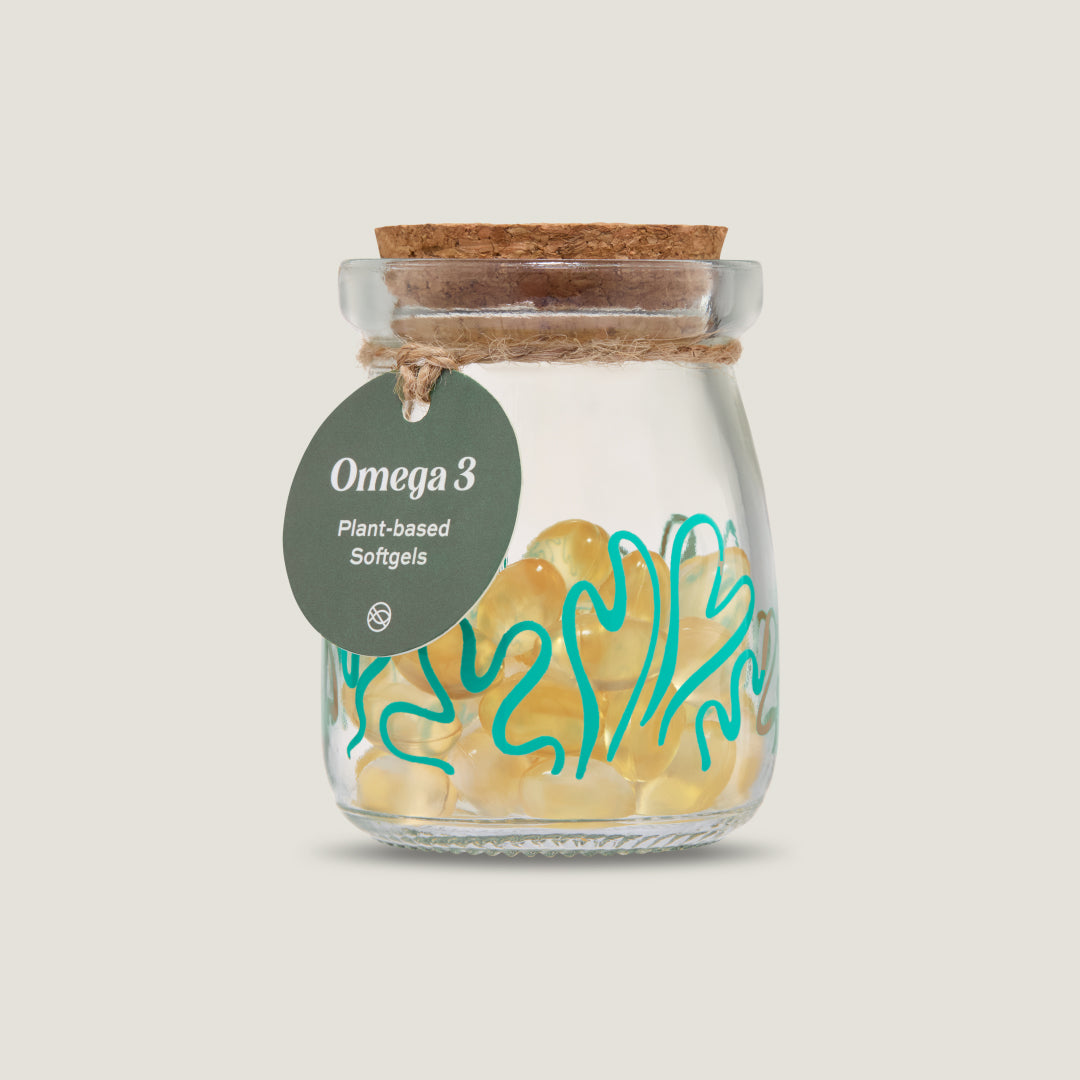
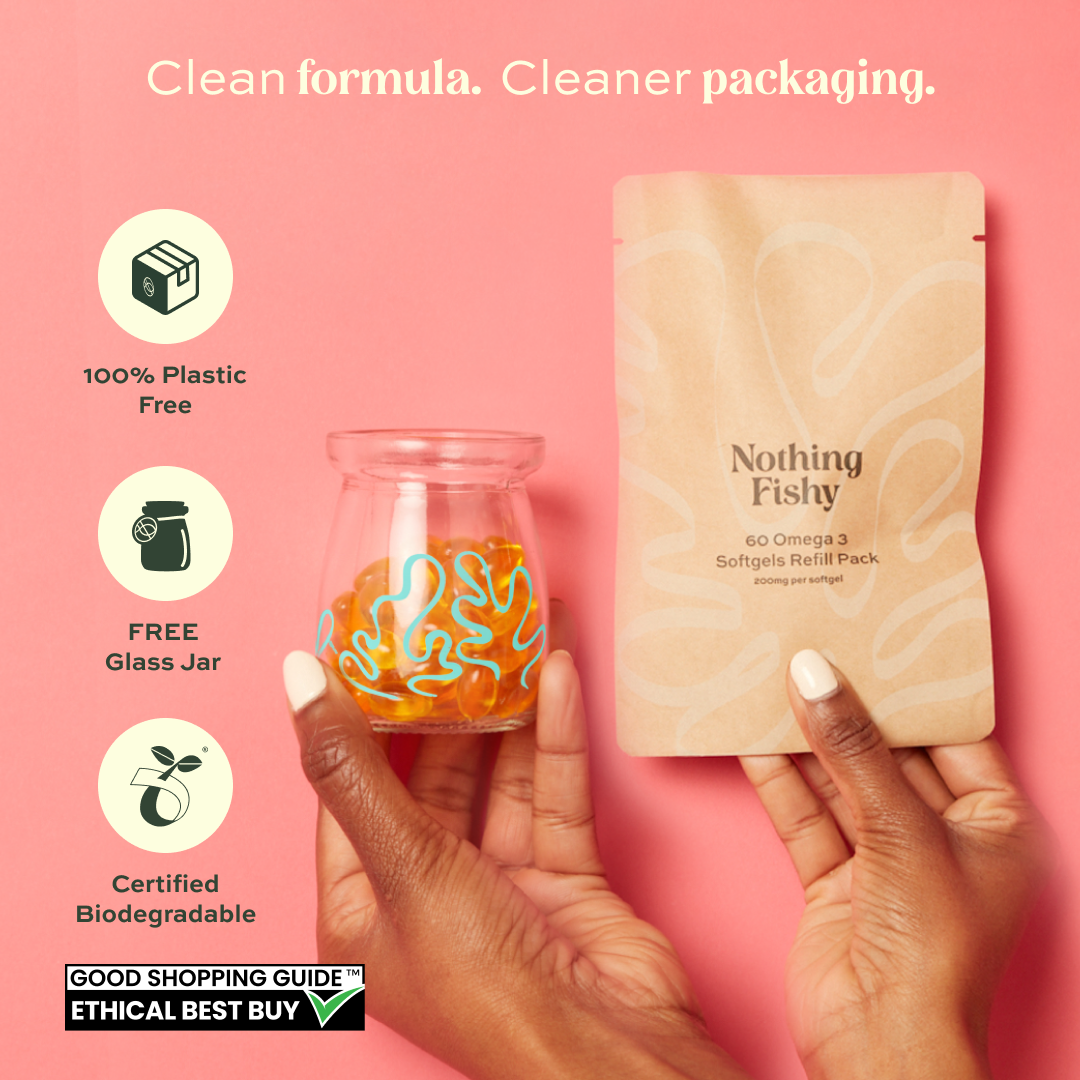
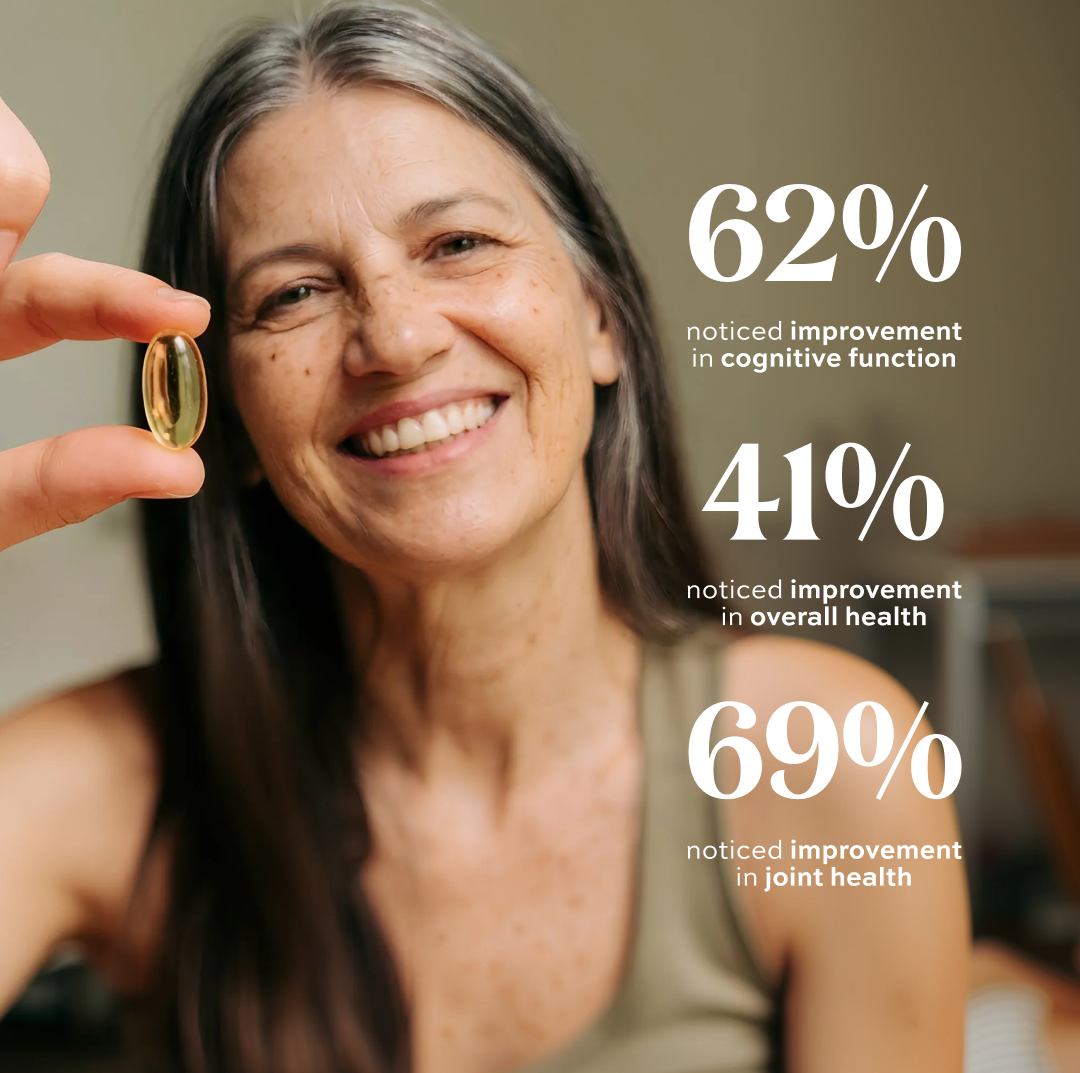
Nothing Fishy is a good brand, sold in glass bottles with refill pouches. Users found a 69% improvement in joint health, 62% improved cognitive performance, and 65% felt benefits within 3 months.
If you already take a sustainable vegan vitamins, check first to avoid over-dosing. However unlike say taking vitamin D alongside a vitamin, most multivitamins don’t have omega 3s, so you should be fine.
Always check with your healthcare provider before taking supplements, if you take medications or other supplements. Check age ranges too, as most are not for children.
If you are taking omega 3s for specific benefits, most people notice a difference within a week, for others it may take up to three months. Any slight stomach upset should settle (esp. if taken with meals or splitting the dose across the day).
Why choose plant-based omega 3?
We now that omega 3 fatty acids are good for the heart, brain, skin and eyes. They also help reduce inflammation so cana help people with rheumatoid arthritis, autoimmune conditions and even depression. But you don’t need mercury-contaminated fish to get them (cooking fish negates benefits anyway).
There are three sources of omega 3 fatty acids:
EPA and DHA are both from oily fish (salmon, mackerel, tuna, sardines and herring). But these are on the ‘banned list’ for pregnancy/nursing, children and weak immunity, due to concerns over mercury. Plus others choose not to eat them, due to over-fishing and bycatch concerns.
ALA is the plant-based source. This is just as good. But in England, the foods are not really on our ‘everyday eating’ list – flaxseeds (linseeds), chia seeds. So it’s time to get creative!
Plant-based sources of omega 3 fatty acids

This vegan coffee walnut cake (The Veg Space) is a good source of omega 3 fatty acids. Avoid caffeine for pregnancy/nursing.
- Walnuts are good for our brains (they even look like little brains!) Not just for Walnut Whips, use these on top of cereals or in puddings and baking. Eat four a day (obviously not for allergies or children). Keep them in the fridge to avoid becoming rancid.
- Flaxseeds (also called linseeds) are easy to find. You can mix 1 tablespoon with 3 tablespoons of water to make a ‘flax egg‘ to use in baking.
- Chia seeds are often used in puddings as a gelatine supplement (they swell so avoid for children and people with swallowing difficulties or on blood thinners, and always mix with water before use).
- Hemp seeds don’t make you high! High in protein, they are only distantly related to cannabis, and grow locally and organiclly. Found in health shops, use them ground up smoothies. Try them in hemp energy bites.
- Rapeseed oil is not really good to have in excess (it’s great for vegan roast potatoes, but you don’t want to be glugging oil all day). However, it’s healthier to cook with than olive oil (best raw for salad dressings).
What’s wrong with fish oil supplements?
Cod liver oil may be ‘good for creaky joints’, but it’s high in vitamin A that in excess can cause liver damage, bone density loss and severe headaches. NHS advises to avoid it during pregnancy, as high doses could cause birth defects.
Cod liver oil can also thin the blood, which can increase bruising and bleeding when taken with some medications (including Warfarin and Aspirin – it can also lower blood pressure for those already on drugs, and affect blood sugar for people with diabetes). Surgeons even advised to stop taking it 1 t 2 weeks before surgery, as it can interfere with blood clotting.
Plus of course cod is from cod – see above for environmental concerns. Plus it quickly goes rancid, and gives fishy burps! Cod liver oil is not recommended for pets, as it can cause vitamin toxicity – talk to your vet about safe alternatives.