Hay Straws! (made from reed stems, don’t go soggy)
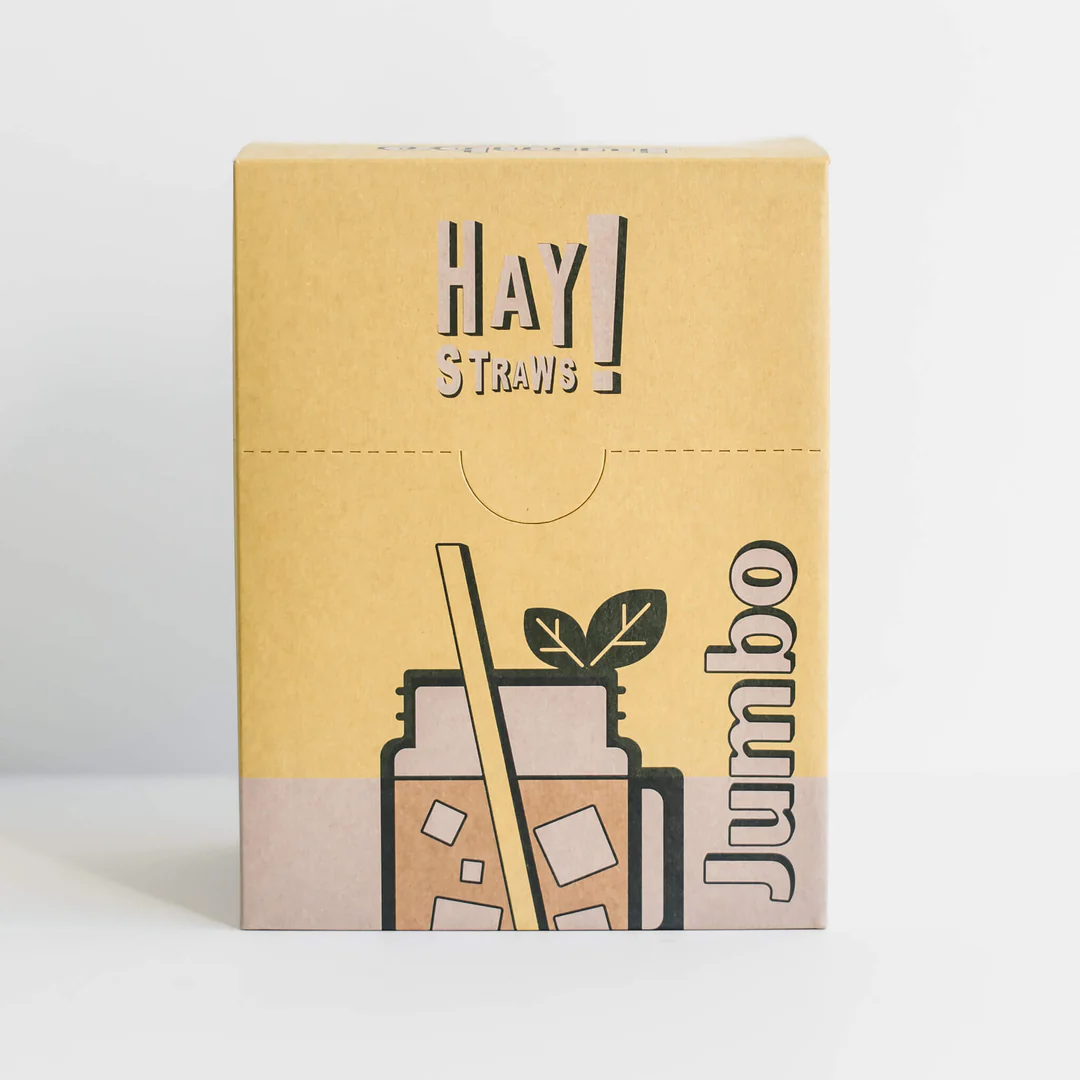
Hay Straws (US) are made from reed stems (sold unwrapped or wrapped in zero waste packs) in slim, original or wide versions, anad wholesale cases from 1500 to 12,000. Unlike paper straws, these don’t go soggy!
Hay does not contain gluten but they say to avoid for allergies to hay or grass. And you are not a horse, so don’t eat them!
And even better, this brand uses profits to adopt a turtle each month at Sea Turtle Conservancy, to keep these beautiful creatures in the wild!
Unless you have a medical condition that requires one, you don’t need drinking straws (you could use your lips?) But as billions are used worldwide, it makes sense to look at reusable alternatives.
Don’t give straws to babies (as for pets, they are choking hazards). Open cups let babies develop facial muscles for speech/eating.
Why avoid plastic drinking straws?
Many countries (since that viral video of the turtle with a plastic straw stuck up its nostril) have now banned single-use plastic straws. But many countries (including the USA) haven’t, and millions of old plastic straws are still used, if bought years ago.
Which countries have banned plastic straws?
Not many, the majority of countries worldwide still allow them. In the US, there is no federal ban, but some states (like Florida and California) have brought in bans. President Trump has not only reversed a ban on plastic straws, but ordered all federal departments to not use paper ones, presumably to support the oil industry (plastic is made from oil).
A few years back, McDonald’s replaced plastic straws (but not plastic lids, which rather defeats the point) on their McFlurry’s. Which led to a petition of over 50,000 people demanding they be returned, as the paper ones ‘went soggy’. Then it was found that the new paper straws could not be recycled, so they had to go back and redesign them. We have a long way to go.