Don’t Dig, Do Good: Grow Food and Help Wildlife
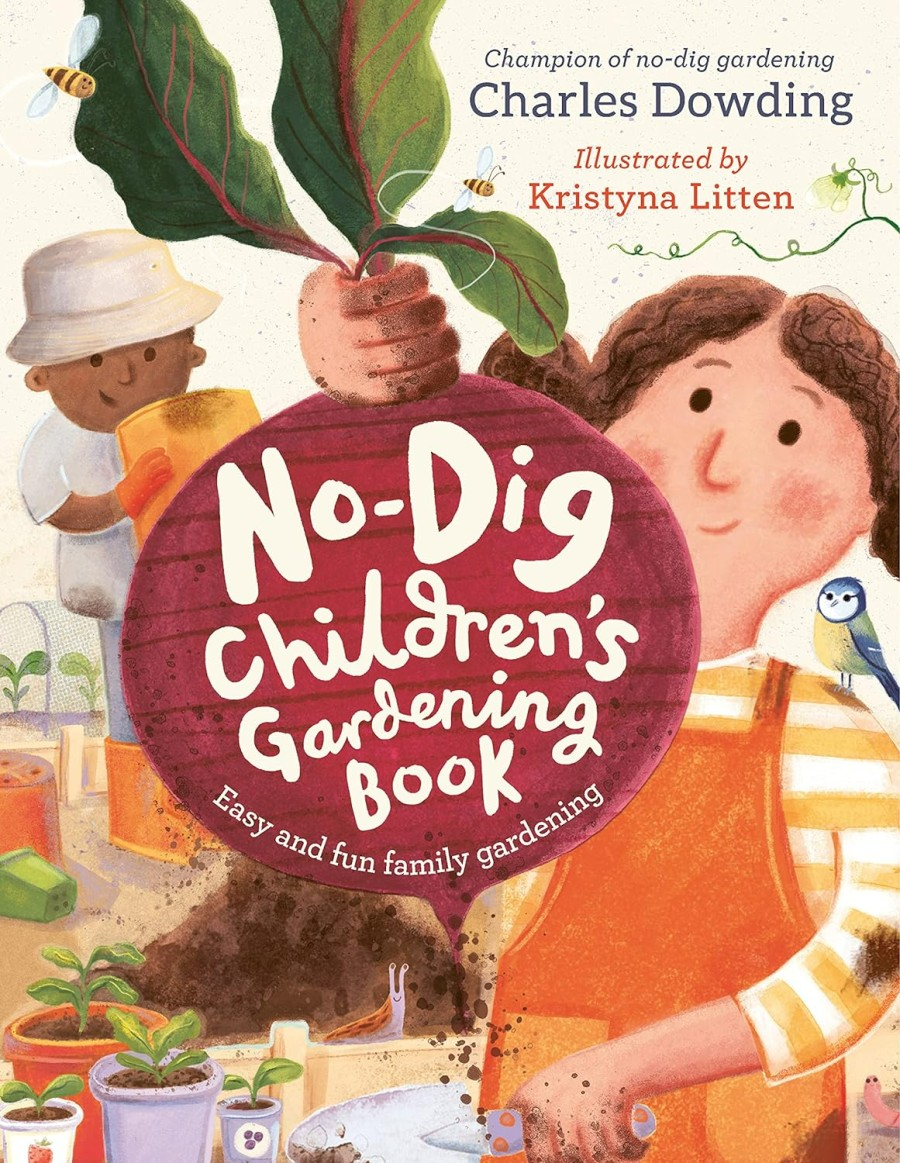
No-Dig Children’s Gardening Book is a fun easy book to grow own organic food (forget that it’s for children, this simple illustrated guide is good for everyone and much easier to understand!)
This book begins with an overview of no-dig gardening and healthy soil. Then learn how to create a no-dig garden bed in a day, and what to plant in it. You’ll learn how and when to sow common garden vegetables, along with tips to grow giant sunflowers!
You’ll also learn of the benefits of no-dig gardening to native wildlife, and how to create a no-dig market garden in your community. Plus learn how to save your seeds for next year, so you can plant them again.
If you share your home with animal friends, learn about pet-friendly gardens (many plants and mulches are unsafe near animal friends). And use nontoxic humane slug and snail deterrents.
Avoid netting and read tips for wildlife-friendly gardens. Also how to create safe havens for garden birds and stop birds flying into windows.
Bin allium scraps (onion, leeks, garlic, shallots, chives) and citrus/tomato/rhubarb scraps, as acids could harm compost creatures. It’s okay to put them in food waste bins (made into biogas).
Of course, all no-dig gardeners know that Charles Dowding is the man to go to, for extensive advice. His website has a beginner’s guide (which you can convert to pdf. and print) that covers all the basics, and he has many videos on his YouTube channel if you prefer ‘moving pictures advice’. He also has an online beginner’s course‘
Grow Together condenses 40 years of experience to create 50 proven companion planting combinations, so you know what to plant next to each other, for better harvests (this naturally deters unwelcome visitors to avoid chemicals or harming native wildlife).
Learn where to plant carrots, lettuce, fennel, spinach, garlic, coriander, broad beans, asparagus, cucumbers, peas and strawberries!
Learn more on no-dig gardening
Garden Organic has a good simple post on how to start a no-dig garden (or create one on existing soil). It says to avoid suppressing weeds with plastic or carpet (most has chemicals that would leach into soil).
It instead recommends a combination of mulch made from homemade compost, fully-rotted manure, leaves, straw, grass cuttings, to suppress weeds (this could take months, so be patient).
And for already-cultivated beds, again it’s simply to transfer to no-dig gardening, applying an annual mulch each autumn. Wonderful worms will do most of the work for you, rising up to eat and digest the mulch, to create black gold soil for your garden goodies! RHS also has a good post.
Where to buy good organic seeds
Not just red, beetroot comes in many colours, but this is the main one. The only caveat is that eating it can sometimes cause ‘beeturia’ (turns your pee pink!) Unless you have some underlying medical issue, don’t worry about it, it will soon disappear out of your system! It occurs simply because betanin pigment does not break down during digestion.
If you can’t find sustainable beetroot seeds locally, you can buy from Vital Seeds, The Real Seed Company, Tamar Organics or RocketGro.
For indoor plants and greenhouses, use Feather Friendly visual markers to stop birds flying into windows (avoid facing indoor plants to face gardens).
Where to Buy High-Quality Organic Seeds
Arthouse Unlimited offers packs of seeds for beetroot, peas, carrots and sweet pepper. The difference is that these packs are beautifully illustrated by artists with complex neuro-diverse and physical support needs, providing them with jobs and income, with sales helping this wonderful non-profit.
Stocks & Green is a good place to buy quality seeds. Sold by a small Essex company, find seeds to grow everything from tomatoes to pumpkins, dwarf green beans to salads. Along with Nutscene raffia to stake your beans!
Seed Exchanges and Community Markets
Many seeds sold are F1 hybrid variety, so you can’t replant or save them, to make you buy new packs next year. Buy real organic seeds from The Real Seed Company or consider a seed swap like Brighton’s Seedy Sunday.
Open-Pollinated Seeds (you can grow next year)
Starting & Saving Seeds is a good book to start.
Vital Seeds is a Devon company, that seeks to get around the silly laws these days, whereby F1 hybrid seeds cannot be saved to sow again the next year. In order to have to buy new packs of seeds, to make big companies more profit.
This company offers organic and open-pollinated seeds that are grown locally (most seeds found in garden centres and DIY stores are produced thousands of miles away in countries with drier climates and cheap labour.
Such seeds don’t grow well, nor support heritage varieties, so important for bees, butterflies and bats to pollinate food. Some of the seeds you can buy here include:
- Beetroot
- Broccoli
- Brussels Sprouts
- Cabbage
- Carrots
- Cauliflower
- Courgette
- Celery
- Chard
- Cucumber
- Kale
- Leek
- Lettuce
- Onions
- Parsnip
- Peas
- Peppers
- Radish
- Runner Beans
- Spinach
- Spring Onions
- Pumpkin & Squash
- Sweetcorn
- Tomatoes
- Turnip
The Real Seed Company also sells proper seeds, and sells Community Support Seeds, which are low-cost for unwaged and struggling families. It also offers a free online seed-saving guide.
What are F1 Hybrid Seeds?
Years ago, you likely have memories of collecting flower seeds (like lupins – toxic to pets) to plant next year. The sad truth is that today, most seeds are hybrids, which not only gives poor crops, but means this is no longer possible.
The idea is that instead, you have to return to the store to buy new seeds. The way to get around this legally is to have seed swaps, like Brighton’s Seedy Sunday, which also keeps heritage seeds alive.
Another reason seeds are grown like this is to make them more ‘uniform’ for supermarkets etc, which means that non-uniform seeds end up as food waste.
The Real Seed Company offers translations of marketing speak:
‘Really uniform fruit’ means ‘inbred for the supermarket, may not adapt to your soil’.
‘Straight long shanks’ means ‘bred to fit the packing machine’
‘Leafless peas – easy to find in pods’ means ‘much smaller yield, as the plants have no leaves!’
If you want real organic vegetables with wonky shapes and proper taste, then consider proper organic seeds, that you can replant the next year!
We had a quick look at the main seed-selling sites in the UK, and found the following:
Sutton Seeds offer a ‘uniform beetroot’ that is F1 hybrid. Who wants a uniform beetroot? We want a knobbly organic beetroot full of flavour, sold cooked at the local greengrocer!
Mr Fothergill’s again sells ‘uniform carrots that are quick to grow’. Organic carrots are quick to grow anyway, and throwing out ‘non-uniform carrots’ is why we have so much food waste.
B & Q’s website grows F1 Brussel sprouts, made by an ‘EU responsible person’. Who on earth is that? Find a friendly organic seed company, and buy from them instead!