Battle Green (organic cotton Swedish dishcloths)
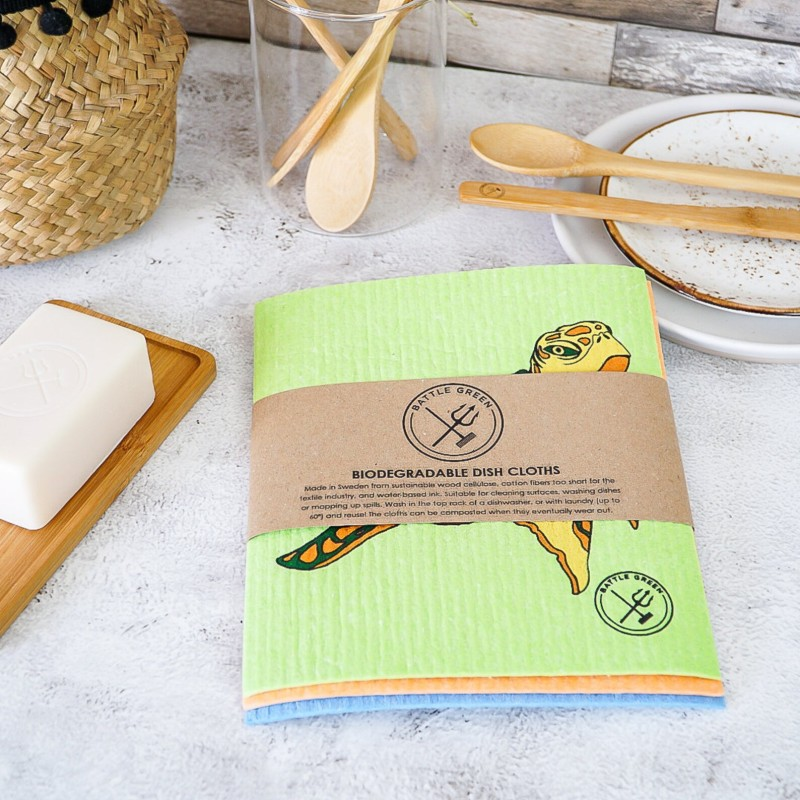
Swedish dishcloths were indeed first used in Sweden (over 30 years ago). They basically are quality dish cloths (which can also be used for cleaning). Unlike microfiber cloths, these are free from microplastics so at end of use, you can cut them up and compost, or just bin to naturally break down.
Battle Green Swedish dishcloths are made from cellulose (wood pulp) and cotton. They are in various pretty designs, all highlighting ocean species (whales, sea turtles and gulls) that are mostly affected by plastic pollution. You can wash these in the top rack of your dishwasher.
These reusable Swedish dishcloths from Dundee are sold in packs of 4 (so you don’t end up doing your washing-up with the cloth used for toilets!) Each cloth can hold up to 15 times its weight in liquid.
- Use unscented products for pregnancy/nursing, baby and pet bowls. Citrus oils are toxic to pets (even if rinsed and dried, residue could be licked from paws).
- Use with SEEP plastic-free cleaning cloths and sponges (they also make fair trade rubber gloves in eco packs).
- Replace chlorine bleach with natural oxygen bleach to remove tea/coffee cup stains. never mix any kind of bleach with acid (lemon or cleaning vinegar) as it causes toxic gas.
- Don’t pour plant-based liqueurs down the drain. They should be treated like oil (wrap and bin small amounts or use an oil recycling bin for larger amounts. Or better yet, just drink them up!
Where to recycle cleaning products
If you have some toxic products that you no longer wish to use, don’t pour them down the sink, as this can harm waterways. You can recycle empty containers with household waste. With bottles still containing product, your council should be able to collect via the hazardous waste department. The fact that this is where they should be taken, is good reason to switch to a more natural brand!