The Ultimate Action Plan to Prevent Food Waste
We all want to prevent food waste. But there are far more extensive ideas than just using up whatever’s leftover in your fridge, and not buying more than we need.
Reducing food waste is mostly about stopping edible food from being thrown away. Love Food Hate Waste says new storage info for potatoes has changed, they should be kept below 5 degrees Celsius, to avoid the colossal amount of potato waste, as they last up to three times longer.
In England, people throw away a third of all food (mostly fresh produce, salads and bread). It’s estimated that UK supermarkets throw away around 190 million meals a year, which could feed hungry people.
Often this is due to supermarkets selling too big of items, for single or two-person households. For instance, they don’t sell things that would help like bags of apples (1 or 2), or tiny bread loaves.
Don’t feed garden birds or wildfowl bread that’s stale, hard, or mouldy, it can cause choking. Also skip buttered bread, because fat can smear onto feathers and reduce waterproofing and warmth.
Before cooking, read up on food safety for people and pets (many foods are unsafe near animal friends). Bin allium scraps (onion, leeks, garlic, shallots, chives) and citrus/tomato/rhubarb scraps, as acids could harm compost creatures. It’s okay to put them in food waste bins (made into biogas).
Before recycling cans, rinse then remove lids (pop ring-pulls over holes). Then use your fingers/thumb to ‘pinch’ inner rims together, to avoid wildlife getting trapped.
Plan meals you will actually eat
Take 10 minutes each week to roughly flesh out a shopping plan and meal list. Pick 3 to 4 dinners you know you’ll eat, ideally having the ingredients overlap. If you buy peppers for fajitas, use them also in a pasta sauce. Add a couple of flexible meals for leftovers, like wraps, stir-fries or fried rice.
Before you shop, check the fridge and freezer and look for items to use up, like spinach, mushrooms and soft fruits. Then build a plan to use them up, and ensure soon-to-go-off foods are near the front or the fridge, so you don’t forget.
Store food properly (understand date labels)
Some people bin food, simply because they don’t understand food labels. In the UK, use by is for safety (you must eat it up). But Best before is about quality (it may lose flavour, but usually is fine for a bit longer. Too Good to Go’s Look-Smell-Taste label helps to avoid confusion:
- Does the produce look okay?
- Is it free from mould?
- Is the packaging undamaged?
- Does the product smell okay?
- Does it taste good?
Cool leftovers quickly and chill within 2 hours in shallow containers. Thaw frozen food in fridge before cooking (don’t reheat again, and avoid eating cooked rice after 24 hours).
Also learn to store food properly:
- Stand herbs in a jar of water (loosely covered).
- Tuck a paper towel into salad leaves to soak moisture.
- Keep milk on a main fridge shelf (the door warms up each time it opens).
- Move ripe fruit away from slower ripening fruit, to avoid ethylene gas.
- Freeze bread in slices so you only take what you need.
- Freeze grated cheese in a silicone bag so it pours out easily.
- Portion foods, then freeze in silicone freezer trays.
- Label things with the day and date, day-first.
Too Good to Go (a food waste prevention app)
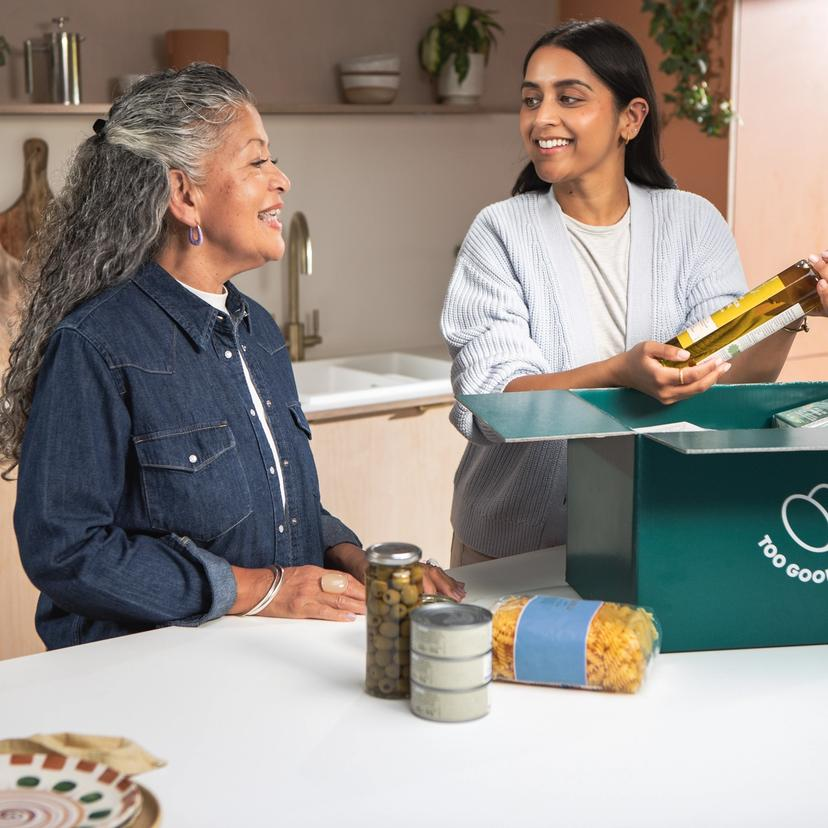
Too Good To Go is an app that is used to create “surprise bags” from cafés, restaurants, bakeries, and supermarkets. You pay a reduced price, then collect near closing time, to get a real bargain, and the shops also make some extra cash, on food they would otherwise have to bin ‘before midnight’.
Olio (another food waste app)
Olio has business pick-ups too, but mostly works for people who have leftover carrots in their veg box, unopened pasta or tins they won’t use (say if going on holiday or into hospital). It suits people who like small, local exchanges and can pick up nearby in containers or insulated bags for chilled food.
Olio also donates non-food items. Avoid sharing items that could be unsafe like old toys. The Lullaby Trust does not recommend donating (or buying) second-hand baby items like mattresses or car seats (and never use cot bumpers). Its site has more info on preventing crib death.
Food waste is illegal in France

Here’s a bit of a political rant! Why in England do we still have so much food waste, yet in France, it’s been illegal (for over 10 years) to throw away edible food? The French laws push retailers to donate unsold items to charities rather than send them to the bin.
Back in England, the government has still (10 years after the ruling in France) not banned supermarkets from throwing away edible food, at a time when so many people go hungry. Despite a paltry pledge to ‘halve food waste by 2030’, despite throwing out around 100,000 tons of edible food each year.
If like in France, supermarkets faced hefty fines for throwing away edible food, they would stop. So why does the government not get its act together, and bring in similar laws immediately?
All that has happened is a law that means all councils in England, must now provide weekly food waste bins, to increase recycling rates. And that’s obviously not working.
Why ban food waste in supermarkets?
It is true that most food waste in England is caused by households throwing out food (we have heaps of posts on this site on how to avoid that – just use our search box!)
But major supermarkets are also in hock, by not using their vast profits to come up with solutions like Karma fridges (where food about to go out-of-date could be sold at vending machines at huge discounts). Or just donating it to local charities that feed hungry people.
Supermarkets are out to make vast profits, they don’t care about the community. They also in recent years have hiked up prices on everyday goods (like apples and rice) but kept prices of luxury goods (like champagne) the same.
Food waste is not only appalling (there is enough food thrown out each year to feed every hungry person on earth). But when it goes on landfills, it emits methane gas, which is contributing to climate change.
And it also insults farmers – who spend months growing food, that is then simply thrown away, just because it’s the wrong shape, size or colour.
Just Meals (affordable meals from food waste)
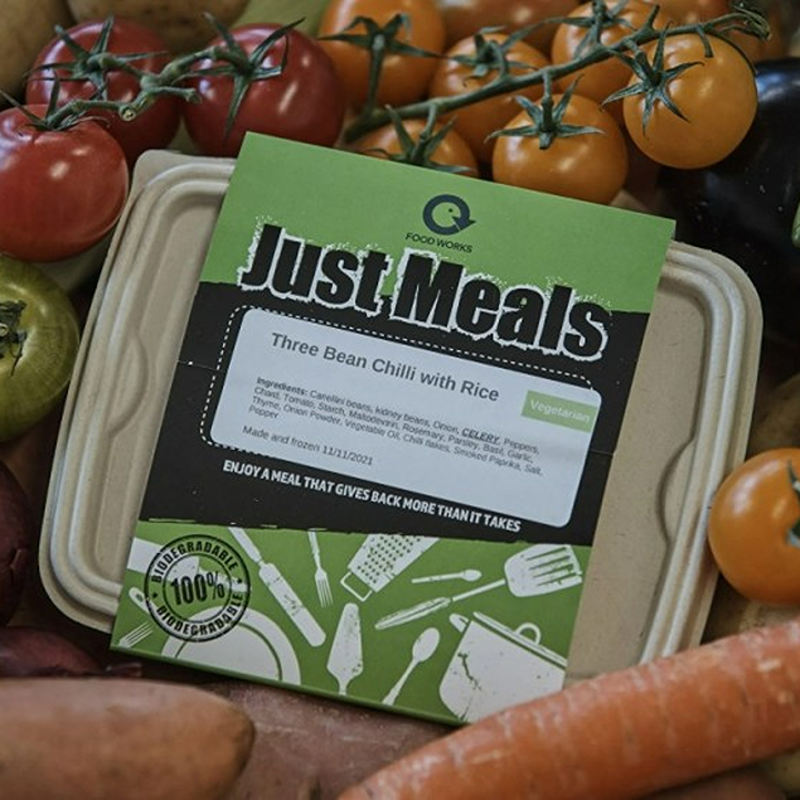
In Sheffield, Just Meals are created by Food Works using high-quality surplus food and sold on a pay-what-you-can basis (starting from £1) to ensure everyone has access to nutritious food. To cater to everyone, Food Works offers a variety of options for all dietary requirements, including vegan meals which are easily identified by an orange sticker.
You can pick up Just Meals directly from Food Works cafes and their warehouse, or find them at various local collection points across the city – a system designed to reduce costs and minimise road traffic.
There are many other ways to eat well on a budget using surplus food. Many communities benefit from surplus shops, food waste cafes, or community fridges where people share what they don’t need. These initiatives provide a vital lifeline for those on a tight budget while keeping perfectly edible food out of the bin.
Pay-what-you-can meals
Many social enterprises across Engalnd now offer ‘pay-what-you-can models’. This means that people with a bit more money can pay more, and this helps to fund those who can’t afford to pay as much.
The General Store (York) is one example. Different to a food bank, people just arrive twice a week to fill a bag with a suggested donation of £1, to find food that would otherwise go to landfill.
In the UK alone, around 9.5 millon tonnes of food is wasted each year, yet so many people are struggling to eat. Bring your bag, and take as much as you want!
Even LIDL now offers ‘too good to waste’ fresh produce boxes early mornings, with 5kg of slightly imperfect fruits and veggies at under £2. However, these are not pay-as-you-want, these boxes don’t make profit, with any surplus going to food charities. Why can’t the other big supermarkets do the same?
Fruits of the Forage (preserves from food waste)
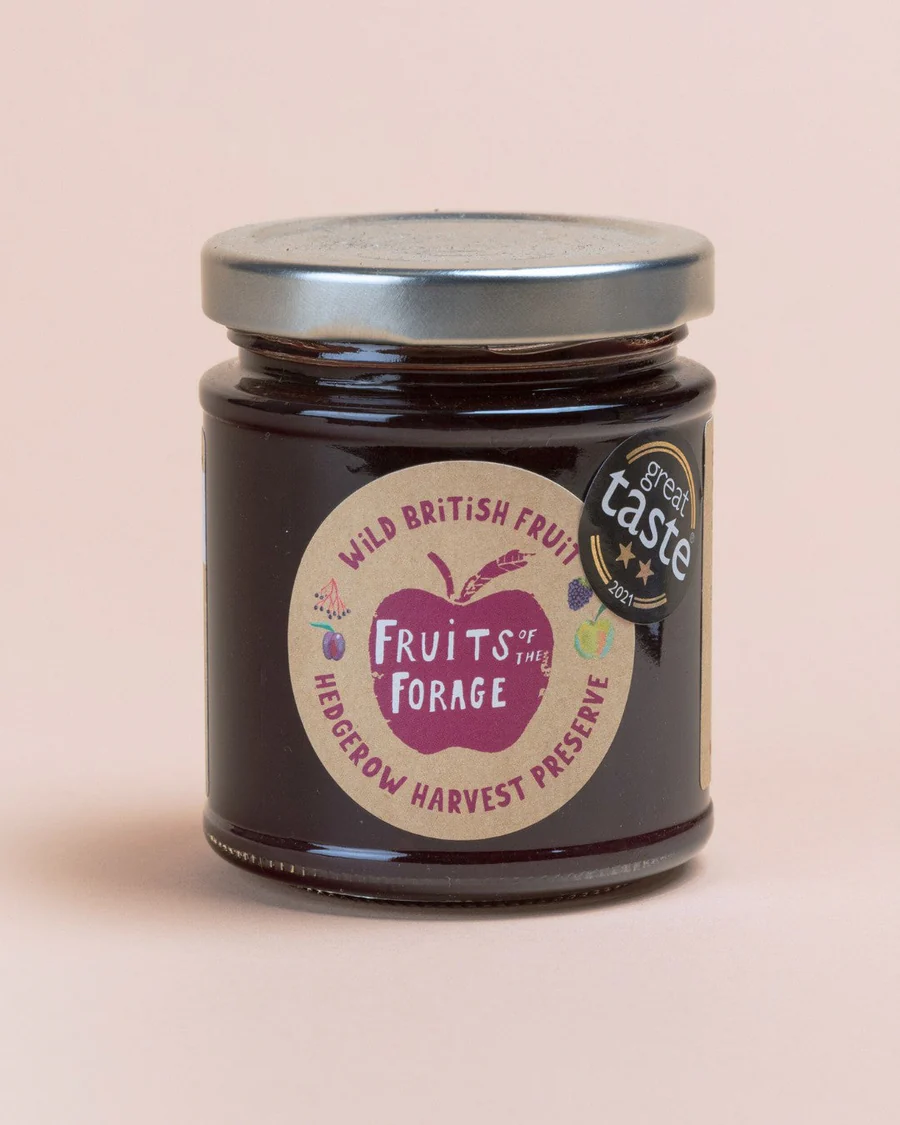
Most towns have shops where you can buy artisan chutney, jam and marmalade, made by locals who know how to cook with real ingredients. You can make your own, but most people don’t (it’s also quite complicated, as you have boil the jars or sterilise them in the dishwasher). Safer and easier to just buy from others!
Fruits of the Forage (Cheshire) makes lots of good preserves, all made from food waste, that would otherwise go to landfill. The seasonal ingredients are taken from people’s gardens (with permission!), hedgerows or farmers’ fields, where they would otherwise rot.
Choose seedless preserves for children, swallowing difficulties or teeth problems. Check medication before consuming grapefruit or rhubarb.
Chutney is very popular in England, though it’s actually from India (the word ‘chaatna’ means ‘to lick’ in Hindi – hence mango chutney. Mostly made with apples, onions and vinegar, it’s good with a vegan cheese sandwich or in a Ploughman’s lunch.
Piccalilli is also good with Ploughman’s, made with cauliflower, runner beans, garlic and mustard powder.
This family firm has also planted 2000 native trees, for the benefit of local wildlife. The range includes:
- Damson and Sloe Chutney (hedgerow fruits, good with vegan cheese).
- Heritage Pear Chutney (wild apples and heritage cooking pears)
- Cider and Onion Chutney (made with Herefordshire cider, sweet onions and Bramley apples)
- Quince Preserve (tastes like apple/pear combined, good with vegan cheese on toast)
- Dandelion Flower Syrup (vegan honey alternative, good for dressings and baking)
Most towns have shops where you can buy artisan chutney, jam and marmalade, made by locals who know how to cook with real ingredients. You can make your own, but most people don’t (it’s also quite complicated, as you have boil the jars or sterilise them in the dishwasher). Safer and easier to just buy from others!
Artisan jams and marmalades
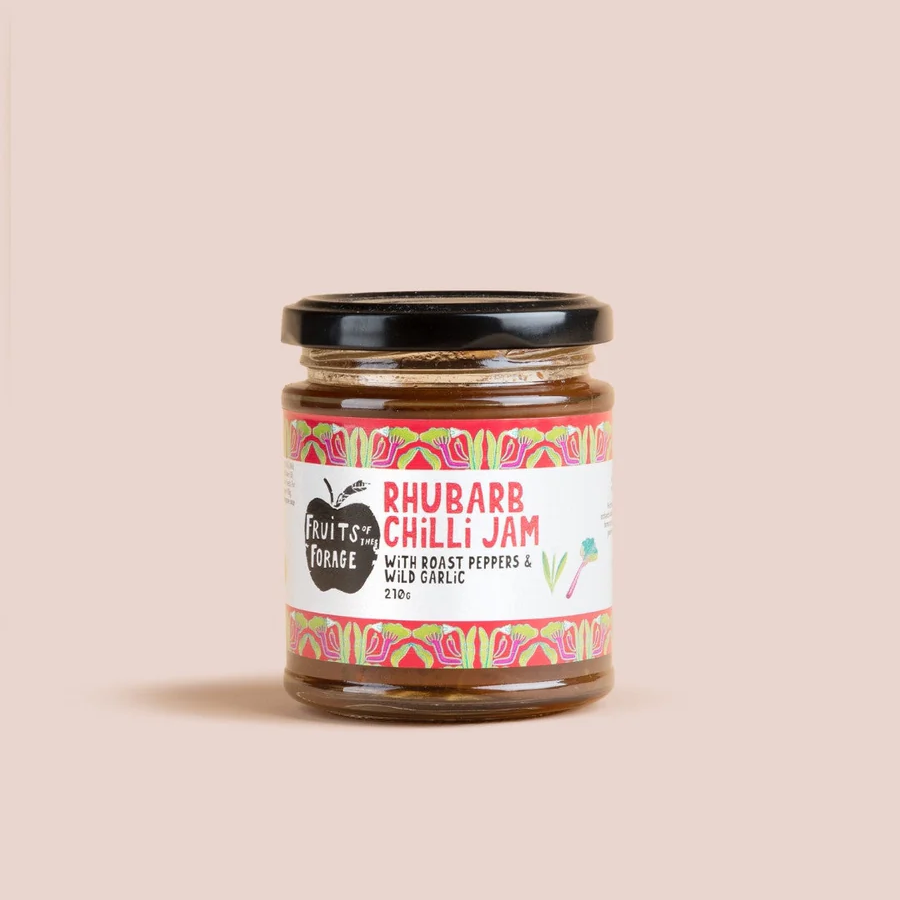
The range is extensive. A few of note are:
- Yellow Egg Plum Jam (made with wild plums from Vale of Evesham)
- Rhubarb Chilli Jam (with cooking apples and foraged wild garlic)
- Victoria Plum Jam (a hint of caramel sweetness)
- Hedgerow Harvest Jam (damson, plum, apple, elderberry, blackberry)
A wise bear always keeps a marmalade sandwich in his hat, in case of emergency. Paddington Bear
Syrups, cordial and liqueurs
- Winter Warmer Cordial (a no-alcohol mulled wine with damson, plus and apple). Good also hot with a dram of brandy, or to spice chilled sparkling wine)
- Raspberry and Sweet Cecily Liqueur (raspberries and mint, with Peak District Sweet Cecily)
- Damson Brown Sauce (ideal with chips or a vegan BLT)
The wonky food co (relishes from food waste)
The Wonky Food Co makes a small range of delicious relishes, all made from wonky fruits and vegetables, that are discarded by supermarkets and sometimes farmers, and would otherwise end up on landfills.
20 years ago, the founder’s summer job on a New Zealand fruit farm, was to walk under kiwi fruit vines, and throw ‘misshapen fruits’ on the ground to rot. He never forgot this food waste issue, and now makes three relishes:
- Chilli Tomato (nice with vegan cheese or add to pasta, or use as a marinade)
- Zesty Lime (nice to add to curry recipes)
- Tangy Onion (for vegan gravy and stew recipes)