Paws on the Street: Help Dogs of Homeless People

England has around 380,000 homeless people (including rough sleepers, sofa-surfers and people living in bed-and-breakfasts). And a good percentage of them have dogs (numbers are unclear, but this is between 10,000 to 90,000 dogs). As most hostels are not dog-friendly, this means many people stay on the streets, as they don’t leave their dogs behind.
Homeless people can claim benefits, giving the address of a family member/friend, hostel or job centre. This helps to pay for food (and pet food), interview clothes and rent deposits. People without bank accounts can use the government’s Payment Exception Service to collect benefits from a local post office or PayPoint outlet.
If you see someone sleeping rough, send a report to StreetLink, whose outreach teams visit rough sleepers at night, to alert them of support to find benefits and accommodation (if the person is under 18, call 999).
Lets with Pets (run by Dogs Trust) offers advice for tenants (including referencing, higher deposits and offering end-of-tenancy deep-clean) plus a free Good Practice Handbook for Landlords.
Around 10 to 25% of homeless people keep dogs as companion animals. And pets can be at risk, if guardians have to visit hospital or even die (most homeless people die in their 40s).
BillyChip (donate hot drinks and pet food)
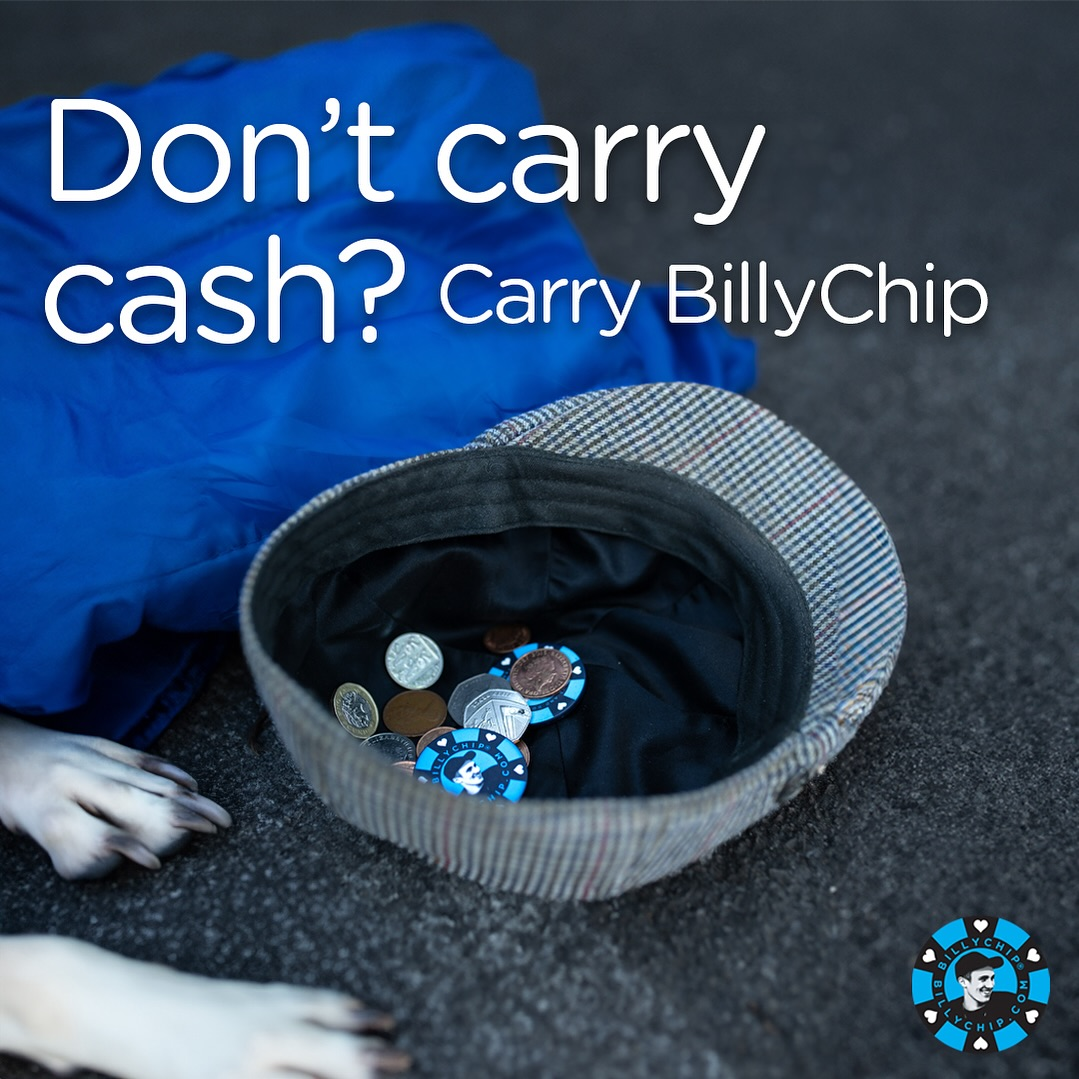
BillyChip is a safe secure ‘currency’ that can be bought from participating shops, to give to homeless people to pay for a hot drink or meal, or buy pet food. This enables people to help, while following council advice not to give cash (and also reduces robbery risk).
The idea was set up in memory of a young man (who died in a road accident) who volunteered to help homeless people. The scheme is free (shops are just charged for chips sold) and the welcome pack includes 25 Billy Chips, window decals and marketing materials.
Pubs and bars are not allowed to join, so chips can’t be used to buy alcohol.
Pet food banks (for anyone in need)
England has many animal food banks (including regional ones, so do look up your local area too). These work like food banks but for pets, run by dedicated volunteers and those who donate food for all species.
- Animal Food Bank has over 120 nationwide volunteers, and businesses that provide pet food donation bins, for people to drop off unopened and in-date pet food.
- Blue Cross
- Dog’s Trust
- RSPCA.
- In Wales, Pet Food Bank service provides pet food to human food banks. This charity needs new premises due to rising rents, so please get in touch if you can help or donate towards rental costs.
More help for homeless people with dogs
- Dog’s Trust Hope Project offers free vet care with participating vets (and can give info on dog-friendly hostels (and help those at risk of eviction).
- Dogs on the Streets (London and Manchester) offers free vet clinics, food and mobile vets.
- StreetVet offers health checks, vaccinations, urgent care and foster care for hospital stays.
- Street Paws runs outreach sessions, worming/flea treatment, microchipping and first aid training for hostels.
- Mayhew (London) offers preventative vet care (neutering, vaccinations, flea/worming treatments), food and leads/coats to keep dogs safe and warm.
Help dogs of homeless people abroad
- Pets of the Homeless (US) offers free food and vet care (along with spay/neuter surgery, nail trimming and ear cleaning). And free crates for shelters that don’t usually allow pets.
- Project Street Vet (US) provides free free vet care (exams, vaccines, flea meds and other supplies) and end-of-life services.
- Vet Outreach and City of Toronto (Canada)
- Pets in the Park and Pets of the Homeless (Australia)
- WE Care Worldwide (Sri Lanka) helps street dogs with injuries and illness (buy cotton t-shirts to support them).
- In Delhi, locals have created a waterproof dog bed for street dogs that combines recycled dog food bags, with jute cover & reflective piping.
- Pets of the Homeless (Australia) offers help with food, vet care and shelter.
In North America, Give Tokens is a similar scheme, good inspiration as it also lets people use the tokens to buy night accommodation, clothing, survival gear, laundry services and even bicycles (as well as food from local street carts).
Greater Change is a super idea. Its a way to ‘give smarter’. Instead of just giving money to buy a Gregg’s pasty, your donations are used to fund long-term investment in a homeless person.
This has huge cost savings to government too. Because if it helps someone get off the streets and into work and self-financed accommodation, that’s public funds that can be used for other things.
For example, the funds may pay for:
- Deposit for a flat
- Washing machines and sofas
- ID cards and training to get a job
When We Walk By is Kevin’s book, which is being received with great reviews everywhere. It’s a community tool book on ‘how to help in 60 seconds’, with ideas for taking action and making real impact with what Kevin calls ‘unhoused neighbours’.
Kevin also founded Miracle Messages, a wonderful organisation that we could emulate here. Basically, it has three premises:
- A family reunification service so that homeless people can reunite (if they want) with estranged family members, which often is the answer in many cases. It has helped to return many homeless people back to their loving families, often after years of nobody being able to find them.
- A phone buddy program, as ‘nobody should go through homelessness alone’.
- Basic income (this campaigns for the benefits of basic income, and meanwhile has a donation page for people to give online – this money is then used to help find stable homes and training for homeless people)
The Roofless Truth focuses on how to design towns that help to prevent homelessness, drawing on ground-breaking research and projects from Canada to Switzerland. Includes tips on (avoiding) hostile architecture.
How to use Evidence to End Homelessness again uses evidence to show what works with case studies and policy tools (includes a contribution from Greater Manchester mayor Andy Burnham).
Sleeping inventions for homeless people
Rough sleepers find it difficult to drag around heavy coats and blankets, especially when wet. Sleep Pod is a £30 rain/wind-resistant ‘sleeping tent’ that is lightweight and easy to carry.
Shelterbag is a high performance survival bag, with a large tented hood to provide full protection from the elements. It is waterproof, heavily insulated, and has a built-in mattress. It is also light, and is carried either over one shoulder or as a 2-strap backpack. And crucially it sells for just £100, an ideal purchase for small homeless charities. Organisations can repurpose black canvas graphics, to be made into bags.
ShowerBox (London, Birmingham and Barking) offers free mobile showers to prevent infections and skin issues, and enhance self-care for better chance of finding a job and stable home. Users also get hot drinks, fresh undies and free use of hair clippers.
Homeless people also need free public toilets (they can be arrested for indecency if urinating or removing clothes in public places). If there are no hostels, what are they supposed to do?
Rome, Miami and San Francisco all have dedicated free toilets for homeless people, why are we so far behind? It’s also safer for everyone, as addicts have safe disposal bins, for used needles.