Saving the Arctic Circle’s Untamed Wilderness
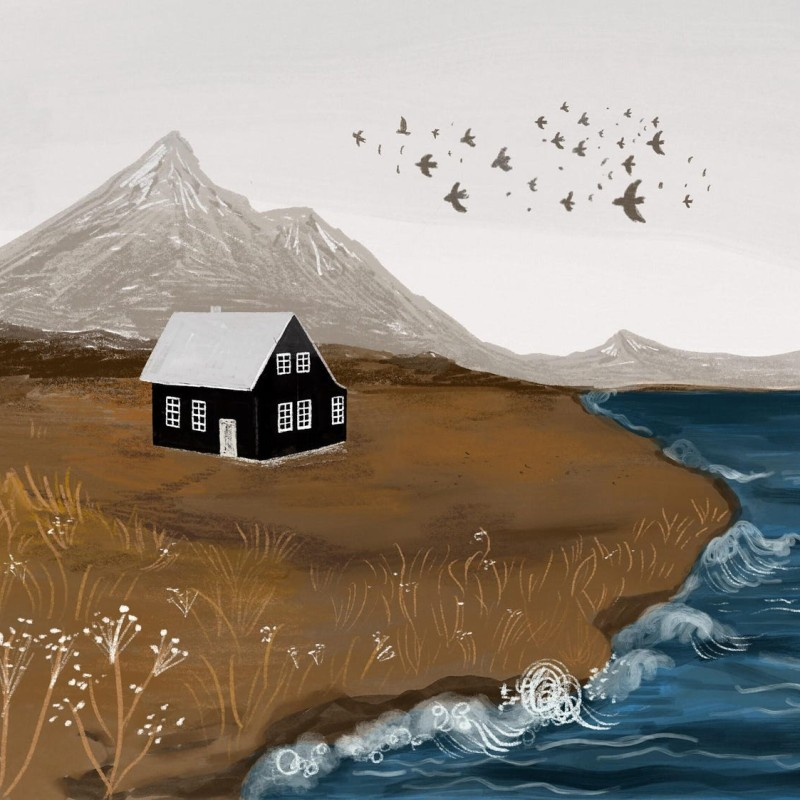
Icelandic cottage, Charis Raine
The Arctic Circle is made up of several countries, in the northern most part of the world. Home to not just snow, but many wild birds and other creatures like bears (including polar bears), Arctic foxes, blue whales and orcas (killer whales).
The Arctic Circle covers parts of Canada, Greenland, Iceland, Russia and parts of Scandinavia. Alaska (owned by the USA) juts into the Arctic Circle.
Although not in England, what we do and how we live can affect this beautiful area, protecting it from climate change. And actually it’s not that far away (Scotland’s Shetland Isles are just 400 miles from the Arctic Circle).
Do humans live in the Arctic Circle?
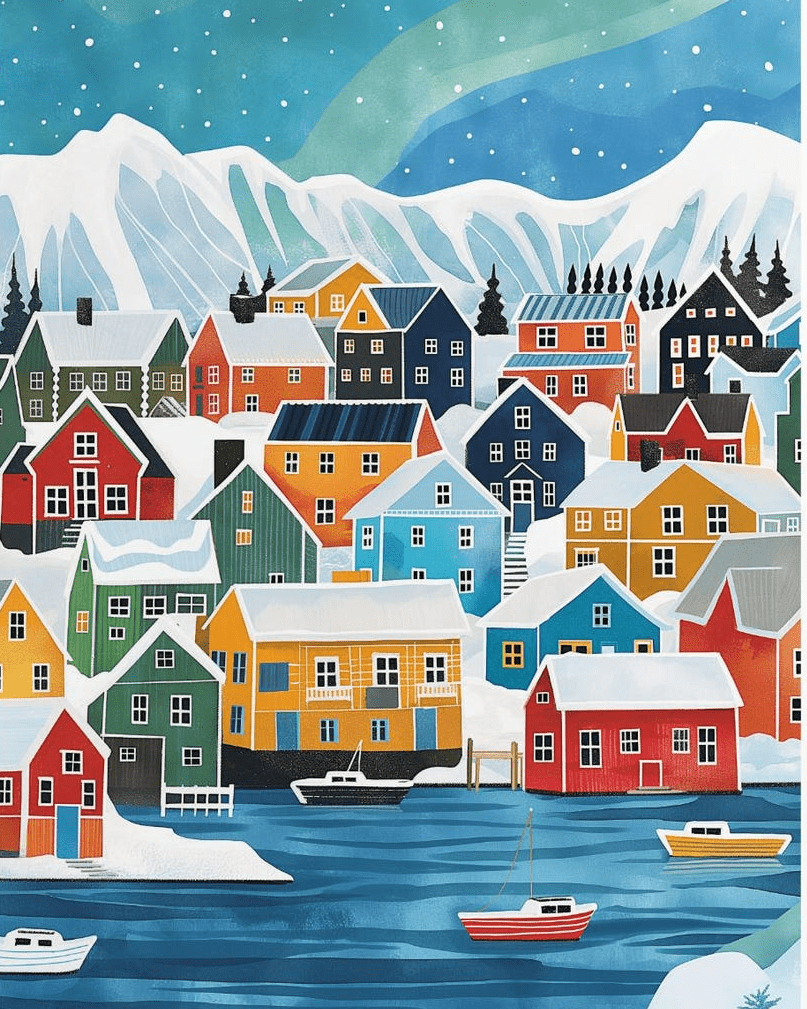
Yes, hundreds of thousands of people live here. It’s cold, but not as cold as Antarctica! Although the Russian town of Oymakon is the world’s coldest town (some say a couple of towns in Siberia are even colder, and many are polluted due to mining run-off.
The Norwegian city of Tromsø is known for having the world’s best views of the northern lights, and nearby Kvaløya Island is known for its wild swimming reindeer!
Some people in these parts have developed ‘reindeer vision’ to cope with dark days and vitamin D deficiency. One side-effect of this is babbling nonsense (sounds like some of our MPs!)
Nearly all local people suffer mild frostbite on exposed facial areas (beards are popular!) Some people even ‘run to warm bus shelters’ in bad weather, a few have even frozen to death, when stranded in cars with flat batteries. Others die of breathing problems due to icy air, and depression is common, due to lack of daylight. For all these reasons, healthcare is nearly always free.
What are concerns in the Arctic Circle?
The Arctic Circle has melting ice due to climate change (that’s from climate scientists, not Trump, JD Vance, Kemi Badenoch or Nigel Farage, as they don’t have climate science degrees).
The Arctic Ocean (the world’s smallest) is also home to home to 10% of the world’s fresh water including Greenland’s ice sheet, which is melting due to climate change. This is causing seas to rise and current estimates of a 7.3 metre rise would be catastrophic to all life forms on earth.
Warming temperatures means that polar bears have to swim in warmer waters to hunt seals, for them and their cubs. Nima Sarikhani’s photo of a polar bear sleeping on a tiny iceberg (carving a bed with his paws) has highlighted concerns. One polar bear recently died from bird flu, after feeding on infected birds.
Greenpeace campaigners are concerned on Trump’s election, on how drilling for oil will affect wildlife, as The Arctic Circle contains 160 billion barrels and a third of the world’s natural gas. The Greenpeace Nordic Case is an ongoing battle between six young activists, trying to persuade the Norwegian government to not hand out licenses to drill for more oil.
The Arctic is a harshly inhospitable place, but the conditions there are precisely what polar bears require to survive – and thrive. ‘Harsh’ to us is ‘home’ for them. Take away the ice and snow, increase the temperature by even a little, and the realm that makes their lives possible, literally melts away. Sylvia Earle
How can we help the Arctic Circle from far away?
It’s very simple. Use our buying power (or lack of it) to affect business and political policies:
- Live a simple sustainable life (in order to prevent climate change and pollution).
- Switch to clean energy. Ecotricity doesn’t make green energy from burning animal carcasses from abattoirs, which some companies do.
- Choose recycled/reclaimed wood and paper products, to help protect forest habitats. One really easy way to protect Boreal forests from deforestation is to switch to zero waste bathroom tissue.
Can you see the Northern Lights in England?
The Northern Lights (Aurora Borealis) are an amazing natural spectacle, when coloured skies fill the sky. Common in Scandinavia, you usually only see them in England after severe storms. It’s easier to view them in places free from light pollution, as they are far easier to see in dark skies with no cloud cover, and you have to look north!
The colours are caused due to electrons hitting gaseous particles, as they enter earth’s atmosphere. Oxygen generates green lights (lower altitude) and red lights (higher altitude) while nitrogen causes blue and purple lights.
Recently in England, a rare event occurred, when people as far south as London and Kent saw incredible pink displays of the Northern Lights, which hardly ever happens.
Concerns over Blackpool Lighting Plans
Although astronomers are aware that the Blackpool lights bring in substantial tourism income, they are concerned over plans to create an artificial ‘aurora borealis’ (northern lights) by way of a 1KW laser to shine in the sky.
This would not just blight the night sky, but ruin views across the county (and also for Merseyside, Cumbria, North Wales and even Isle of Man).