The Best Southern Vegan Fried Chicken & Nuggets
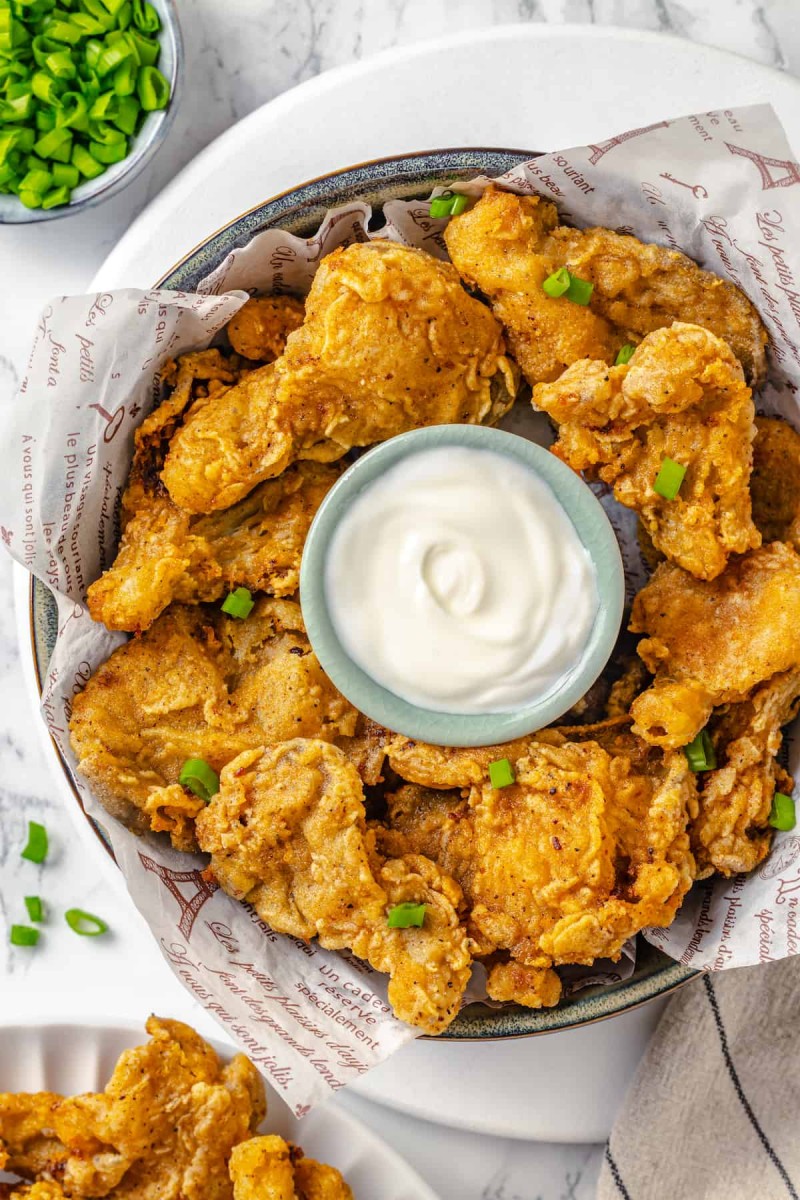
Fried chicken is sold worldwide in fast food outlets, but this is an animal welfare and environmental and health catastrophe. The good news is that it’s really easy to make your own, and even easier to find store-bought alternatives. All chicken-friendly and cholesterol-free!
KFC fries are (like Burger King fries) cooked in the same chicken fat as the chicken, so are not suitable for vegans. Apparently the burgers (unlike Burger King) are cooked on separate equipment.
Like Nando’s, KFC has recently ditched its commitment to better chicken welfare, which would have used slower-growing breeds (to avoid chickens suffering from pain in the legs) citing ‘lack of birds and higher environmental impact?’ Both chains say that slow-growing breeds ‘need more feed, land and water’ (yes, because that’s better welfare). Obviously the real reason is that it costs more, reducing profits.
Make your own vegan fried chicken
It’s safer to air-fry or bake (than use deep-fat fryers). All stores that sell electrical goods have to take back old ones by law, even if you don’t buy a new one. So take old deep-fat fryer there for recycling. And possibly buy a new safer air-fryer.
Read up on food safety for people and pets (don’t give vegan fried chicken to pets as it contains unsafe ingredients like onion, garlic, spices etc – raw or cooked chicken bones should never be fed to animal friends, due to choking hazards). Before recycling tins, rinse/remove lids (or pop ring-pulls over holes) then ‘pinch’ inner rims together, to stop wildlife getting trapped.
Although it’s good to compost food scraps, unless you have a food waste bin (turned into biogas), just bin allium scraps (onion, leeks, garlic, shallot, chives), citrus/tomato/rhubarb scraps and tea/coffee grounds. To avoid too much acid/caffeine affecting compost creatures.
Reasons to choose vegan fried chicken
- Zero cholesterol – real chicken actually has almost as much cholesterol as beef
- High in fibre – unlike real chicken, plant alternatives have gut-friendly fibre, which is also good for your heart. And keeps you fuller for longer.
- Antibiotic-free – factory-farmed chicken (from where nearly all fried chicken comes from) contains growth hormones
- Massive carbon reduction – plant-based chicken creates up to 90% fewer greenhouse gases than poultry farming, and far less water and land (so no deforestation)
- Chicken-friendly! This is the obvious one. Free-range chicken still kills birds, but factory-farmed chicken should be banned worldwide.
- Inclusive dining – you can make one bucket to please everyone at the table!
VFC ( the vegan alternative to KFC!)
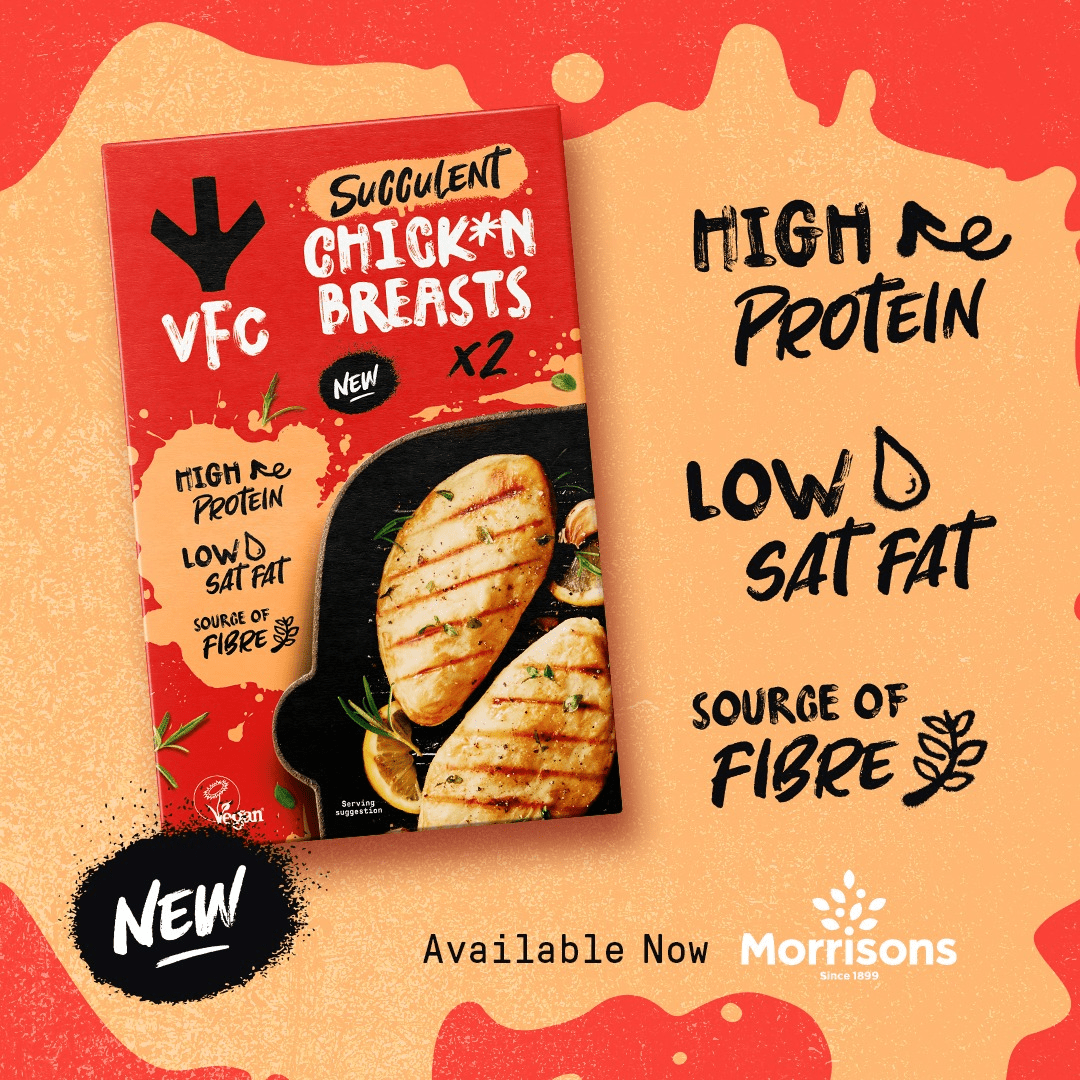
VFC is sold in all supermarkets (including budget ones like Lidl). It’s a simple mix of plant proteins that is easy to cook in the oven or air-fryer and very affordable.
The brand was co-founded by the co-founder of Veganuary, the world’s most successful plant-based marketing campaign. You can buy nuggets to chicken popcorn, and also burgers. Serve with homemade chips and some salad, and you wouldn’t know the difference.
If buying ready-made, recycle packaging at kerbside or supermarket bag bins.
The history of KFC
KFC is a global fast food chain with over 30,000 locations in 150 countries. It was founded on a ‘secret recipe’ of 11 herbs and spices by Colonel Sanders in 1930, and is the world’s second-largest restaurant chain (after McDonald’s).
He began by selling fried chicken at a roadside motel in Kentucky, after losing various jobs beforehand due to apparently to a bad temper. and insurance salesman, often losing them due to his temper.
The first franchise opened back in 1952 in Utah, and the first branch in England opened in Preston (Lancashire) in 1965. Today the company is owned by the same brand that owns Taco Bell and Pizza Hut.
KFC is of course known for its chicken drumsticks and sharing buckets, but also sells fries, burgers and has recently starting sell vegan burgers (which are basically Quorn filters in a bun with lettuce, mayo and their 11 spice/herb mix).
Avoid feeding pets leftover vegan chicken (contains unsafe herbs and onions) nor cooked real chicken (high in fat/salt and may contain cooked bones).
Heura vegan chicken nuggets
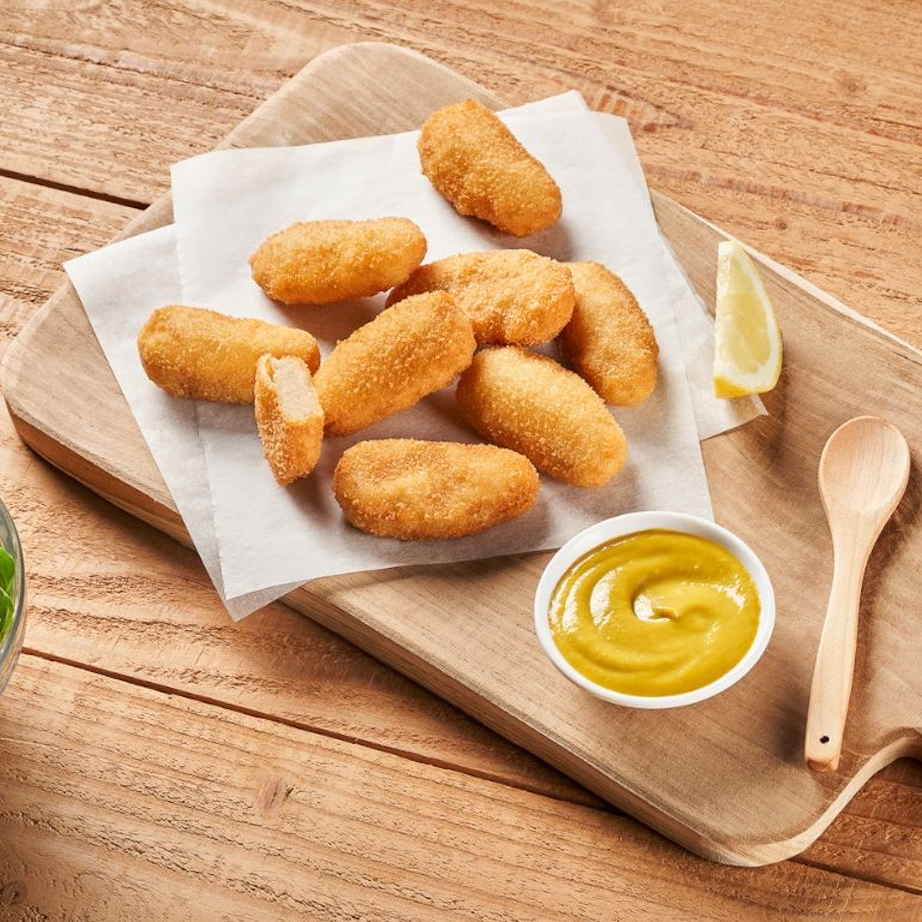
- Heura is a fresh young brand from Barcelona, offering chunks and nuggets in sustainable packaging.
- Moving Mountains Chicken (burgers and nuggets) is made from natural ingredients, and also sold for food service (hotels, restaurants etc).
- Meatless Farm crispy nuggets
- M & S Plant Kitchen nuggets
- Linda McCartney chicken-style dippers
- OMV (Asda) vegan chicken nuggets
- THIS isn’t chicken wings or thighs
The Herbivorous Butcher!
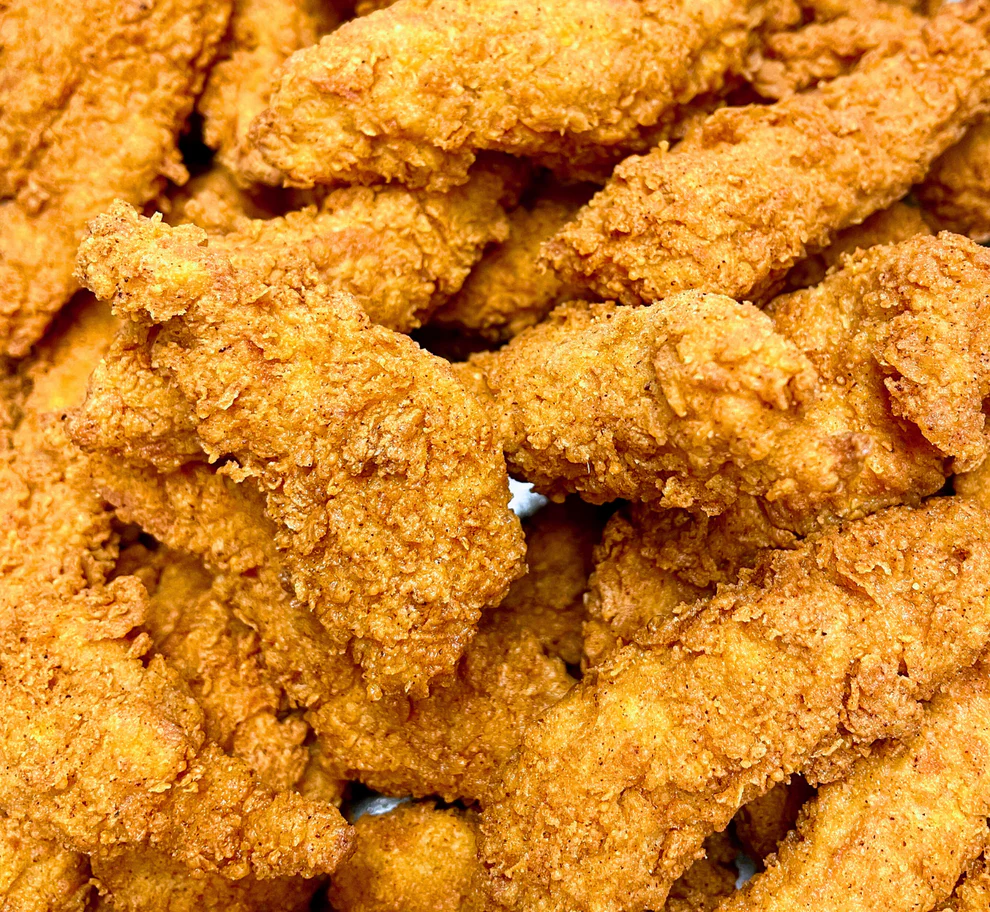
The Herbivorous Butcher (USA) offers vegan fried chicken, that can be cooked in the oven or air-fryer. And profits also help their own farm sanctuary!
Homemade plant-based ‘chicken nuggets’
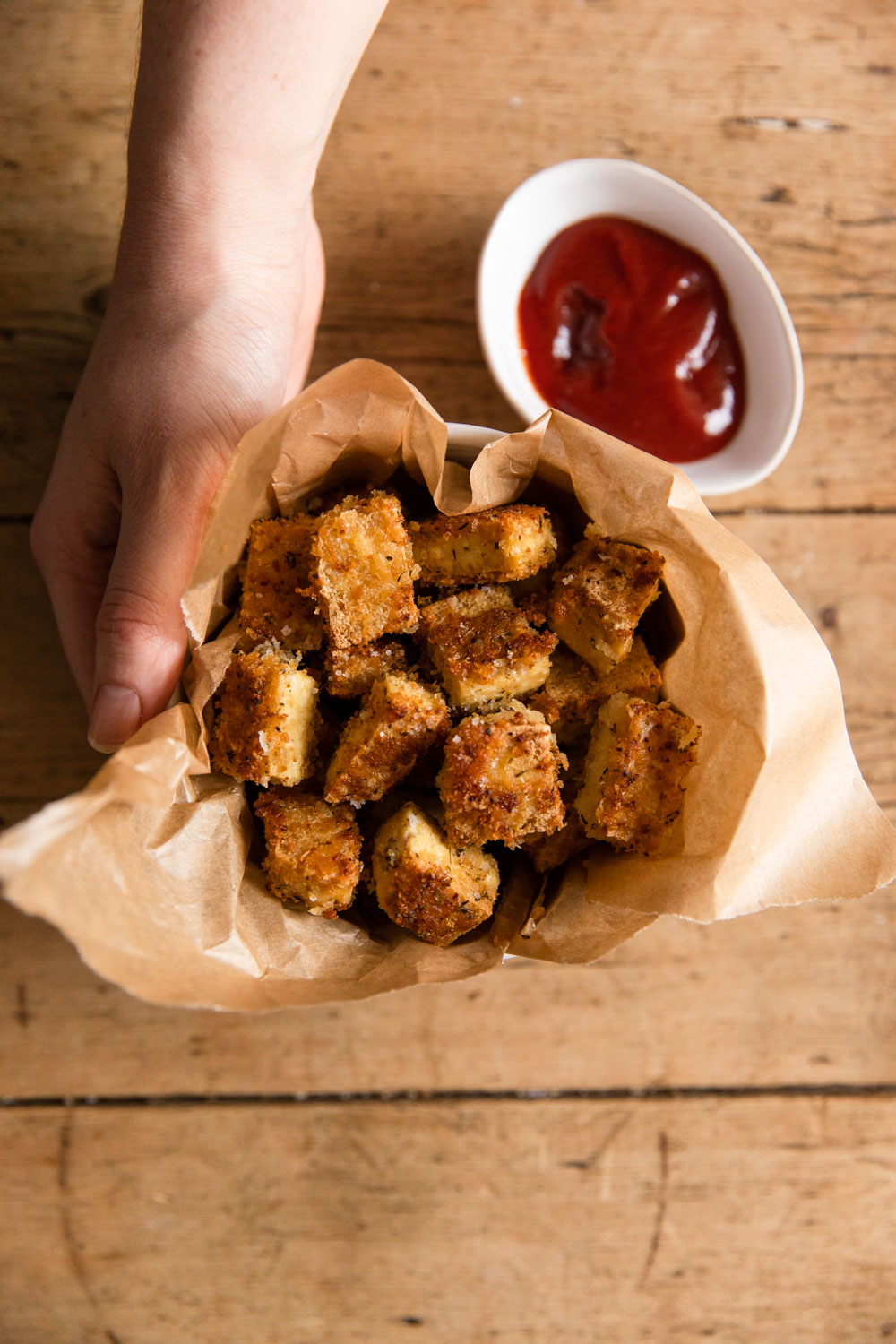
Tofu nuggets (Madeleine Olivia) cover tofu with a crunching coating seasoned with mustard, spices, herbs and cheesy-tasting nutritional yeast.
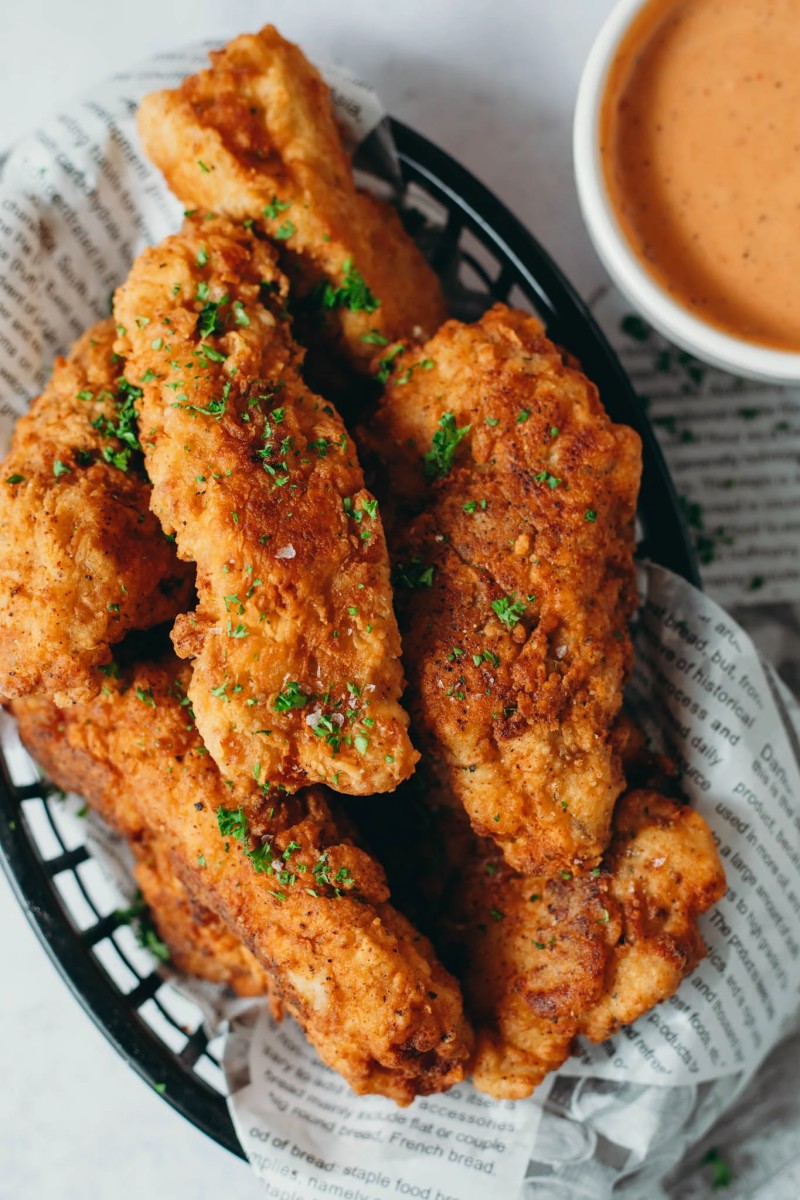
These seitan fingers (It’s Liv B) are quick and easy to make with vital wheat gluten and simple seasonings, served with a tasty sauce after being pan-fried.
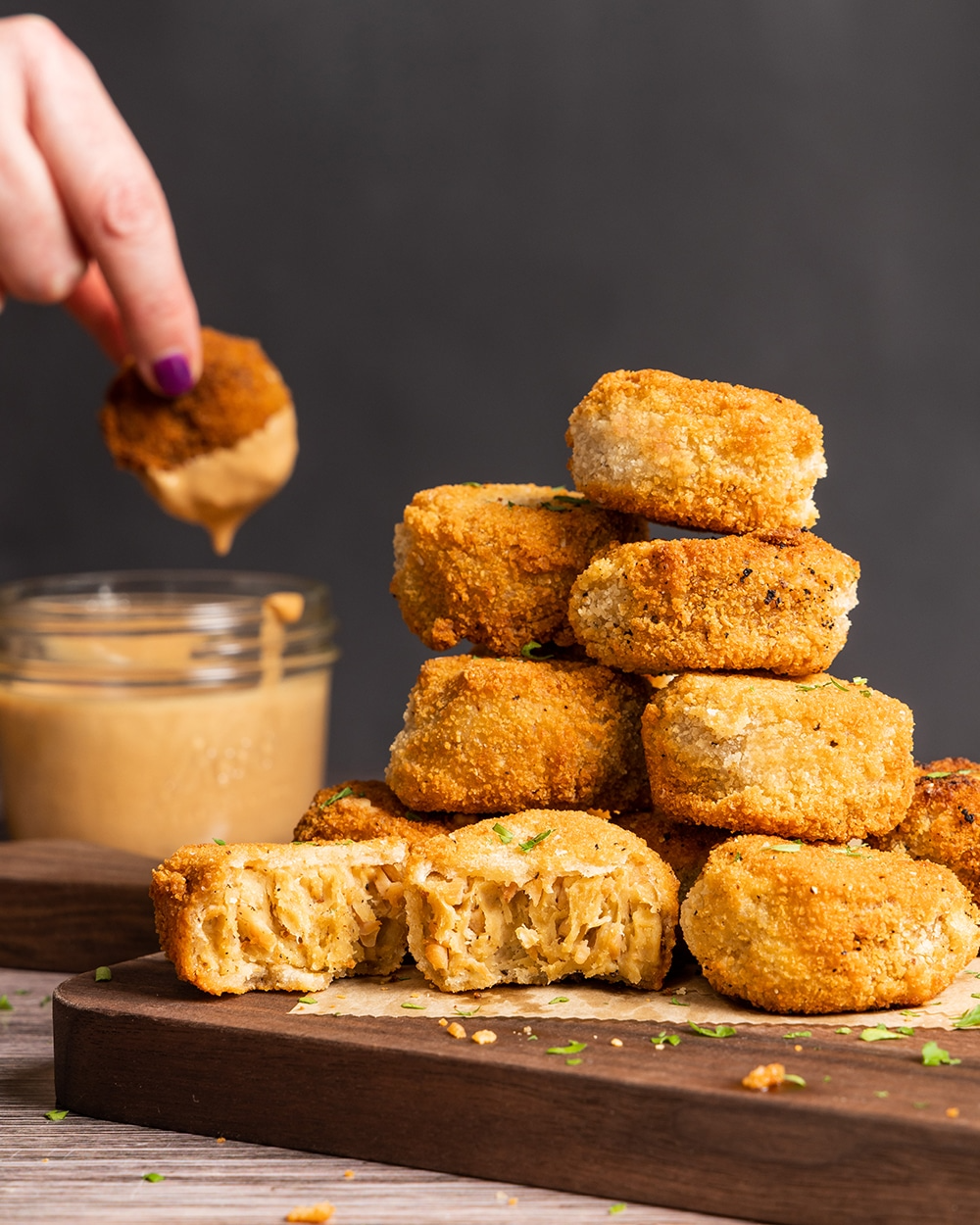
These vegan chicken nuggets (The Post Punk Kitchen) were created by Isa Chandra Moskowitz, one of the world’s best-selling vegan cookbook authors. This recipe is a bit more complicated, but ideal for ambitious chefs or restaurants who wish to serve up something similar to KFC.
The NHS picks up the cost of KFC
KFC is not health food. Fried chicken has high levels of sodium fat and calories, which can lead to heart disease, diabetes and obesity when consumed frequently (which it frequently is by fans). Most people who eat fast food regularly, tend to live on it. High levels of salt also contribute to high blood pressure and kidney disease.
The buns used are made from refined grains, and large portions (like sharing buckets) go way over recommended daily calorie allowances.
There is also a myth that chicken is low cholesterol. In fact, even with the skin removed, the difference in cholesterol levels from chicken and beef is minimal.
Nobody is berating anyone who enjoys a KFC meal. But en-masse (combined with lack of affordable good food and natural exercise spaces like green parks), this contributes not just to ill health, but to huge expenses for the NHS, at a time when its budget is limited.
Ironically, NHS staff are entitled to discounts at KFC, helping to fuel the very market that is causing them indirectly to be so over-worked.
Litter and packaging issues with KFC
And as with all the main fast food chains, the ‘greenwash’ is about only using paper straws, with a commitment to reducing plastic over time (when vegan fast food chains like London’s Unity Diner have been using only biodegradable and compostable packaging for years). And cashless tills, as bank notes contain plastic and animal fats.
Fast food joints also usually open late at night, which results in litter being strewn everywhere by the next morning (your council tax being used to pick it up). This litter can also harm wildlife and birds, before council workers get to it. No matter who dropped it on public land, it’s your council’s responsibility to clear it. So report it to Fix My Street (complaints with photos are made public).
If litter is on private land, councils can serve litter abatement orders (non-compliance results in a fine or invoice for councils to clean it up).
A worrying trend in town planning
This is really really concerning. A recent trend has developed, and it’s not clear how this is happening. Local councils are finally ‘growing a pair’ in refusing planning permission to new fast food outlets, due to concern over health (especially of children with planning applications near schools), litter and local opposition.
But this worrying trend is now taking flight. It happened recently in the Norfolk town of Sheringham (with an application from Domino’s Pizza). And has now happened again in Ormskirk (Lancashire) with a KFC application, with a planning inspectorate (based in Bristol) overturning the decision.
Basically, the council refused both applications. But then this was overridden by government. The councils don’t want it, the local residents don’t want it – so the national government decide to let them open anyway.