Good for the Oceans, Great for You: Vegan Salmon
Plant-based salmon is now all the rage, due to concerns of over-fishing and by-catch, but also because Atlantic wild salmon is now endangered, leading to awful fish farm alternatives. Plant-based alternatives are not just kinder and free from mercury, but a fraction of the price.
Keep vegan salmon away from pets, due to salt and other unsafe ingredients (raw salmon is also toxic to pets, due to a fatal parasite if not treated).
For tins, rinse/remove lids (or pop ring-pulls over holes) then step on the can to ‘pinch’ inner rims together, to stop wildlife getting trapped.
For recipes, unless you have a food waste bin (turned into biogas), just bin allium scraps (onion, leeks, garlic, shallot, chives), as acids could harm compost creatures.
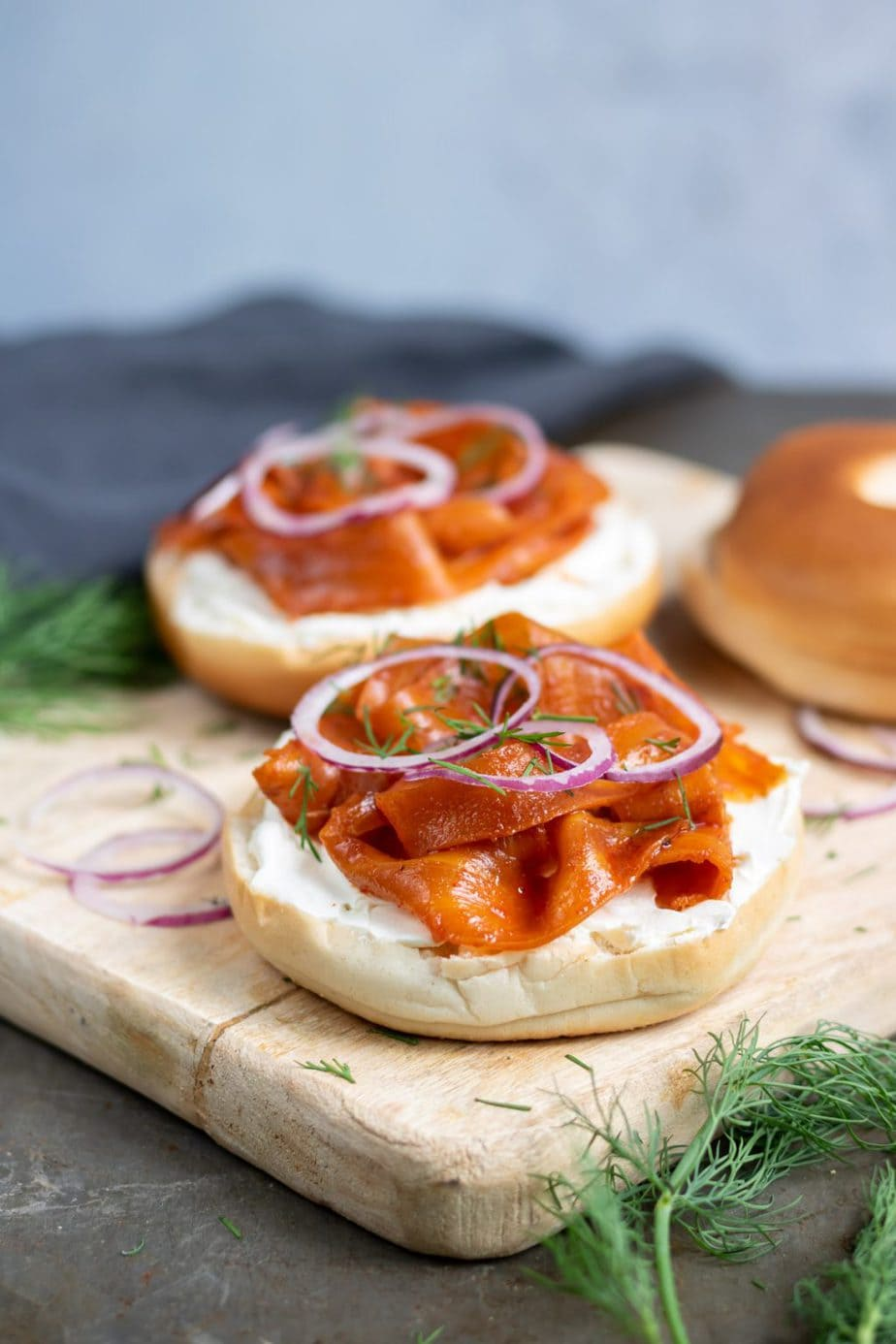
Vegan Smoked Salmon (Veggie Desserts) is made with marinated strips of baked carrot, ideal on a bagel with vegan cream cheese.
Vivera plant-based salmon fillets
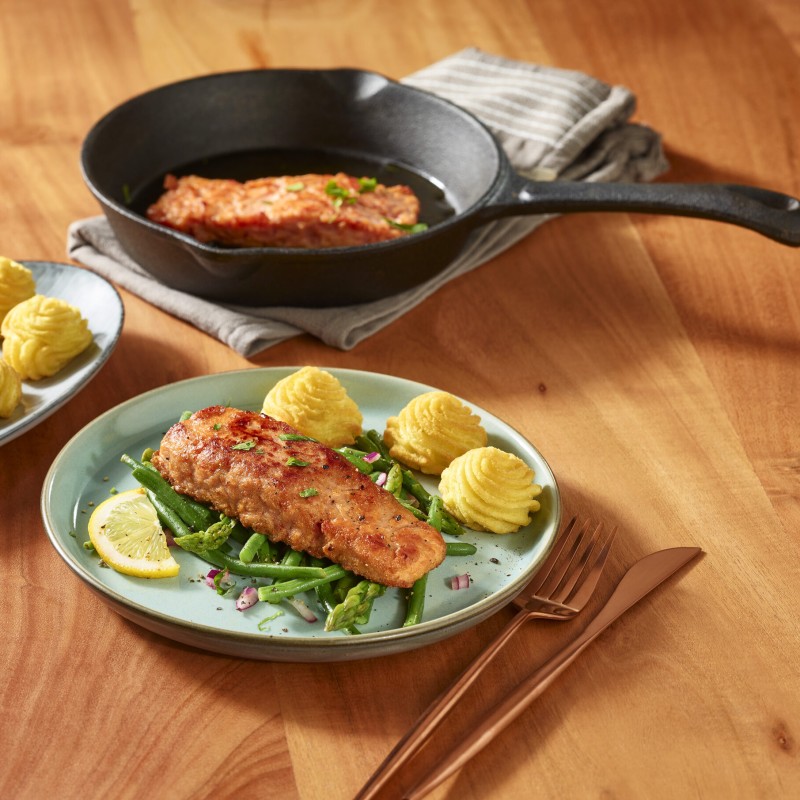
Vivera plant-based salmon fillet are made from quality plant-based ingredients with no palm oil. Just sear them for a few minutes in a pan (or heat in the oven or air-fryer). Packed with protein, fibre and omega 3 fatty acids. You can rinse and recycle the tray, for now you have to bin the top plastic film.
Oshi offers vegan salmon fillets, with 18g of protein per serving, omega 3 fatty acids and a flaky texture.
Issues with Scottish farmed salmon
Atlantic wild salmon is now on the Red List, following a massive drop in numbers (it’s now illegal for Scottish fishermen to not follow ‘catch and release policies’. Yet this still mostly kills fish, that end up layer dying in the sea due to hook wounds, suffocation, loss of protective coating that shields from disease and lactic acid build-up in muscles.
So instead Scotland is using fish farms that pack millions of salmon into tight spaces, which causes parasites like sea lice (fish are eaten alive), caught by passing wild juvenile salmon. Smaller wrasse and lumpsuckers are bred to pick lice off salmon (around 7 million of them have also died).
From 2023 to 2025, over 35 million salmon on Scottish farms died prematurely. Due to disease and hydrogen sulphide gas (also lethal to nearby crabs and lobsters).
Farmed salmon fish are in ‘open net systems’, which means faeces, uneaten food pellets and antibiotics drop into the seabed (a single tonne of farmed salmon produces as much waste as 80 humans).
Salmon are natural carnivores, so industrial fleets then catch millions of wild small fish (like anchovies and sardines) in low-income countries in the Global South to grind into pellets to feed them. Experts say these wild fish are mostly fit for direct human consumption, and argue that this is ‘stealing from countries with little food’.