Wild Guardians: The Women’s Conservation Movement
These days we are often asked to think about ‘wild women’ as people in pin-striped suits in a political dispatch box. Or feistyloud women shouting out as loudly as men. But in fact, some of the world’s most heroic women are those who gently and quietly saving the planet and all its beautiful creatures. Let’s meet a few wild women guardians!
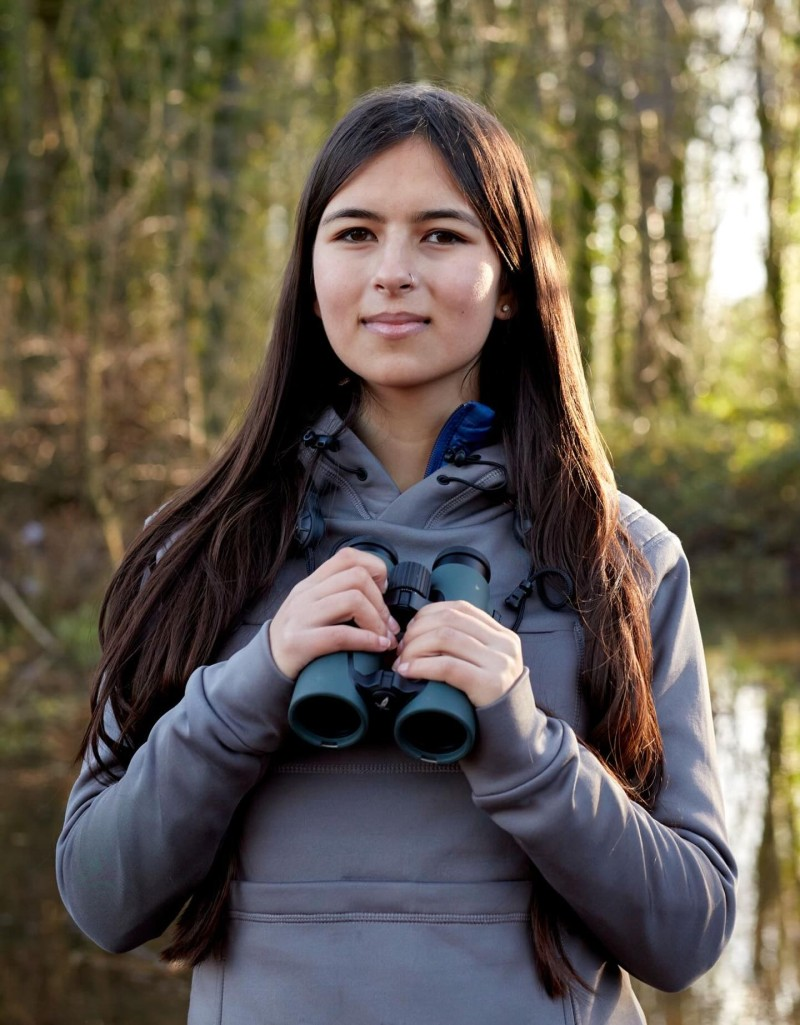
Dr Mya-Rose Craig (a hopeful voice for feathered friends!)
Dr Mya-Rose Craig is otherwise known as ‘Birdgirl’, a hopeful bright voice for the future of our feathered friends! She is now one of the world’s most prominent ornithologist and environmentalists.
But also as a British Bangladeshi, a campaigner for diversity (she founded Black2Nature that organises free days out and summer camps for ethnic minorities, when she was just 12!)
Raised by a family who travelled widely, she has become the youngest person on earth to see half the birds in the world (including a Harpy Eagle in the Brazilian Amazon when she was just 17). At just nine days old, she was on the Scilly Isles observing a European visiting Lesser Kestrel!
An active campaigner against palm oil, GMO, oil and plastic pollution, she also campaigns against climate change and for animal welfare. She’s a particular fan of Bolivian Ruth Alipaz who ran away from her indigeneous tribe to take a tree, then returned to persuade her community to refuse a logging contract, and instead build a lodge for eco-tourism!
She is also not afraid to call out some racists in the early USA conservation movement, who protected trees, but evicted indigeneous people from their lands, leaving them with no income.
Read Birdlife (Mya’s first book!)
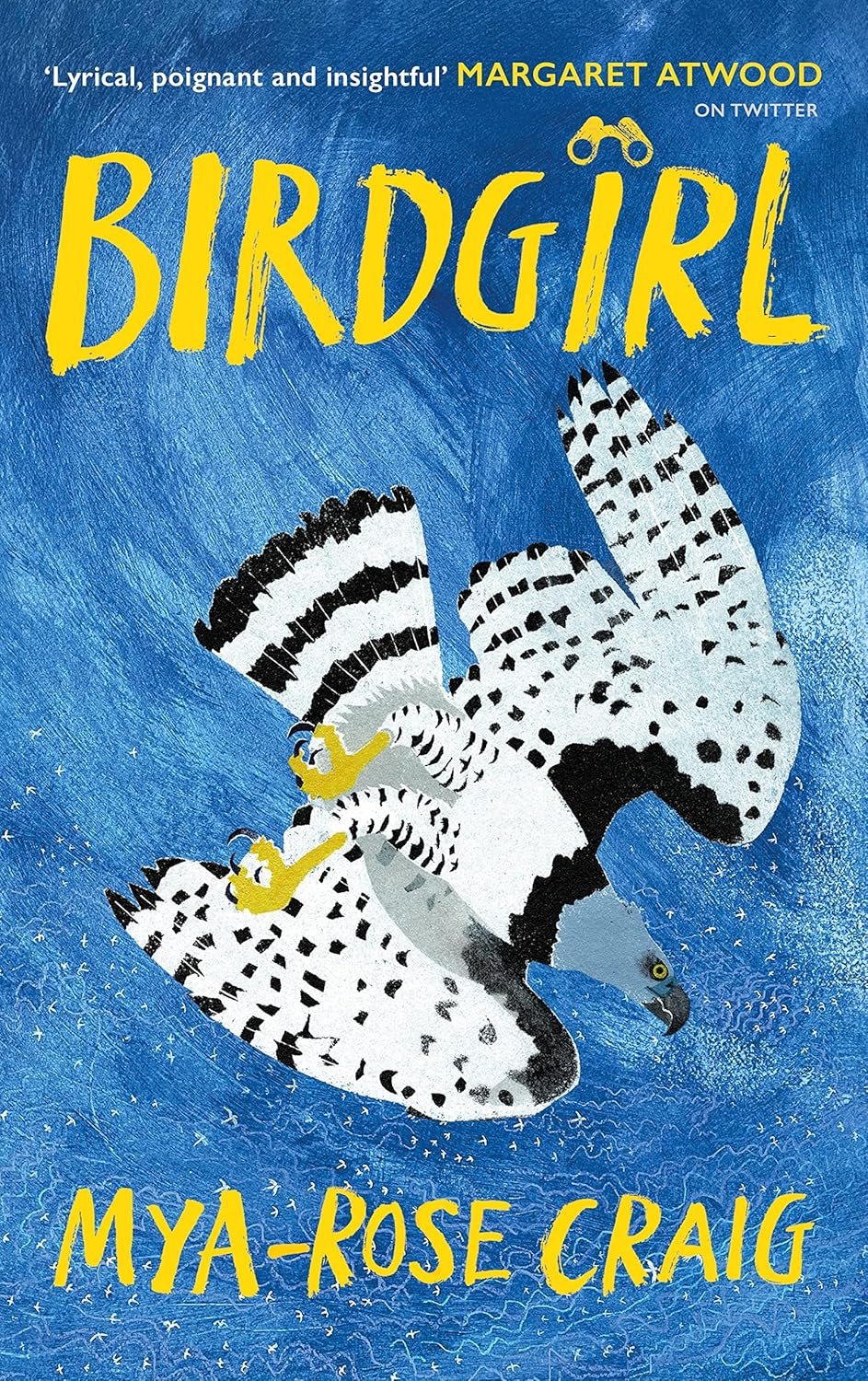
Birdgirl is an award-winning book by Mya, who today has seen over 5000 types of birds (over half the world’s species). Each single bird a treasure, each sighting a moment of joy and stillness.
This is Maya’s journey, defined by her love for these extraordinary creatures. Because large or small, brown, patterned or jewelled, there is something about birds that makes us, even for just moments at a time, lift our eyes away from our lives and up to the skies. The perfect read for any young or aspiring environmentalists.
Kate Stephenson (building a global conservation movement)
Kate is a conservationist and campaigner for animal welfare, who is passionate on educating future generations. She was the youngest trustee of Born Free and head of communications at Whitley Fund for Nature.
She’s made friends with everyone from Sir David Attenborough and Chris Packham to wildlife cameraman Gordon Buchanan and Queen guitarist Brian May (who campaigns to save badgers).
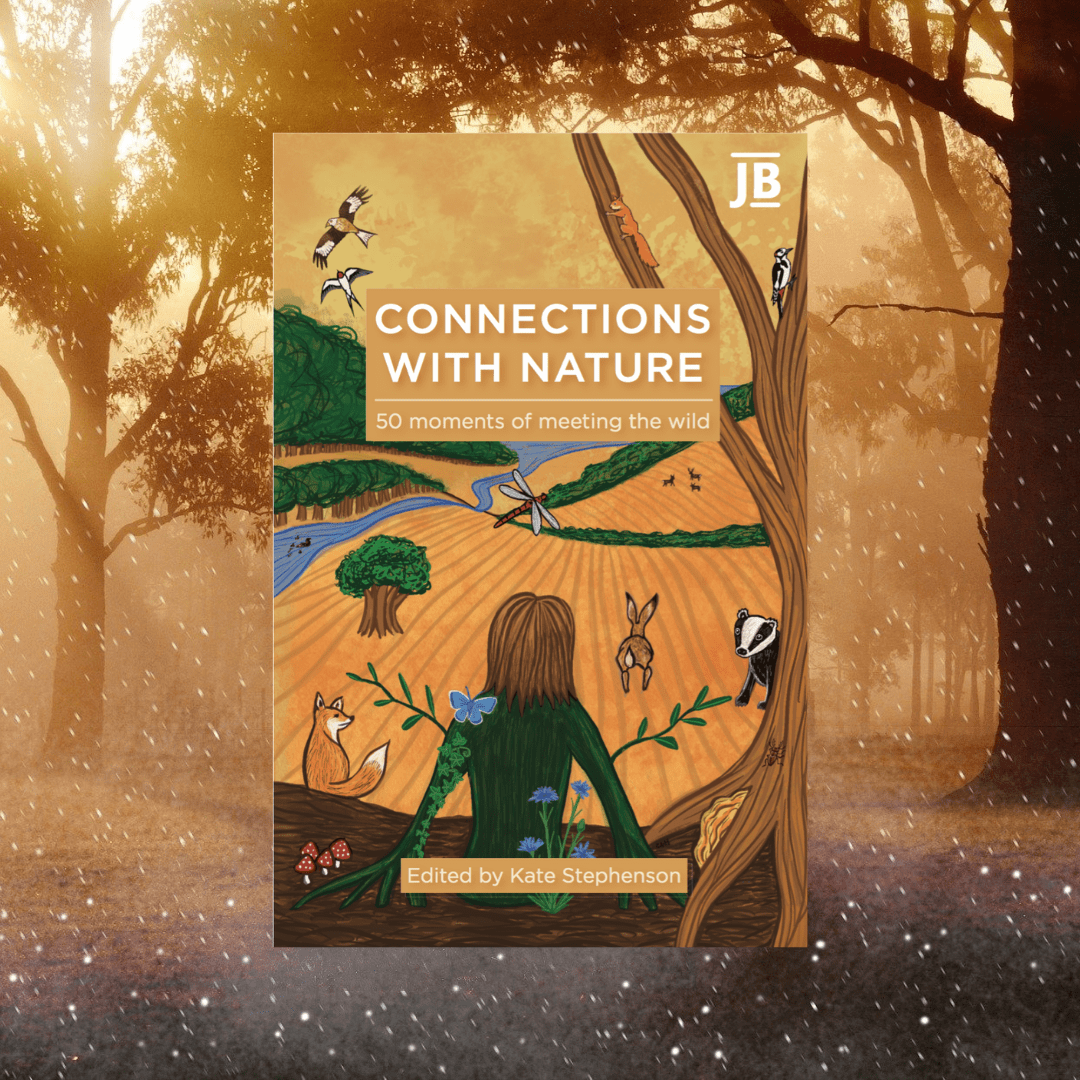
Her book Connections with Nature is a wonderful read, by one of our favourite wildlife bloggers and campaigners. Kate has a first-class English degree, and has used her writing skills for 15 years to help all animals.
This is basically an anthology by 50 members of her ‘wildlife crowd’, on a journey to meet the wild. From wondering at the moon (rather than stare at a screen), studying the details of a barn owl feather (along with a 7-year old!) and watching the ‘moorland fairground’ at dusk.
This book shows how entwined we are with the natural world. And you’ll be hooked, once you visit her upbeat and interesting blog.
Philippa Forrester (writing books to inspire love for wildlife)
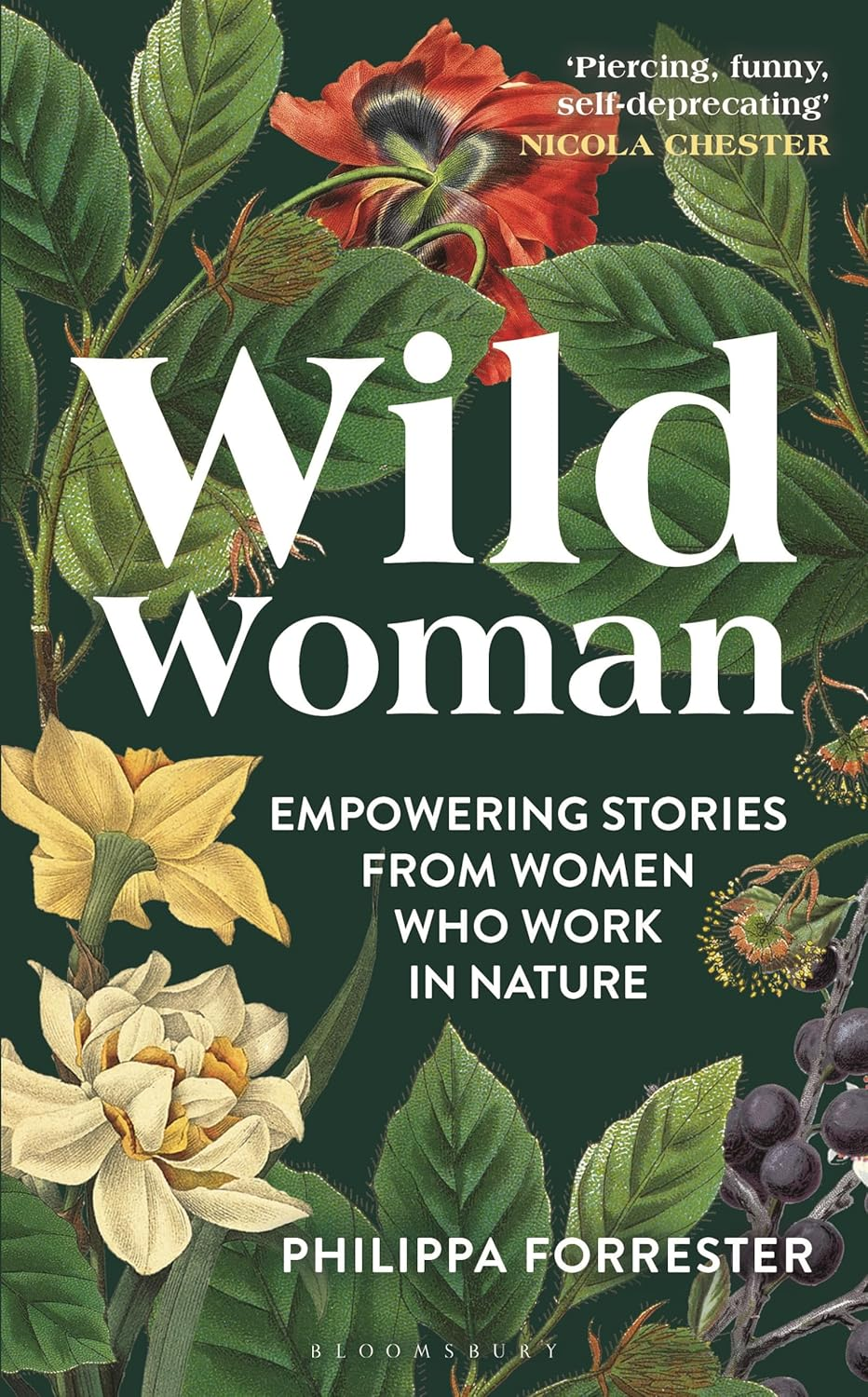
Philippa Forrester is a TV and radio presenter, producer and writer. She has a degree in ecology and conservation, and works with several wildlife organisations, to promote their work.
Wild Woman is an engaging blend of conservation stories and personal humorous anecdotes by TV presenter Philippa Forrester who has chosen to live and work in the wild (wildlife fans will know her from programmes filming otters with her husband Charlie Hamilton-Jones).
In this book, she studies and celebrates women who have chosen to live and work in wild and challenging landscapes.
Relating some of her own experiences (she has a degree in ecology & conservation) from 30 years of travelling to some of the wildest places on earth, she looks how at how women benefit from a life spent in the wilderness, and considers what the natural world gains from them.
And as she explores our relationship with the wild, Philippa contemplates what we expect and need from nature, and ponders why we still feel a pull towards it.
For six years, Philippa lived in Wyoming, encountering wolves, grizzly bears, moose and the odd cowboy. But after returning to live here in summer 2020, she is rediscovering her own patch of wilderness and the joys of the English countryside (especially her favourite wild animal – otters!)
When I see a fox run by, my immediate thought is ‘What’s he up to? Where’s he going?’ Journeys are so much of life.
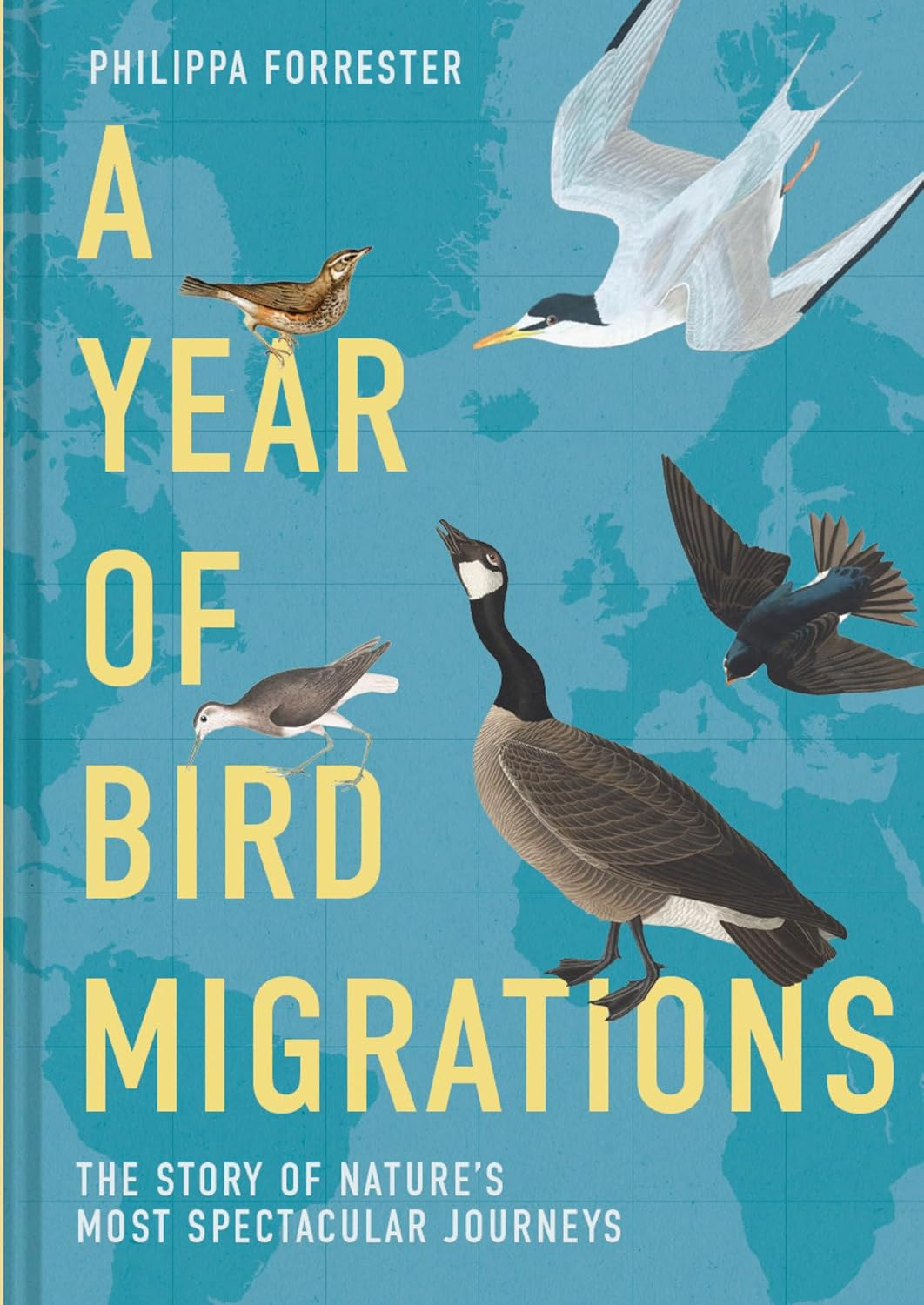
A Year of Bird Migrations discovers nature’s most extraordinary journeys, through some of the most intrepid avian species on our planet.
From swallows and arctic terns crossing the skies between summer and wintering grounds, to great snipes making non-stop flights of up to 7000km. An albatrosses circling the globe as they ride the ‘Roaring Forties’ winds on the Southern Hemisphere.
The scop of our avian life’s journeys are astounding. Whether travelling to warmer climates, increased food sources or breeding grounds, migrating birds are equipped with incredible resources to help them on their way. Some species even have tiny bits of magnetic material in their brains, which act as an internal compass.
With several entries for each migrating birds over the course of a single year, discover the different points along each route, and the incredible distances covered.
As well as the challenges faced and the ways in which climate change can affect these ancient routes. Also included are colour illustrations to depict each bird, plus maps which plot the flight lines.
Lara Jackson (using photography to help rhinos)
Where Did All the Rhinos Go? is a children’s book to inspire youngsters to look after this critically endangered species. In her debut book, conservation biologist Lara explores the impact that humans have on the world around us.
The book encourages us to stop and think about how we can help, and how we might make more room for nature in our everyday lives. And offers a child-centric overview of issues like poaching to deforestation, addressing how to help in a compassionate way.
Through the eyes of an orphaned black rhino, we learn how deeply interconnected our world is. It is a powerful reminder to reimagine our relationship to nature and to each other. Ami Vitale (National Geographic photographer)
Lara Jackson is a conservationist who uses award-winning wildlife photography to highlight the causes of endangered species worldwide. She is particularly active in campaigns to save critically endangered rhinos, at risk from habitat loss, palm oil and poaching.
Even as a child, Lara would wrap up an injured hedgehog and take it to the local wildlife rescue. And this passion never left her. She studied wildlife conservation at Southampton University and now is at the forefront of helping creatures all over the planet.
Christine Figgener (the biologist who helped ban straws)
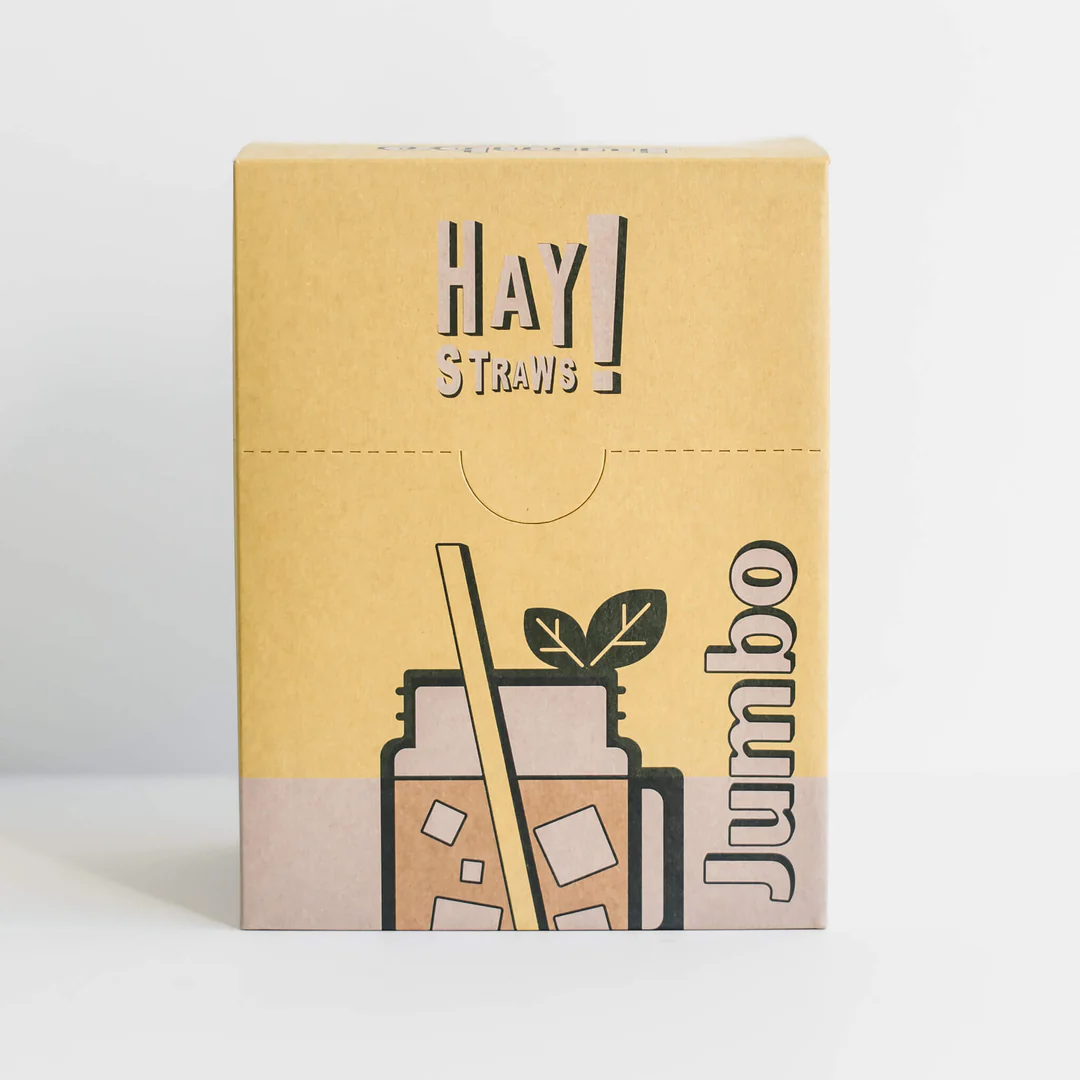
Straw waste accounts for 10% of all ocean plastic (their shape and size miss sewage filters – one clean-up on US shorelines found 7.5 million plastic straws). Then marine creatures are injured by sharp edges.
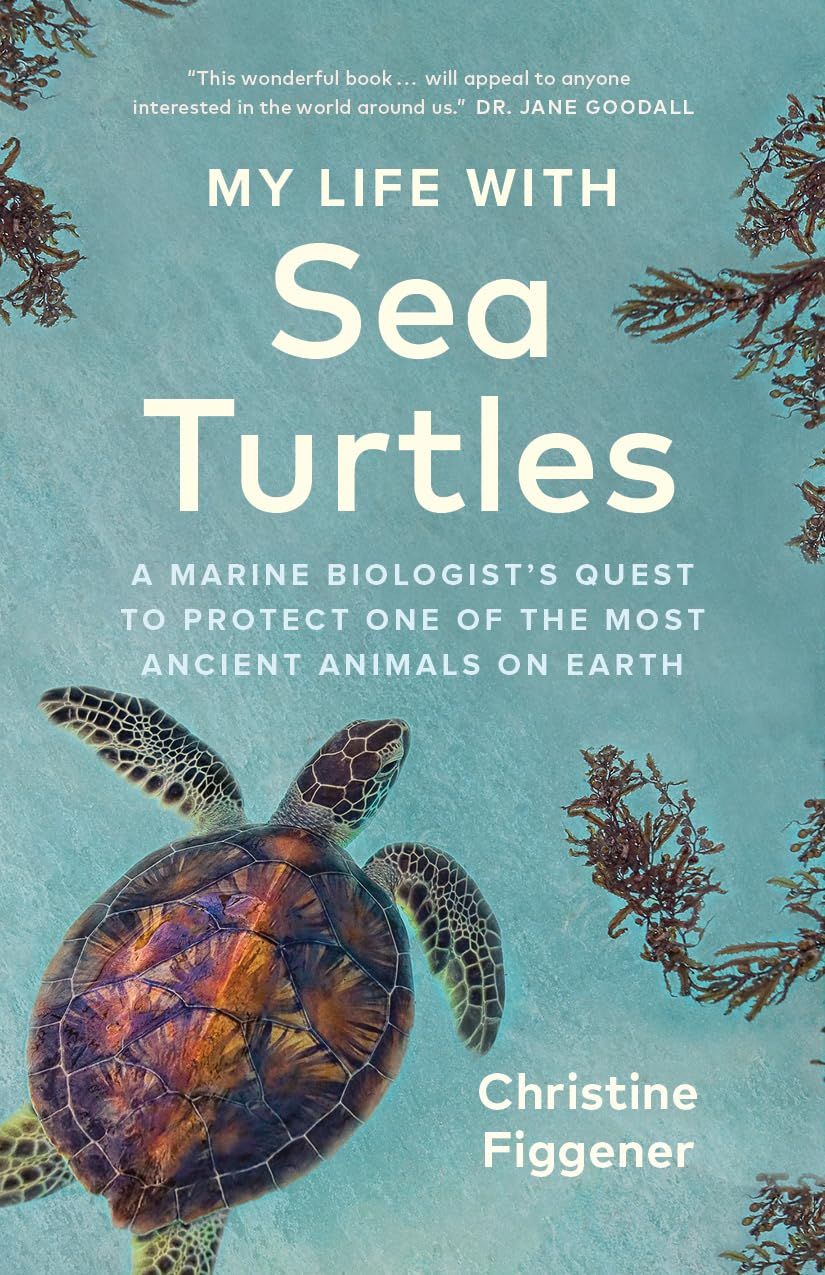
My Life with Sea Turtles is the autobiography of the marine biologist who was behind the famed viral video, when she and others removed a foreign object from a turtle (they initially thought it was a tube worm).
It’s quite shocking to watch, but the turtle was okay and released back to the sea. Hopefully never to come across a straw again, which it turned out what the object was).
The video was viewed millions of times, and led to the plastic straw ban in many countries, including the UK. Perhaps someone should show President Trump, though doubt he would care.
We are not going to fix the world, by phasing out plastic straws. We never aimed so small. It was like a stone that fell into the water, and created little ripples that became waves. This really horrible thing inspired many people, and sparked something good. Christine Figgener
The Woman Who Changed the World: Jane Goodall
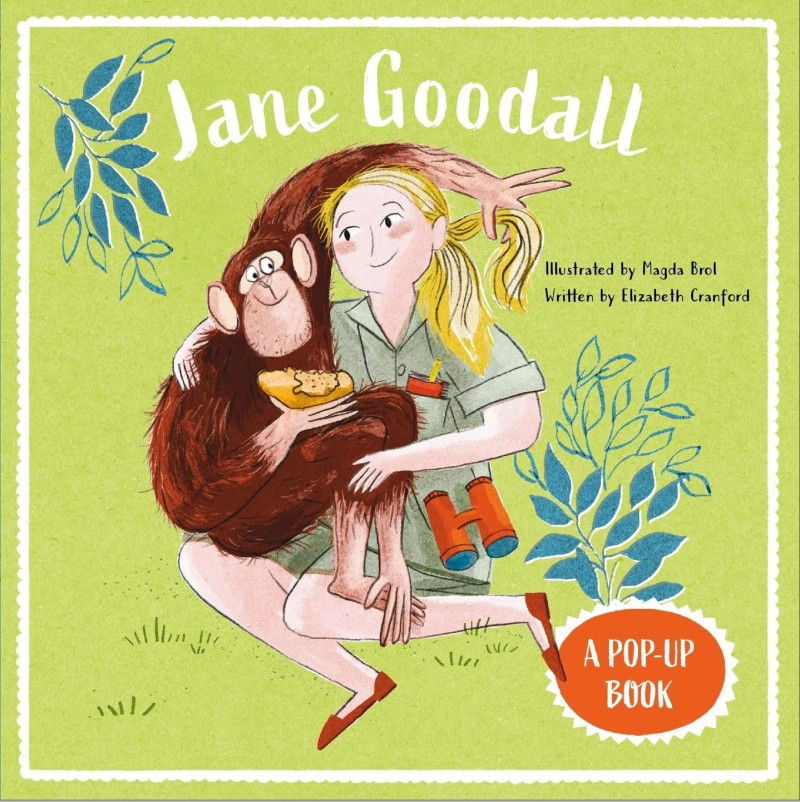
In October 2025, primatologist Jane Goodall died peacefully in her sleep, age 91. This unassuming and quiet beautiful woman had no ego, yet has left a legacy that has helped animals across the world.
Jane was born in London, but grew up in Bournemouth (her father was a racing driver, her mother a novelist). Always fascinated by nature, she enjoyed reading animals and watching birds, and had a toy chimp named Jubilee on her bed, a daily reminder of her dream to work with wild apes later in life.
After working as a secretary and waitress to save a ticket, she visited Kenya in 1957, and met archaeologist Louis Leakey, who sent her to what became Gombe Stream National Park in Tanzania. Her observations led to her becoming the world’s foremost expert on wild chimpanzees.
Jane her team rescued Wounda from the illegal wildlife trade, then released her to her natural forest home (she’s thriving, with a daughter of her own). Just before going off to her new life, she gives a big hug to Jane, it’s the most heart-warming video you’ll ever see!
Childhood Dreams to African Adventures
Jane’s most famous finding was when she observed a chimpanzee using a twig, to fish termites from a mound, and stripping leaves, to make the tool work better. Before that, people thought only humans could make tools.
She also discovered that chimps shared many human traits like grief, family bonds, grooming and even arguments and conflict. This led to beliefs that our differences were far less than previously thought. And her findings have caused many to switch donations to animal-testing medical charities to humane medical research.
By the late 1970s, an older Jane was spending less time in the field, and instead speaking to others to build empathy for all creatures on earth. This resulted in creating the Jane Goodall Institute which even after her death, works on many projects worldwide, including:
- Mandrill rehabilitation and release
- Stopping illegal wildlife trafficking and crime
- Restoring wildlife habitats
- Funding eco fuel stoves (to stop deforestation)
- Caring for rescued captive apes (not in zoos)
- Snare removal
- Agroforestry
- Sustainable coffee production
You can donate anonymously with a Charities Aid Foundation account (personal or business use) or list Jane Goodall Institute as your cause as easyfundraising (anytime you buy things with listed companies, they donate a portion to the charity, at no cost to you). Or donate unwanted shares.
Inspiring Young People Through Roots & Shoots
Roots & Shoots is Jane’s worldwide network for youth, to look after the planet and animals. Teachers can download free educational resources, and youngsters can access the My Local Area hub to focus on actions in your community (including environmental mapping and rubbish charts that impact local wildlife).
I hate hearing that ‘we’ve borrowed the Earth from our children’, because it’s a lie. We’ve not borrowed, we have been stealing. We’ve mad so many mistakes and it’s not the young people’s job to put it right. We have to work with them to fix it. We’re holding your hand, so that together we can make it better. Jane Goodall
Cheeky Chimp Ale!
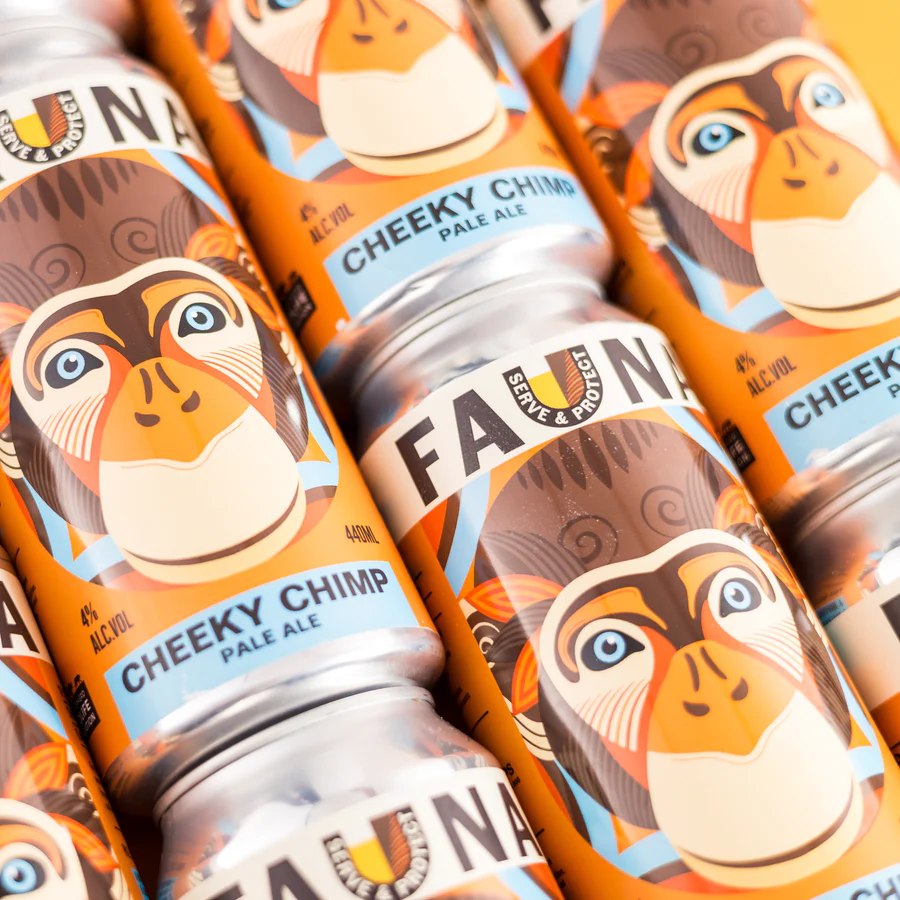
When you’re next buying booze, considering Cheeky Chimp Ale, this brew from Fauna Brewing uses profits to help wild chimp welfare. Jane would raise a glass to you!
Wise Wisdom from Jane Goodall
The least I can do is speak out for chimpanzees who sit hunched, miserable and without hope, staring out with dead eyes from their metal prisons. They cannot speak for themselves.
My mission is to create a world where we can live in harmony with nature. And can I do that alone? No. So there is a whole army of youth that can do it. So I suppose my mission is to reach as many of those young people as I can, through my own efforts.
The biggest problem we have as environmental activists, is to fight the power of money.
I don’t have any idea of who or what God is. But I do believe in some great spiritual power. I feel it particularly, when I’m out in nature. It’s just something that’s bigger and stronger than what I am, or what anybody is. I feel it. And it’s enough for me.