Blown Off Course: Why Big Wind Farms Threaten Puffins
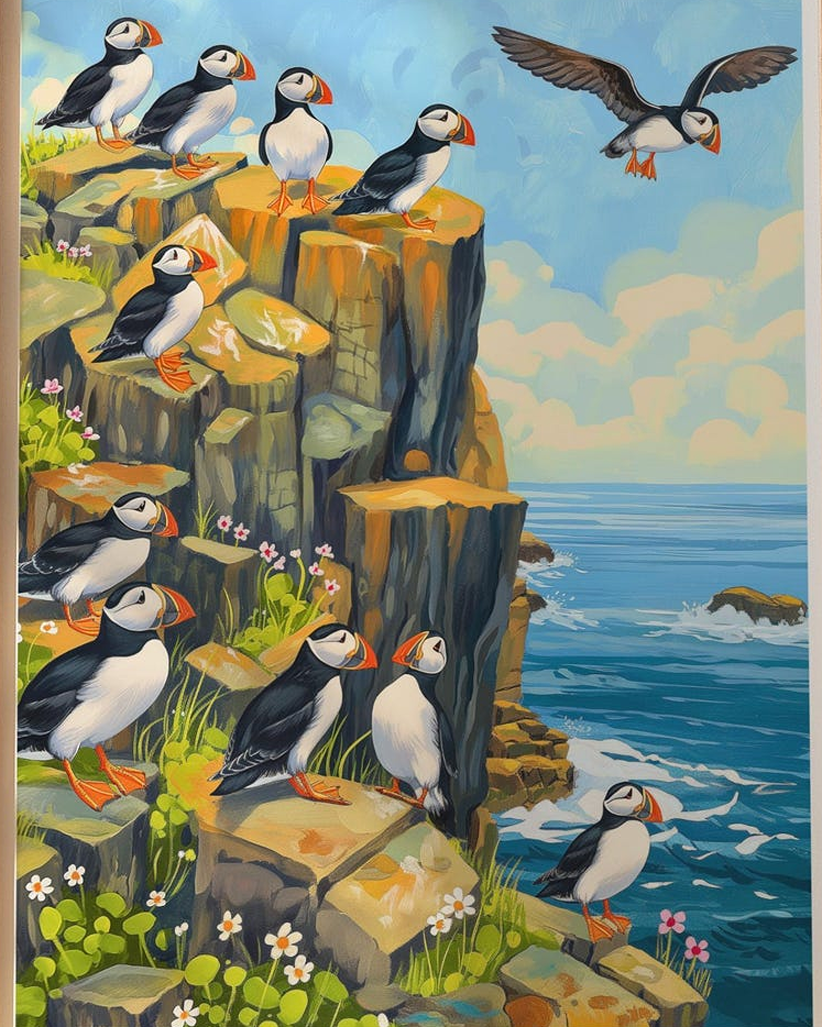
Atlantic puffins are native to Iceland, but also many live in England. Now a Red List species of conservation concern, they face risk of global extinction, having lost almost a quarter of their population over the last 20 years.
Puffins have grey beaks most of the year, which turn to orange when breeding. Worldwide, there are also other species:
- Horned puffins (with yellow bills)
- Tufted puffins (a crown of straw-coloured feathers)
- Rhinoceros auklet (looks nothing like a puffin!)
Puffins spend most of their lives at sea, but return to the coast from late March to late July each year to breed. And raise pufflings in little underground burrows on grassy cliftops and rocky islands.
The main places in England where puffins breed are:
- Bempton Cliffs (Yorkshire) are tall chalk cliffs, managed by RSPB
- Flamborough Cliffs (Yorkshire) are managed by Yorkshire Wildlife Trust
- Lundy Island (Devon) is a remote isle in the Bristol Channel.
- Farne Islands (Northumberland) is a small island near Seahouses. Managed by the National Trust, there are strict rules for boat visitors, to ensure nobody brings litter or disease to the island.
Why are puffins at risk of extinction?
- Climate change is warming our oceans, and this in turn disrupts marine food chains, causing a decline in sandeels – those silvery fish you often see in the mouths of puffins in photos.
- Oil spills and pollution (puffins are especially at risk, as they live in the North Sea, which is at risk from being opened to drill for more oil and gas).
- Sandeel fishing has also contributed to their decline. Sandeel fishing is now banned in England and Scotland, the EU recently lost a bid to reverse the ban (sandeels are used to feed farmed fish, poultry and pigs).
- More severe storms (again due to climate change) can flood underground burrows, and drown eggs and young chicks (pufflings).
- Invasive predators (humans bringing over rodents has led to some small chicks and eggs being eaten). This has been mostly from visiting ships or occasionally being inside bags of tourists.
How we can all help puffins (and pufflings)
- Live a simple sustainable life to keep your carbon footprint low. If we all do this en-masse, this is the best way to help prevent climate change, which helps reduce freak weather and warming seas.
- Avoid eating factory-farmed fish or meat, to help reduce demand for sandeels in the farming industry. This can help strengthen the present ban on sandeel fishing in the North Sea for England and Scotland.
- Switch over to clean energy and live a zero waste life, to use less plastic (made from oil).
- If you visit any island where puffins are nearby, adhere to strict National Trust and other advice: don’t take picnic boxes, unzipped rucksacks or plants/compost off the mainland, to avoid risk of predators arriving on the island. Also don’t visit if you have been in contact with poultry, to avoid risk of contamination with bird flu.
- If you visit any island near puffins, keep to marked paths to avoid crushing underground puffin burrows (dogs are banned, so leave them at home if you visit or have someone look after them – never leave dogs in cars).
- Use binoculars or zoom lens to view puffins and their young, to avoid getting close. This would cause stress and could cause parents to abandon their nests.
Stop Berwick Bank wind farm (urgently)
Scottish Seabird Trust (which has volunteers removing tree mallow, an invasive plant that prevents puffins from nesting and rearing young) is campaigning to stop the building of Berwick Bank, which threatens to be the deadliest wind farm for birds in the world. It would result in the deaths of thousands of seabirds in one of the world’s most important seabird colonies.
Although some wind farms are now more bird-friendly (there are different designs and siting advice), this one is opposed by the RSPB to Marine Conservation Society. It is set to be be located near three important seabird coasts, home to puffins, razorbills, kittiwakes, guillemots and gannets (the world’s second-largest colony).
The Scottish government has only given approval on the condition that SSE Renewables implement a ‘sufficient seabird compensation plan’, which conservationists say is impossible for the deaths of so many birds. The project aims to build over 300 wind farms in an area four times the size of Edinburgh.
Local birds would starve, as they would not have energy to fly elsewhere to feed. Fish, seals, dolphins and crustaceans would also be affected.
Write to your MP to protest (using this template email). You can also object by email to addresses listed at RSPB (Scottish ministers and UK energy ministers, responsible for approving decisions).
There are other ways of reaching Net Zero, like walkable communities (less cars), community solar panels, organic farming (pesticides use oil) and insulating homes (less energy needed).
Puffling rescuers (due to light pollution)
An amazing spectacle happens each year in Iceland. Due to local light pollution, many pufflings that leave their clifftop burrows at night crash land into the city, where they are vulnerable to predators and starvation. In nature, they would navigate by the moon.
So local volunteers scour the streets at night to search for lost pufflings, and keep them safe overnight in ventilated cardboard boxes. The next morning, they take the rescued birds to the cliffs overlooking the ocean. And help the birds catch the breeze, to fly out to their new lives by the sea.
Campaign to stop puffin hunts
Iceland and the Faroe Islands are the only two places of earth where it’s still legal to hunt Atlantic puffins, for around six weeks each year. They are killed by ‘sky fishing’ (sweeping birds out of the air into nets as they fly past). The practice is very controversial in both countries, due to declining numbers. And landowners are allowed to ban such practices on their premises, if wished.
60% of the world’s Atlantic puffins live in Iceland, but the population has plummeted by around 70% in the last 30 years, again mostly due to warming seas wiping out sandeels (along with hunting). There are now some emergency bans on hunting, to protect remaining birds.
Likewise due to again declining numbers, hunting on the Faroe Islands for puffins is now massively in decline, with local bans in place.
Local conservation organisations ask tourists travelling to Iceland to never order puffin meat, as the remaining hunts are driven by demands from foreign tourists, rather than local consumption. And just like other trophy hunts, some tourist companies charge thousands of pounds for hunters from abroad to kill up to 100 puffins per trip. Email the Icelandic Prime Minister to put a ban on this practice.
The Puffin: a biography by Stephen Moss
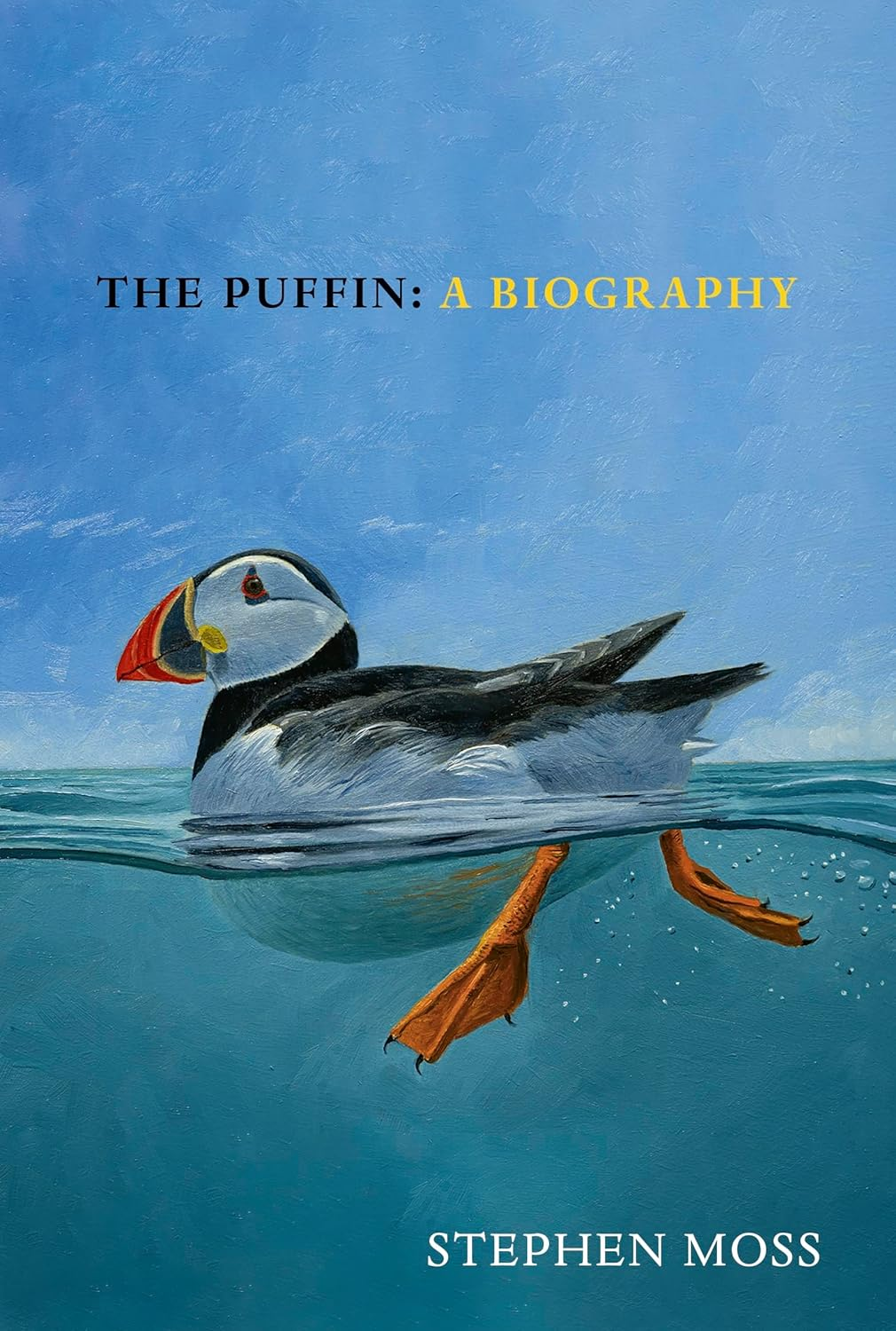
The Puffin: A Biography is an illustrated celebration of these lovely birds, from egg and nestling to juvenile puffling and adult courtship (puffins mate for life).