Don’t Carry It Alone: Find Help for Depression
The western world is having a huge mental health crisis, with suicide a leading cause of death. Although genetics and sometimes nutritional deficiencies or medication side effects sometimes play a part, usually it’s due to simply people with lots of problems having coping mechanisms breaking down.
Most people who end their lives do so because they don’t have any mental strength to carry on, not because they want to die. So providing free support and help is so important, and saves lives.
Smiling depression is a term used to describe someone living with depression on the inside. While appearing perfectly happy or content on the outside. We never know what people are going through. Vex King
Common reasons for severe depression
- Genetic tendencies. This happens but is quite rare. If you have (or had) depressed parents (and grew up in a home where people were depressed), this is a risk factor. But not something you can’t break free from.
- Bereavement. Read where to find help for grieving for people and companion animals.
- Side effects of medication. Get a medication review, to make sure you are not taking drugs that make you depressed. A couple of decades ago, there was a huge furore over teenagers who had been ‘medicated for shyness?’ with a drug that led many to commit suicide.
- Bullying. Especially when children can’t escape from bullies in an online world. Read how to prevent bullying (in schools and workplaces).
- Relationship break-ups. This is a big one (as is the modern practice of ‘ghosting’ when people leave a relationship or friendship without any reason and refuse to communicate, which can mess with people’s mental health). Play yourself some heartbroken country music songs, have a bottle of wine – then go and find someone who treats you better!
- Money/home issues. These are serious, as they can lead to debt, gambling problems and even homelessness. Read our post on how to get out of debt. Sometimes you have to ‘think big’ by downsizing to a smaller and simple way of living, if your outgoings are way above what you can afford.
- The ‘me me me society’. This is something that is making many people depressed these days. We have governments that are taking us back to horrible times in history, wildfires and climate change and wars, all of which harm people and animals. It can make people very ‘what’s the point?’
- Turn off the news and subscribe to a happy newspaper, to know that most people in the world are good. And there really is hope. We are already seeing it, in that the ‘bad guys’ seem to be losing popularity worldwide. Don’t give up!
How the natural world can help depression
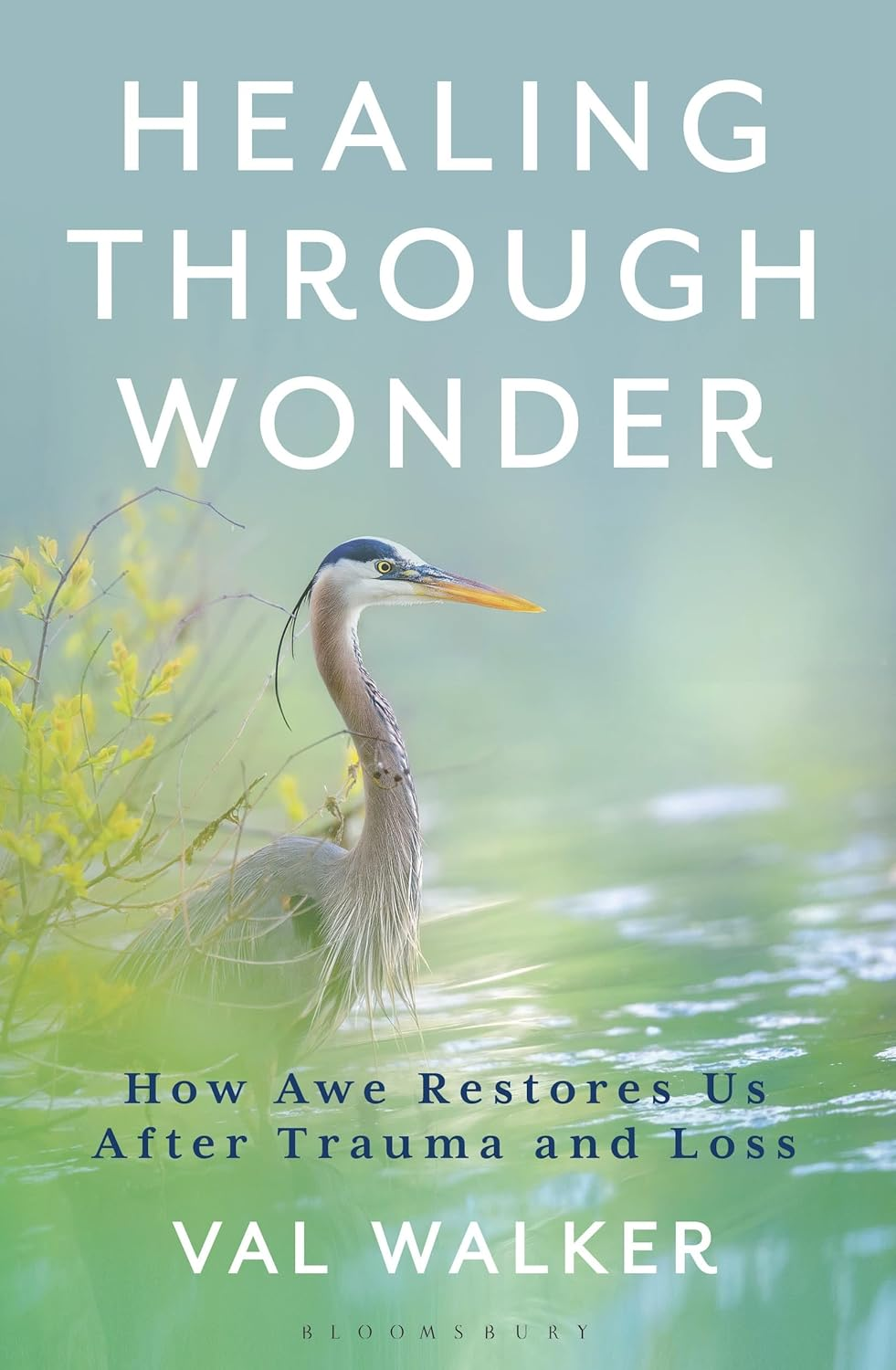
Healing through Wonder is the author’s profound journey through trauma, and coming out the other side. Homeless, running from a violent partner and battling suicidal depression, Val found herself sitting by a river, holding a bottle of pills in one hand, and a bottle of red wine to wash them down, in the other.
Then out of the twilight sky, a majestic blue heron circled, and landed just a few feet away. Something in the bird’s piercing eyes caused her to stop swallowing the pills. In that moment, she realised there was too much beauty in the world to give up.
Thus began a quest, to understand how wonderous encounters, can spark healing from trauma and grief. This inspiring guide shares healing stories sparked by wondrous experiences, and also unpacks the neuroscience that explains how wonder helps our brains and bodies heal.
What not to say to suicidal people
Let’s start with things never to say to people who feel suicidal. These are dumb phrases that often come out of the mouths of well-meaning people, and are to be strictly avoided:
- Just snap out of it. You can’t just do that with an aerobic routine or a long walk, if you’ve got really bad depression. It can help some people, but just assuming that this will ‘cure it’, shows you have no idea what real depression is.
- I know how you feel. No you don’t. You have no idea what is going on in someone’s head. For a start, that person may be more sensitive than you, and find it harder to cope with the same problems. Plus, it’s very likely that he or she has not shared their life history with you. So you don’t know the ‘combination of problems’ that has got their head to where it is today.
- Other people are worse off. This is a terrible thing to say to someone who is depressed. Because it adds guilt to depression. A seriously depressed person is quite aware that he/she could volunteer to take their mind off problems.
- Read your Bible. Another awful thing to say. Some people are not Christian (or any religion). And again for them it may not be the comfort that it is to you. What if the said person has been abused by a priest years ago? Going to Church may well make them feel even worse.
How to help someone who is depressed
- Just be there, listen and don’t judge. Often people (especially men) who are depressed, don’t confide in anyone. And they won’t, if they feel they will be judged. Just by listening and being there is good. Make them something nice to eat, accompany them on a walk, or just take them to the pub for a beer and a friendly chat, so they ‘feel normal’.
- Let them know they are not isolated. If someone wants to spend time alone, that’s fine. But make it clear that if they need to talk any time of the day or night, you are on the other end of the phone. Make that clear.
- Offer resources to help. Below are some really useful resources. So if your friend or relative does not want to talk to you, he or she can find people to chat to anonymously, if that is more comfortable.
Tips to help yourself, if you have depression
- Accept it. Don’t try to ‘fix things’ before acknowledging your depression.
- Have a routine. Some people with serious depression find it difficult to get out of bed, brush their teeth or take a shower. But if you did those things, you are a hero! Just take baby steps. Buy health foods that are easy to prepare if you don’t feel like cooking. And try to have a gentle but consistent routine.
- Spend time offline. Go to the library and buy a few novels for ‘escapism’, have a warm relaxing bath and potter around doing nothing. Know that if it takes some time, it takes some time. That’s fine. No rush.
- Make good sleep a priority. If you have insomnia, waking up at 2am is likely the time when you feel worse. If you can’t sleep, just pop the light on and read a book, and just relax. Eventually you’ll have to sleep, even if it’s an afternoon nap the next day. Try to go to bed and wake up the same time.
- Try not to drink alcohol. Easier said than done if you have a bucket load of problems. But alcohol is a depressant. And although it may ‘wash your issues away for a while’, it can make you feel worse long-term, especially if you wake up in the middle of the night. Read our post on help for alcohol addiction.
Where to find help for depression
You could start with your GP. But to be honest, funding now usually means you’ll get cognitive behaviour therapy (which is good for phobias, but not so good for serious depression – but if it’s free, you could try it).
Samaritans (you don’t have to be suicidal to call)
- Samaritans (open 24 hours a day). All calls are free from landlines and pay-as-you-go mobiles. The number (116 123) does not appear on caller display, nor your phone bill. There are also over 200 branches staffed by volunteers.
- SOS Silence of Suicide is a confidential free helpline (0808 115 1505) open 8pm until midnight (or 4pm until midnight at weekends). Co-founded by a woman who experienced poor mental health/suicide loss and barrister Michael Mansfield KC (who lost a daughter to suicide).
- Its free training course OPEN Conversations helps to educate and empower those who struggle, and courses for burnout and chronic pain are soon to be offered, along with nationwide mobile mental well-being hubs.
- Shout offers 24/7 free confidential text support (85258), for people who don’t like talking, or need support at night or in busy shared spaces. You receive four automated messages, then are connected to a trained volunteer for up to an hour, until in a ‘safe place’.
More helpful suicide helplines
- Suicide Prevention Helpline again offers anonymous support (0800 587 0800). Volunteers help people talk and consider their next steps.
- CALM offers a free helpline (0800 58 58 58) from 5pm to midnight.
- I’m Okay is a suicide prevention app that sends up to 3 messages a day to check you’re okay. If within 15 minutes you don’t reply, it alerts one of your five emergency contacts.
- PAPYRUS HOPELINEUK (for people under 35) offers a helpline from 9am to midnight, and weekends/bank holidays (2pm to midnight).
- Togetherall is a digital mental health support service (anonymous) that’s free if your employer, university, college, NHS provider or local council partners with it. Plus it’s free to all veterans and former veterans, due to a partnership with the Ministry of Defence.
Specialist help for depression
Often depression is not due to ‘something wrong with your brain’, but due to specific circumstances. These helplines offer trained listeners:
- Cruse offers a free helpline for bereavement. For animal companions, Blue Cross again offers free phone support from trained volunteers.
- Gordon Moody helps people with gambling addiction.
- Farming Community Network can help with tenancy and financial issues, plus free food for livestock in cases of debt, drought or flood.
- Combat Stress offers help for veterans with post-traumatic-stress.
- Vetlife helps surgeons/nurses (70% of vets have lost a colleague to suicide).
- Switchboard is for LGBT people who struggle with depression.
Denmark: Inside the World’s Happiest Country
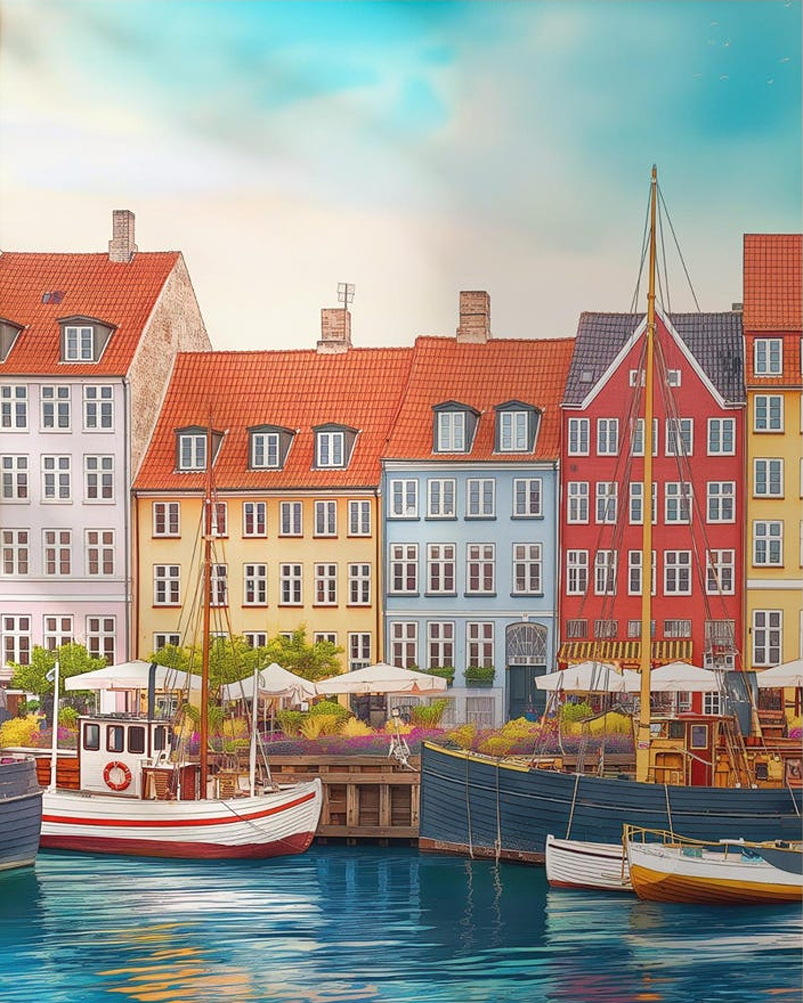
Denmark (along with Finland) is the world’s happiest country, despite it being freezing cold and dark most of the year. It’s flat (so popular for walking and cycling) and many people indulge in ‘hygge’ where rather than binge-watch TV, winter is all outdoor walks or firetime snuggles!
‘Danish bacon’ is only popular in the UK, due to huge demand for cheap meat. Instead, look in stores for La Vie vegan bacon (made in France!)
There is lots to like about Denmark:
The government is trusted and people are looked after financially from cradle to crave. There is little homelessness and no celebrity culture, so people just take care of themselves, easier when you can pay your bills due to good benefits. And not live in a cold damp bedsit, dreaming of winning the lottery.
Copenhagen is the world’s most walkable city, made over from a city that was gridlocked with traffic. By architect Jan Gehl, who made the main street car-free then added more car-free lanes, bicycle rentals and heated street lamps. Walkable cities also make it safer for people, pets and wildlife.
Read Walkable City Rules, with 101 simple changes town planners could make – from making places more comfortable and interesting, to escaping car obsession.
Like England, Denmark has lots of beach huts. The doors face sideways (not the sea) and are ‘little castles’ with flowery curtains, chipped crockery and tiny rooms. This is where people go, when the sun finally comes out!
People in Denmark are polite, formal and punctual. There’s a story on how Danish people behave. You tell neighbours you’ve moved next door and invite them for dinner in 6 weeks, when you’ve sorted yourself out.
Weeks will go by and your new neighbours don’t talk. So you forget about it, thinking they don’t like you. Then 6 weeks to the dot, they will ring the bell and arrive, expecting their dinner! That’s how Danes operate. They will give you space, but are direct and will keep to their word.
Studies show that being kind to ourselves makes us nicer to the people around us. This has a ripple effect out into the wider community. Helen Russell
Why Dutch children are the happiest
Dutch children are the happiest on earth. It’s rare for them to have tantrums, and they have better education records, yet don’t do homework before age 10.
Did you know tulips (like all bulbs) are unsafe near pets?
Dutch parents value independence from the start, teaching children how to be safe, but not ‘mollycuddling’ like many other countries. As a result, Dutch children are stable, happy and balanced.
In The Netherlands, there is a word called niksen. It basically means ‘doing nothing on purpose’. Dutch families build in time for doing nothing, to remain calm. This could be a slow afternoon reading books, a quiet walk by the canal, or a lazy Sunday breakfast.
Children are also (as in Montessori schools) trained to share chores. There are no ‘make-believe plastic kitchens to play with’. Instead, children do ‘real safe tasks’ like peeling bananas if mum is making a banana loaf.
They help to set the table, fold laundry, feed pets and walk dogs. Dutch children make their own beds. They don’t spend their life on phones, share feelings and eat home-cooked meals.