Is It Possible to Live Zero Waste in a Modern World?
The term ‘zero waste’ is popular these days (adding two new words of ‘refuse’ and ‘rot’ to the known mantra of ‘reduce, reuse, recycle’. But in this day and age, is it really possible to live a zero waste life? The truth is probably not. But as chef Anne-Marie Bonneau wrote:
We don’t need a few people doing zero waste perfectly. We need billions of people doing it imperfectly’.
The Internet is awash with people who generate ‘one small plastic bag’s worth of waste each year’.
It’s commendable, but not realistic for most people who have to rely on local supermarkets and perhaps don’t have the time, resources or good health to make everything from scratch.
Like those people who literally live on no money (bartering for homes and food), these are nice ideas to inspire, but the average person is not going to live this way. It’s more helpful en-masse to live simpler lives that are also enjoyable, to inspire those around them to do the same.
We’d all love to skip to the organic farmers’ market and buy bunches of loose carrots, then walk home to a zero waste kitchen spend the afternoon making soup. But most people don’t live within walking distance of a market or zero waste shop. The best thing is just to do what you.
If we all do this, collectively it will affect the economy so much that MPs and big business will have to take notice, and change the way they do things.
It’s happened with Sir David Attenborough’s programs and Veganuary – now let’s see if we can get big supermarkets offering refill stations and zero-waste packaging!
Don’t give away items that could harm wildlife like strimmers (recycle them and get edging shears instead). The Lullaby Trust does not recommend donating (or buying) second-hand baby items like mattresses or car seats (and never use cot bumpers). Its site has more info on preventing crib death.
Zero waste must be affordable to work
Once, writer George Monbiot was sitting on a train and his fellow passenger was reading a book on ‘the simple organic life’ written by the then-wife of a well-known environmental campaigner.
He was bored so asked to take a peek. After a few pages, he noted ‘this is for people who don’t go out to work, isn’t it?’ The book actually had good reviews.
Yet 14 years after being published, the writer sells £600-odd real (not recycled) diamond charms online and endorses Prada handbags (a brand ranked ‘not good enough’ on environmental and animal welfare grounds at Good On You).
The problem with terms like ‘zero waste’ is that eventually we all fall off the wagon. Caught short on a hot day without a reusable water bottle, or buying a needed ingredient for a recipe (only sold in plastic).
Or perhaps you need medicine for a relative/pet, you’re obviously not going to refuse that. Aspire to a ‘simple sustainable life’ rather than perfection. Then don’t feel guilty if you get something wrong. Just get back on the train and keep going!
Meet Philadelphia’s zero waste mayor
If you thought a typical Mayor wears a big hat and shakes a bell, like a town crier, meet a more visionary kind of Mayor in the US city of Philadelphia (the ‘city of brotherly love’ is just 1.5 hours from New York). Waste Free Philly is the website of a new kind of politician, and one we could emulate.
Whereas our city council websites just have oodles of confusing recycling information, this Mayor has developed a manifesto, determined to remove all litter from the streets, and stop it coming back again.
Local businesses are getting involved to rent out tabletop linen (rather than buy), cleaning up community parks in volunteer efforts and renting out toys to children.
Rather than just pen-pushers doing greenwash bulletins, this city is planning to appoint an Officer of Zero Waste, staffed by sustainability experts who know what they’re doing. It’s also going to tackle illegal dumping and aim to make the streets completely trash-free within a few years.
The city’s band of SWEEP officers are trained uniformed civilians (a bit like ‘special constables’) who train local people about the laws (it’s illegal not to recycle) and can issue fines. They patrol the streets to enforce litter laws, so you’d never get what happens here.
The city of Philadelphia is the largest in the state of Pennsylvania, and not far from New York City. Founded by Quakers, it has around the same population as London, so what can we learn from it?
One is that its mayor has a zero waste policy, and this is the politician’s primary goal (instead of infighting over whether Mayors are ruled by certain religions etc). In fact, the city’s founder William Penn was a campaigner for religious freedom, and would no doubt not be amused by today’s politics in his home country.
Wissahickon Valley Park is one of the largest urban parks in the world, and contains a car-free road for long walks. Forbidden Drive is a trail named after a campaign by 12,000 walkers to stop cars using it. Each year there is a parade to celebrate their victory.
It’s a nice city with many fans. Lonely Planet travel guides rank this as the best city in the USA to visit. And like many pleasant cities, it’s designed on a grid system with long straight streets running east-west and north-south, which makes it very easy to get around by foot (no having to walk miles to take a short journey ‘as the crow flies’ that sometimes happens in England).
When I speak of simplicity, I don’t mean a life of deprivation, hair-shirt living or hardship. I believe in a good life, in beautiful things, in arts and crafts and in sufficiency. This is why I put the word ‘elegant’ before simplicity.
We all need and should have a comfortable and pleasant life. But at the moment our complicated lives are no longer comfortable. If we are blessed with wealth, we can use it for caring for the Earth and her people. Satish Kumar
Small Steps, Massive Impact: Rob’s 100 Lifestyle Changes
Rob Greenfield is an American former marketing manager who now lives an eco zero waste lifestyle, and encourages others to do the same.
He wrote 100 changes he would like to make, to take him to the lifestyle he yearned for. Then put the list on his kitchen wall, and ticked off one change every week, so in 2 years he had achieved his goals. You may not wish to live in a van, but it’s a great idea. You can just pick and choose items from his to-do list to suit your own dream lifestyle.
For instance:
If you live in a busy London flat doing an office job you hate but have no qualifications to become a landscape ecological gardener in a seaside village. This dream may take you two years, but you can do it.
From simplifying your life, training in the profession of your choice, taking short breaks to find the perfect seaside village, going to class to learn how to decorate your old home once bought, and learning to swim, so you can enjoy the sea!
All of us have different dream lifestyles. Whatever yours is, focus on simple sustainable living. Often most people who end up buying junk food and getting stuck in traffic jams or working in jobs they hate, never planned for life to be that way.
So by breaking your big dream into tiny bite-size achievements each week, you’ll likely get there. Think of you had started this habit 2 years ago – where would you be now?
A few of Rob’s 100 ideas to inspire
Read up on food safety for people and pets (many foods are unsafe near animal friends). Before recycling tins, rinse/remove lids (or pop ring-pulls over holes) then step on can to ‘pinch’ inner rims together, to stop wildlife getting trapped.
Although it’s good to compost food scraps, unless you have a food waste bin (turned into biogas), just bin allium scraps (onion, leeks, garlic, shallot, chives), citrus/tomato/rhubarb scraps and tea/coffee grounds. To avoid too much acid/caffeine affecting compost creatures.
Use no-dig gardening and learn how to create pet-friendly gardens (use humane slug/snail deterrents). Avoid facing indoor foliage to outdoor gardens, to help stop birds flying into windows.
- Eat local food from farmers’ markets and independent shops.
- Eat whole foods (learn to cook!)
- Shop at zero waste stores, to save on plastic packaging.
- Carry a reusable shopping bag.
- Eat more plant foods.
- Grow some of your own food, or join a community garden.
- Drink filtered tap water, over bottled.
- Switch to green energy.
- Switch to energy-efficient lightbulbs.
- Unplug things you don’t need to use.
- If you don’t need it, don’t buy it!
- Choose reusable hankies, paper towels etc.
- Switch to zero waste menstrual care (if female)
- Choose recycled toilet paper brands.
- Walk or cycle, when possible.
- Get a public transport pass
- Join a car-share, if you drive.
- Design your life to avoid long commutes.
- Switch to a green bank
- Get rid of your credit card.
- Donate a portion of income to tiny charities.
- Train to do a job you love (earth-friendly)
- Switch to eco-friendly cleaning and laundry brands.
- Switch to eco-friendly beauty brands.
- Switch to eco-friendly dental products.
- Reduce use of alcohol, cigarettes, drugs.
- Wear natural fibres for slow fashion.
- Buy quality items that last, and repair them yourself.
- Try not to take the aeroplane!
- Stay at small local hotels (not big chains).
- Adopt or foster pets (don’t buy from pet shops).
- Exercise naturally (walking, swimming, yoga)
- Spend time outside in nature
- Change your media (books, radio, TV)
- Don’t have children just because (Rob’s had a vasectomy!)
- Take time off the Internet and mobile phone
- Volunteer with local non-profits
- Pick up trash where you find it.
- Never drop litter!
- Host skill-sharing and clothes-swap events
Letting Go: Why Removing Stuff Gives Time Back
Getting rid of clutter is not about getting rid of everything you love, and living in a stark white room.
There are psychological reasons behind why people buy and store clutter, why people become hoarders and why letting go of stuff you don’t want or need is a therapeutic form of Swedish death-cleaning (meaning when you die, you don’t give your relatives the stress of having to go through all your crap, when they should spend that time grieving).
The Secret Life of Clutter is by an expert asking why so many people have such a hard time letting go of ‘stuff’ they don’t need and moving on.
This is peaceful politics in action. Because people who accumulate clutter tend to buy more clutter, and fund a ‘buy and throw away or lose and buy again’ mentality that is harming the planet, with endless consumerism.
Amazing changes happen when you declutter your home. A new energy will emerge and often significant things start to shift.
If you skirt around the edges of a clutter problem, you find yourself moving things from one place to another. I call this the washing machine effect.
I recommend rolling up your sleeves and setting aside a decent block of time to really get to grips with piles of clutter, and spring cleaning, deep into those corners.
In this book, the author takes us on 10 touching stories as people discover what their cluttered homes reveal about their lives, then make life-changing shifts when they start to let go and move on. The secret to a calm nurturing home is simply to uncover the psychological reasons that lie beneath the clutter, and how unlocking the meaning is key to saying goodbye to what you no longer need, while keeping precious memories intact.
A thoughtful and surprisingly emotional account of our complex relationship with stuff. If you don’t want your possessions to possess you, then this is a book you must read. Graham Allcott
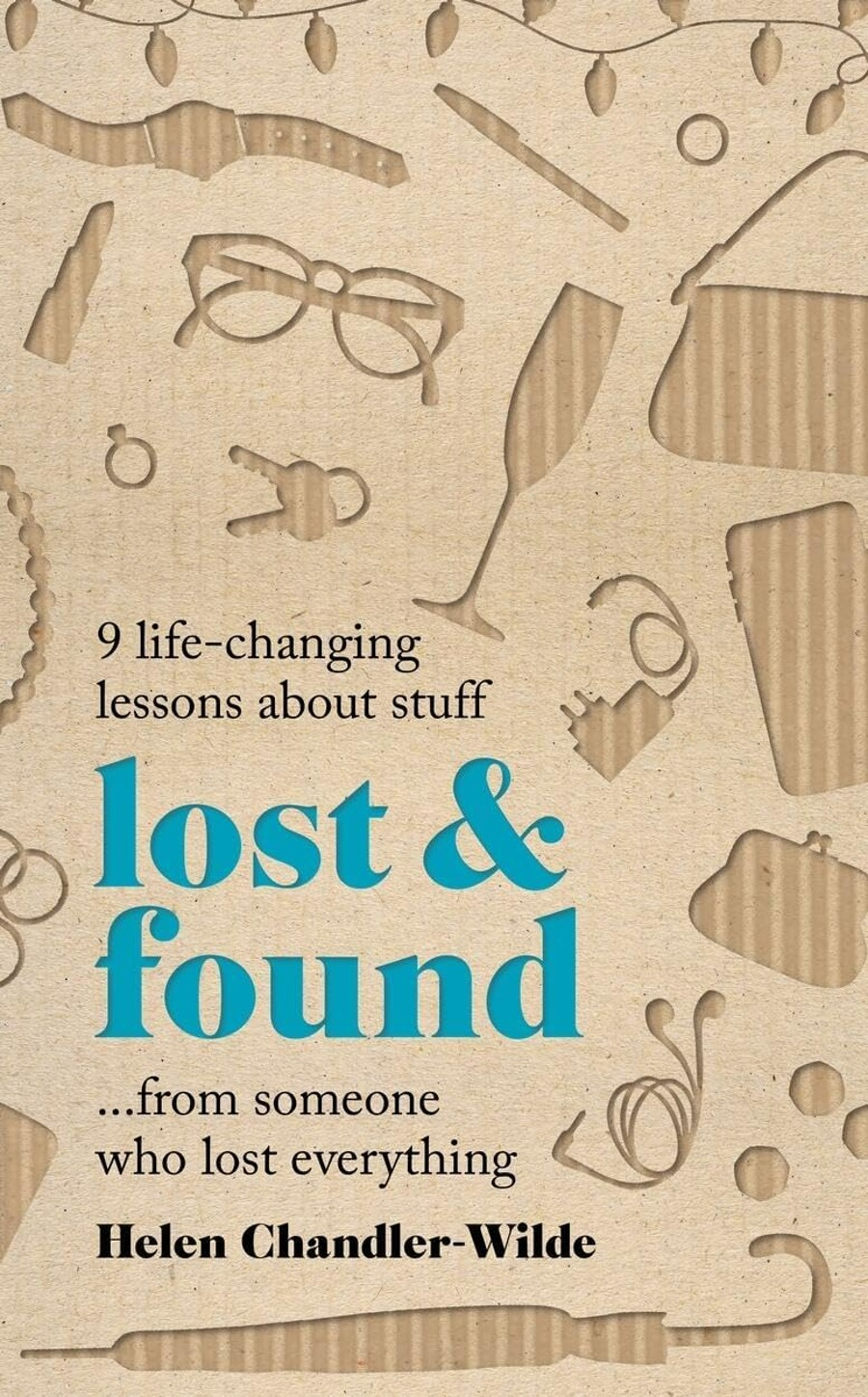
Lost & Found is a book of 9 life-changing lessons, from a woman who lost everything she owned in a storage unit fire in Croydon, where she had stowed her stuff after a break-up.
Left devastated, the event forced her to re-evaluate her relationship with owning material things. In this book, the author explores the psychological reasons for why we buy and keep things, and shows how to liberate ourselves from the tyranny of ‘too much’.
She interviews behavioural psychologists on the science of nostalgia, a nun (on what it’s like to own almost nothing) and consumer psychologists on why we spend impulsively, to help us better surround why we’re surrounded by clutter, and what we can do to change it. By the end, your relationship with your belongings will be changed forever.
The simple way to get rid of stuff
Skoup is a company that can get rid of both household and business waste, and then recycles it to the appropriate places on your behalf.
It turns green waste into compost, rubble into building materials, old paper and glass into new paper and glass, old metal into drinks cans and old wood into new wood.
Ideal if you have a lot of waste to dispose of (say a house clearance or you’re doing up a house), they will collect and take away your rubbish. If you have too many bin bags for kerbside collection, just pile up your biodegradable bin bags and they will take them away too for a much cheaper price. Just enter your postcode to see if this service operates in your area.
Unpack your emotions (and your clutter)
Reset Your Home is way more than an ‘organise your home’ book. It looks at reasons why some people buy and hoard so much stuff, and find it difficult to donate or sell on, recycle or bin.
Only donate safe items (take electrical goods and old mattresses and car seats etc to the tip for recycling). If donating to charity shops, choose ones that don’t test on animals.
Why do you put emotions behind so many ‘things’ apart from the obvious important ones like photographs. Why can’t some people part with a chipped mug or expensive shoes that are never worn (and could help someone else with no good shoes to afford?)
This book guides through each room of your house, helping you to sort out the emotional connection to stuff first, before deciding whether to let go of it.
The book begins in the kitchen (the room with the fewest emotive items). That way you can learn to strengthen your ‘decluttering muscle’ as you go, tackling more sentimental items at the end.
- The Kitchen
- The Bathroom
- The Bedroom
- Lofts, Attics, Basements, Storage Units
- The Hallway
- Books
- The Living Room
- Sentimental Items
Then you can enjoy the things you keep with real sentimental value, but end up with a lighter life, free to do what you live with it, instead of sitting a home full of hoarded useless stuff.
Lesley Spellman and Ingrid Jansen are both professional organisers and declutter experts.